Sinnen Brooke L, Bowen Aaron B, Forte Jeffrey S, Hiester Brian G, Crosby Kevin C, Gibson Emily S, Dell'Acqua Mark L, Kennedy Matthew J
Department of Pharmacology, University of Colorado School of Medicine, Aurora, CO 80045, USA.
Department of Pharmacology, University of Colorado School of Medicine, Aurora, CO 80045, USA.
Neuron. 2017 Feb 8;93(3):646-660.e5. doi: 10.1016/j.neuron.2016.12.037. Epub 2017 Jan 26.
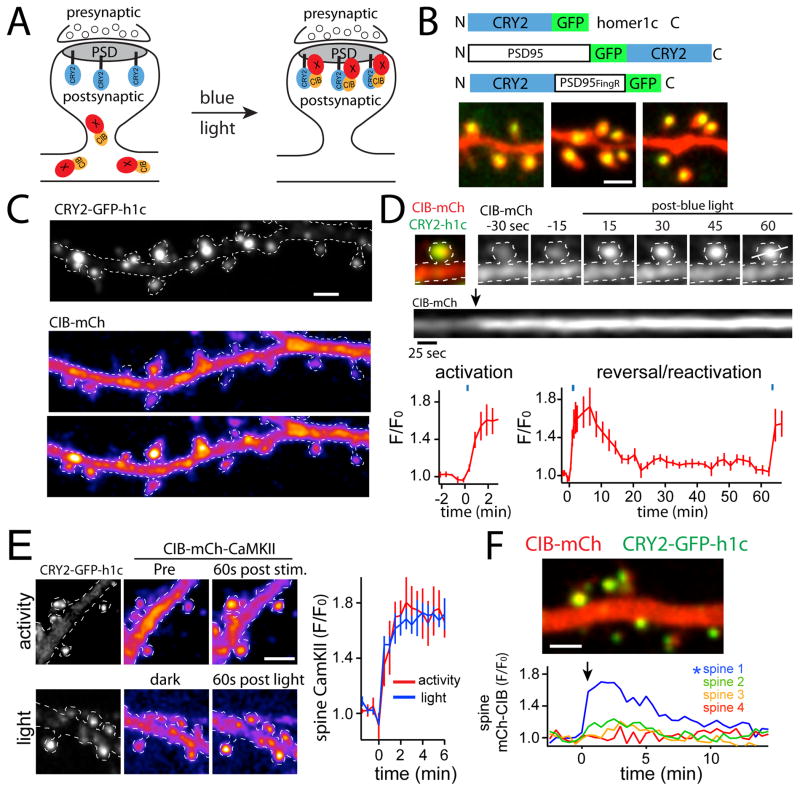
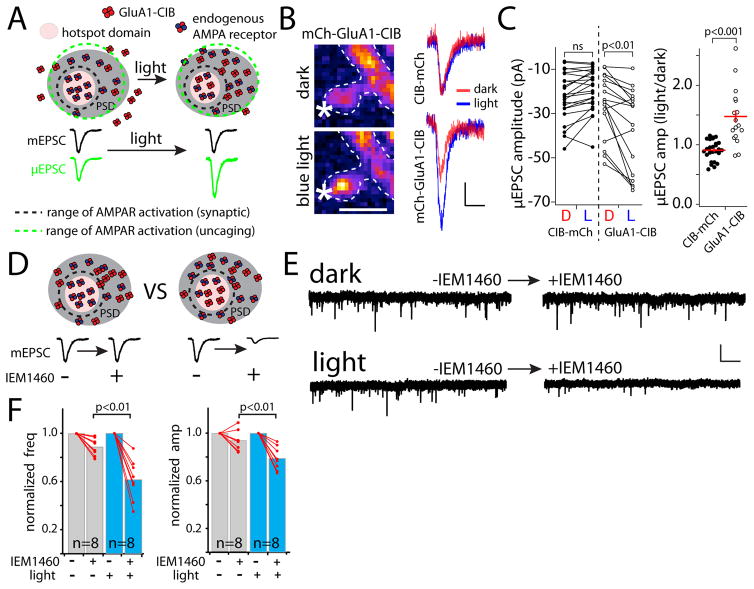
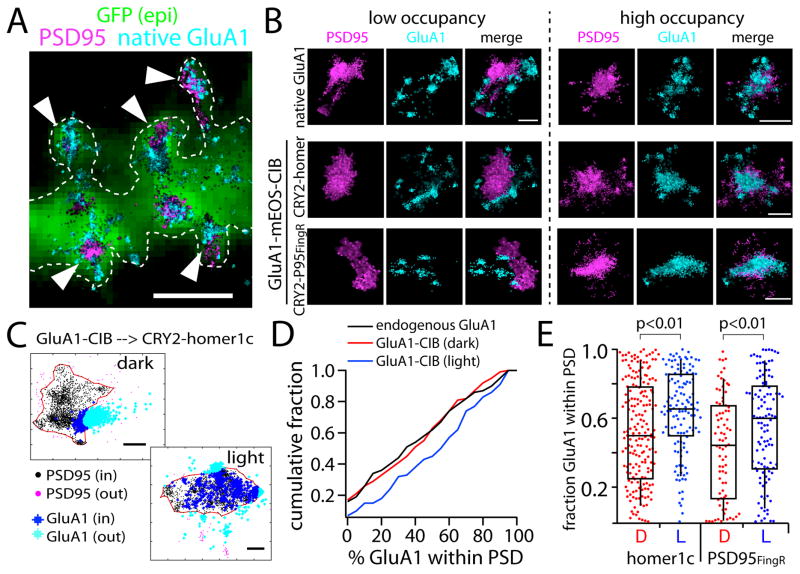
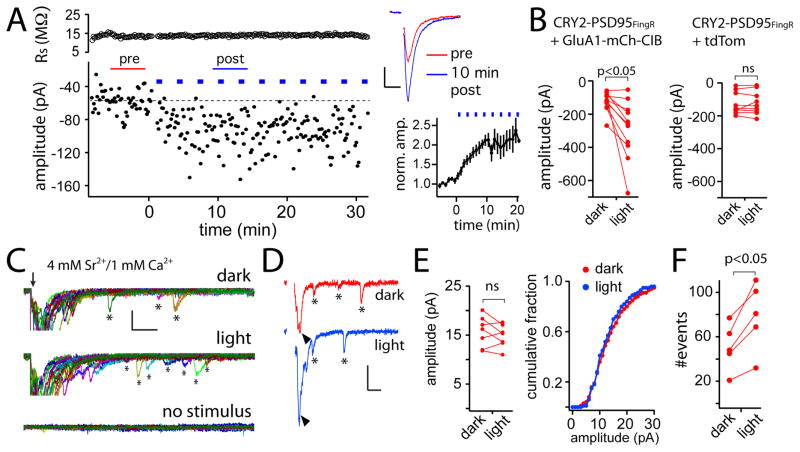
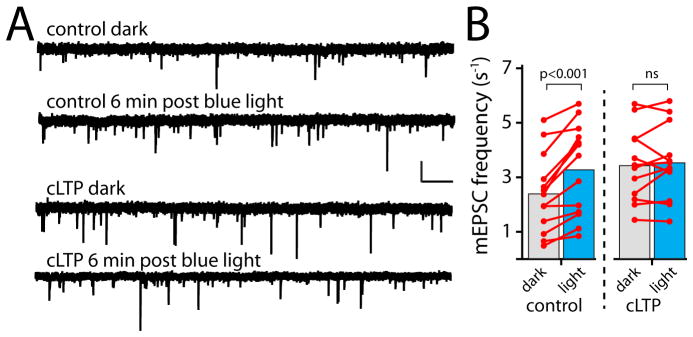
The molecular composition of the postsynaptic membrane is sculpted by synaptic activity. During synaptic plasticity at excitatory synapses, numerous structural, signaling, and receptor molecules concentrate at the postsynaptic density (PSD) to regulate synaptic strength. We developed an approach that uses light to tune the abundance of specific molecules in the PSD. We used this approach to investigate the relationship between the number of AMPA-type glutamate receptors in the PSD and synaptic strength. Surprisingly, adding more AMPA receptors to excitatory contacts had little effect on synaptic strength. Instead, we observed increased excitatory input through the apparent addition of new functional sites. Our data support a model where adding AMPA receptors is sufficient to activate synapses that had few receptors to begin with, but that additional remodeling events are required to strengthen established synapses. More broadly, this approach introduces the precise spatiotemporal control of optogenetics to the molecular control of synaptic function.
突触后膜的分子组成由突触活动塑造。在兴奋性突触的突触可塑性过程中,众多结构、信号和受体分子聚集在突触后致密区(PSD)以调节突触强度。我们开发了一种利用光来调节PSD中特定分子丰度的方法。我们用这种方法研究了PSD中AMPA型谷氨酸受体数量与突触强度之间的关系。令人惊讶的是,在兴奋性突触处添加更多的AMPA受体对突触强度几乎没有影响。相反,我们通过明显增加新的功能位点观察到兴奋性输入增加。我们的数据支持这样一个模型:添加AMPA受体足以激活最初受体较少的突触,但需要额外的重塑事件来增强已建立的突触。更广泛地说,这种方法将光遗传学的精确时空控制引入到突触功能的分子控制中。