Department of Urology, University of California, Irvine, Orange, CA, USA.
Swedish Urology Group, Swedish Medical Center Seattle and Issaquah, Seattle, WA, USA.
Sci Rep. 2018 Nov 5;8(1):16352. doi: 10.1038/s41598-018-34657-4.
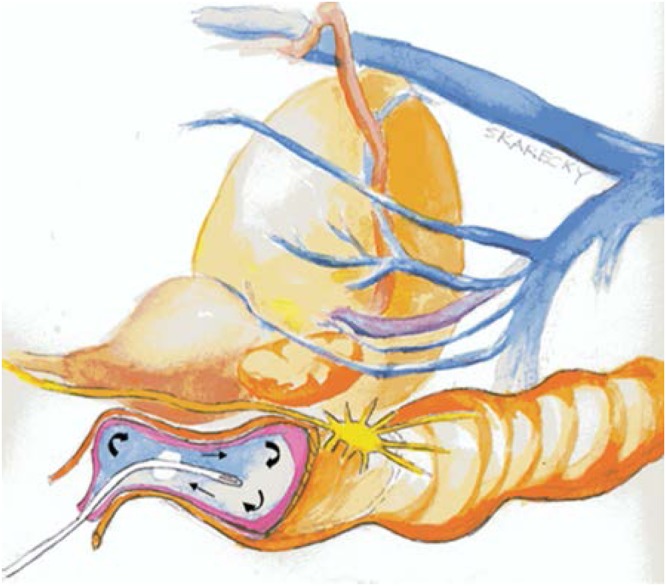
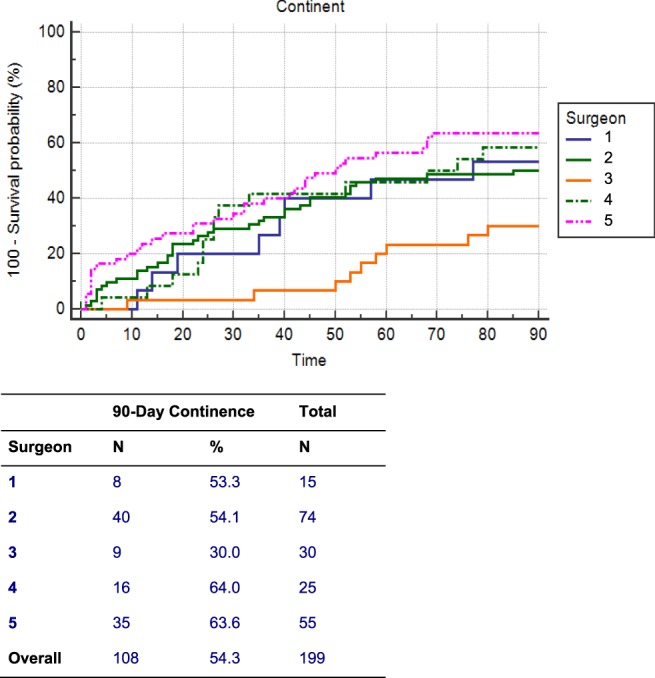
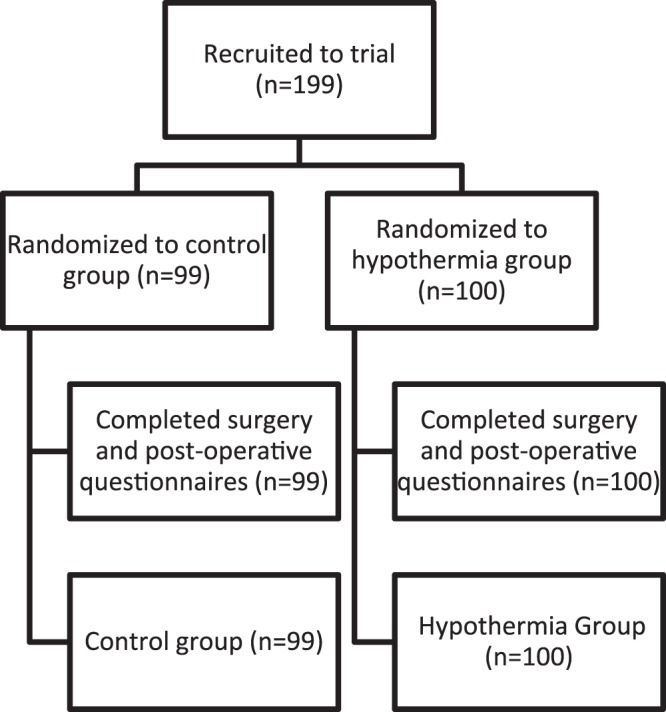
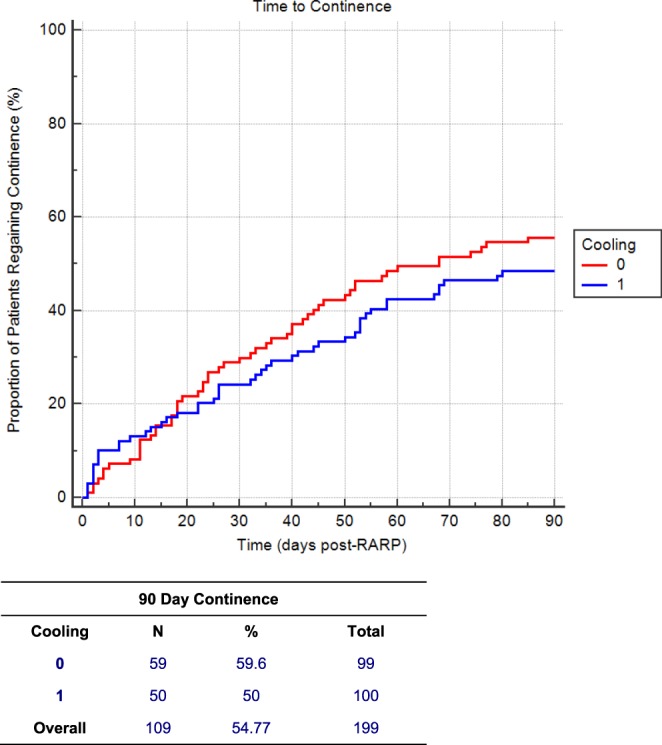
The present study seeks to present a single-blind, randomized control trial of a hypothermic anti-inflammatory device, the endorectal cooling balloon (ECB), to assess whether regional hypothermia could improve 90-day and time to pad-free continence following robot-assisted radical prostatectomy (RARP). Five high-volume surgeons at three institutions had patients randomized (1:1) to regional hypothermia with ECB versus control. Patients were blinded to device use, as it was inserted and removed intraoperatively. Knowledge of device use was restricted to the operating room personnel only; recovery room and ward nursing staff were not informed of device use and instructed to indicate such if a patient inquired. An independent and blinded data acquisition contractor assessed outcomes via components of the EPIC and IPSS. The primary outcome was categorical pad-free continence at 90-days and the secondary outcome was a Kaplan-Meier time-to pad-free continence at 90 days. 100 hypothermia and 99 control patients were included. The primary outcome of 90-day pad-free continence was 50.0% (27.8-70.0%) in the hypothermia group versus 59.2% (33.3-78.6%) in the control (p = 0.194). The secondary outcome of Kaplan Meier analysis for time to 90-day continence was not statistically significant. At one year, there were also no statistically significant differences in continence recovery. Post-hoc analysis revealed a trend towards improvement in continence in one of three sites. Overall, the trial demonstrated no benefit to regional hypothermia either in our primary or secondary outcomes. It is suggested that surgical technique and prevention of surgical trauma may be more advantageous to improving continence recovery.
本研究旨在进行一项单盲、随机对照试验,评估直肠内冷却球囊(ECB)的局部低温是否能改善机器人辅助根治性前列腺切除术(RARP)后 90 天和无尿垫控尿的时间。三家机构的 5 位高年资外科医生将患者随机(1:1)分为局部低温组(ECB)和对照组。患者对器械的使用情况是盲态的,因为器械是在手术中插入和取出的。只有手术室人员了解器械的使用情况,而复苏室和病房的护理人员不了解器械的使用情况,如果患者询问,他们将被指示说明。一位独立的、盲法数据采集承包商通过 EPIC 和 IPSS 的组成部分评估了结果。主要结局是 90 天无尿垫控尿的分类,次要结局是 90 天无尿垫控尿的 Kaplan-Meier 时间。纳入了 100 名低温组和 99 名对照组患者。低温组 90 天无尿垫控尿的主要结局为 50.0%(27.8-70.0%),对照组为 59.2%(33.3-78.6%)(p=0.194)。Kaplan-Meier 分析的次要结局在统计学上无显著差异。在一年时,控尿的恢复也没有统计学上的显著差异。事后分析显示,有一个部位的控尿情况有改善趋势。总体而言,该试验在主要和次要结局中均未显示局部低温有任何益处。因此,手术技术和预防手术创伤可能更有利于提高控尿恢复。