Albanese-O'Neill Anastasia, Beauchamp Giovanna, Thomas Nicole, Westen Sarah C, Johnson Nicole, Schatz Desmond, Haller Michael J
Division of Pediatric Endocrinology, Department of Pediatrics, University of Florida, Gainesville, FL, United States.
Division of Pediatric Endocrinology, Department of Pediatrics, University of Alabama at Birmingham, Birmingham, AL, United States.
JMIR Diabetes. 2018 Nov 5;3(4):e10909. doi: 10.2196/10909.
Young adults with type 1 diabetes (T1D) experience a decline in glycemic outcomes and gaps in clinical care. A diabetes education and support program designed for young adults was delivered through group videoconference and mobile Web.
The objective of our study was to assess the feasibility, acceptability, and preliminary efficacy of the program as measured by attendance and webpage views, satisfaction, and pre- and postintervention psychosocial outcomes, respectively.
Young adults aged 18-25 years were recruited to attend five 30-minute group diabetes education videoconferences during an 8-week period. Videoconferences included an expert presentation followed by a moderated group discussion. Within 48 hours of each videoconference, participants were sent a link to more information on the study website. Feasibility was assessed using data on videoconference attendance and webpage views. Acceptability was assessed via a Satisfaction Survey completed at the conclusion of the study. Descriptive statistics were generated. Preliminary efficacy was assessed via a survey to measure changes in diabetes-specific self-efficacy and diabetes distress. Pre- and postintervention data were compared using paired samples t tests.
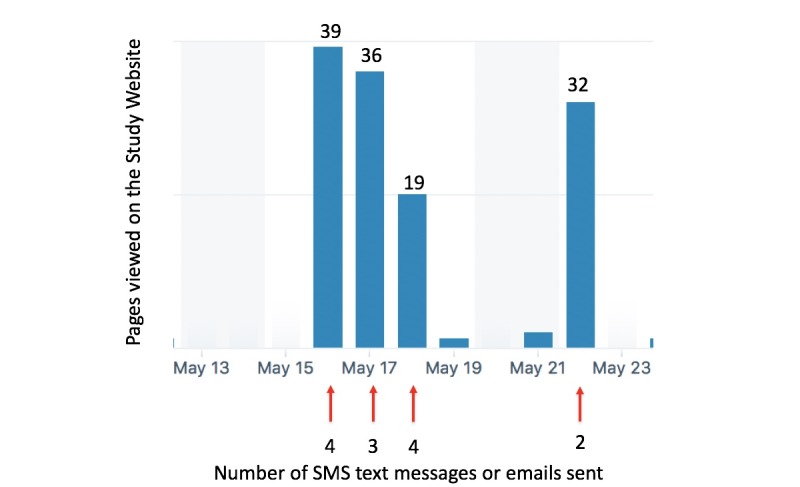
In this study, 20 young adults (mean age 19.2 [SD 1.1] years) attended an average of 5.1 (SD 1.0) videoconferences equivalent to 153 (SD 30.6) minutes of diabetes education per participant during an 8-week period. Average participant satisfaction scores were 62.2 (SD 2.6) out of a possible 65 points. A total of 102 links sent via text message (short message service) or email resulted in 504 webpage views. There was no statistically significant difference between pre- and postintervention diabetes-specific self-efficacy or diabetes-related distress.
Delivery of diabetes education via group videoconference using mobile Web follow-up is feasible and acceptable to young adults with T1D. This model of care delivery has the potential to improve attendance, social support, and patient-reported satisfaction. Nevertheless, further research is required to establish the effect on long-term psychosocial and glycemic outcomes.
1型糖尿病(T1D)青年患者的血糖控制效果会下降,临床护理也存在差距。一项为青年患者设计的糖尿病教育与支持项目通过群组视频会议和移动网络开展。
我们研究的目的是分别通过出席情况、网页浏览量、满意度以及干预前后的心理社会结果来评估该项目的可行性、可接受性和初步疗效。
招募18至25岁的青年患者,在8周内参加5次30分钟的群组糖尿病教育视频会议。视频会议包括专家讲座,随后是有主持人的小组讨论。每次视频会议结束后48小时内,会向参与者发送研究网站上更多信息的链接。使用视频会议出席情况和网页浏览量数据评估可行性。通过研究结束时完成的满意度调查评估可接受性。生成描述性统计数据。通过一项调查评估初步疗效,以测量糖尿病特异性自我效能感和糖尿病困扰的变化。使用配对样本t检验比较干预前后的数据。
在本研究中,20名青年患者(平均年龄19.2[标准差1.1]岁)在8周内平均参加了5.1(标准差1.0)次视频会议,每位参与者相当于接受了153(标准差30.6)分钟的糖尿病教育。参与者的平均满意度得分为62.2(标准差2.6)分(满分65分)。通过短信(短消息服务)或电子邮件发送的102个链接产生了504次网页浏览量。干预前后的糖尿病特异性自我效能感或糖尿病相关困扰没有统计学上的显著差异。
通过群组视频会议并利用移动网络进行后续跟进开展糖尿病教育,对于T1D青年患者是可行且可接受的。这种护理模式有可能提高参与度、社会支持和患者报告的满意度。然而,需要进一步研究以确定其对长期心理社会和血糖结果的影响。