School of Chemical and Biomedical Engineering, Nanyang Technological University, 70 Nanyang Drive, Singapore, 637457, Singapore.
Lee Kong Chian School of Medicine, Nanyang Technological University, 59 Nanyang Drive, Singapore, 636921, Singapore.
Nat Commun. 2018 Nov 6;9(1):4433. doi: 10.1038/s41467-018-06981-w.
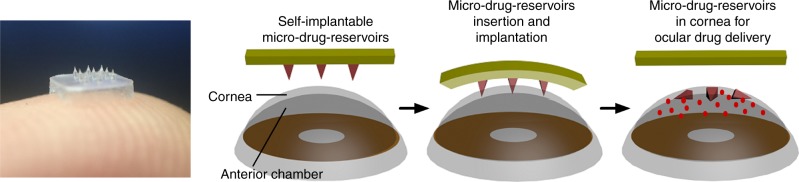
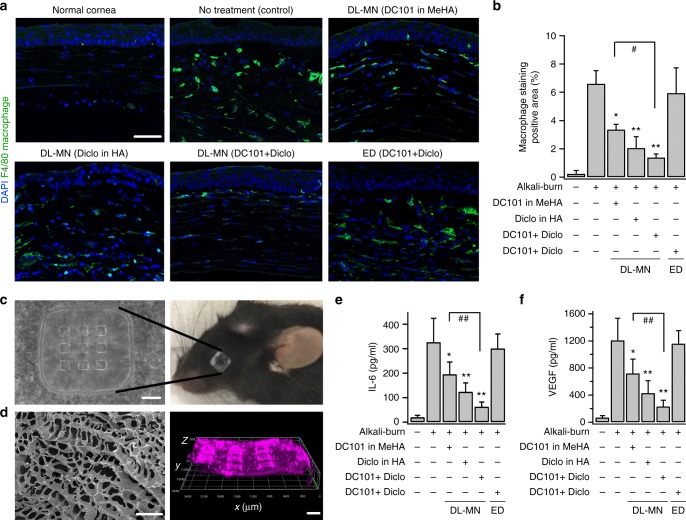
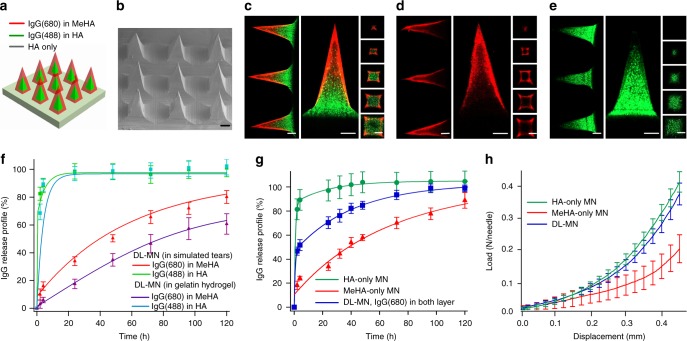
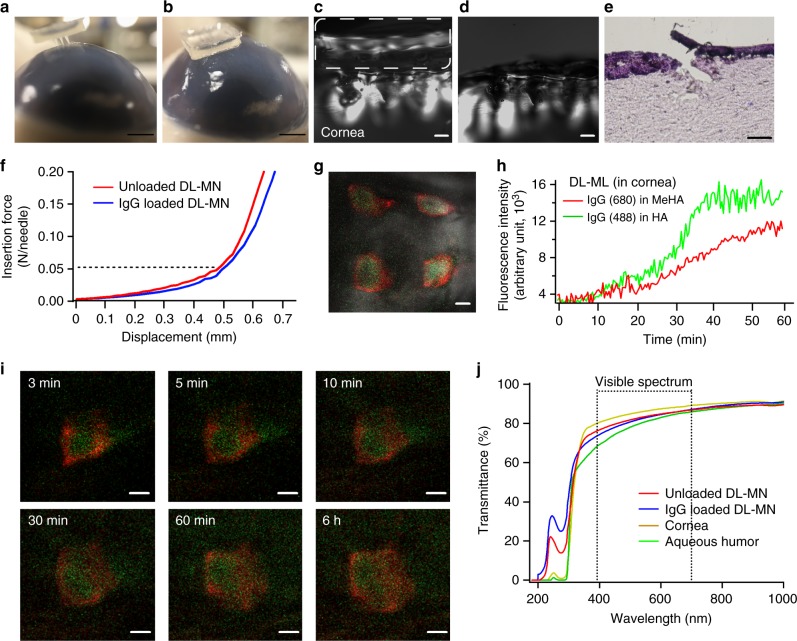
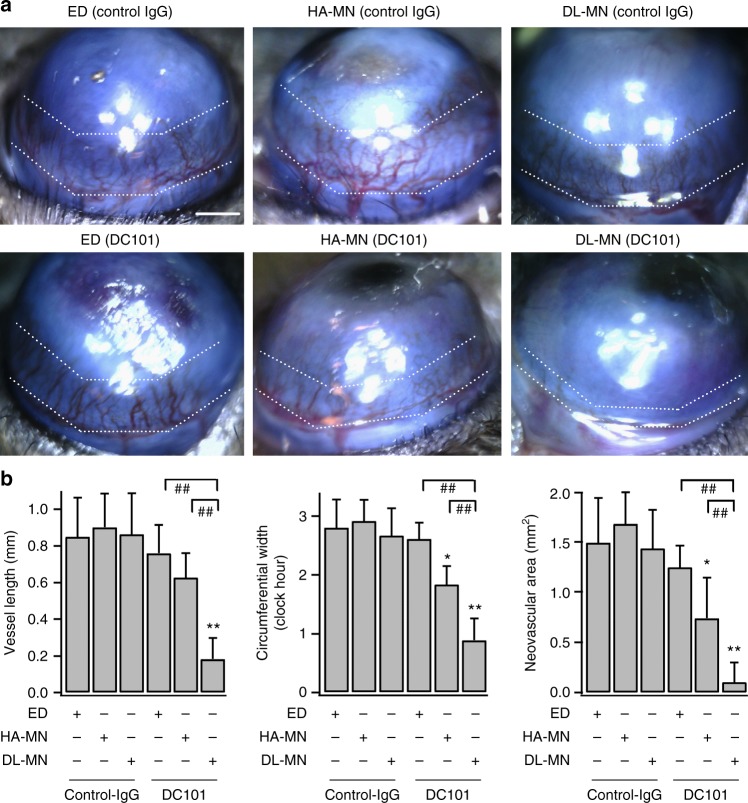
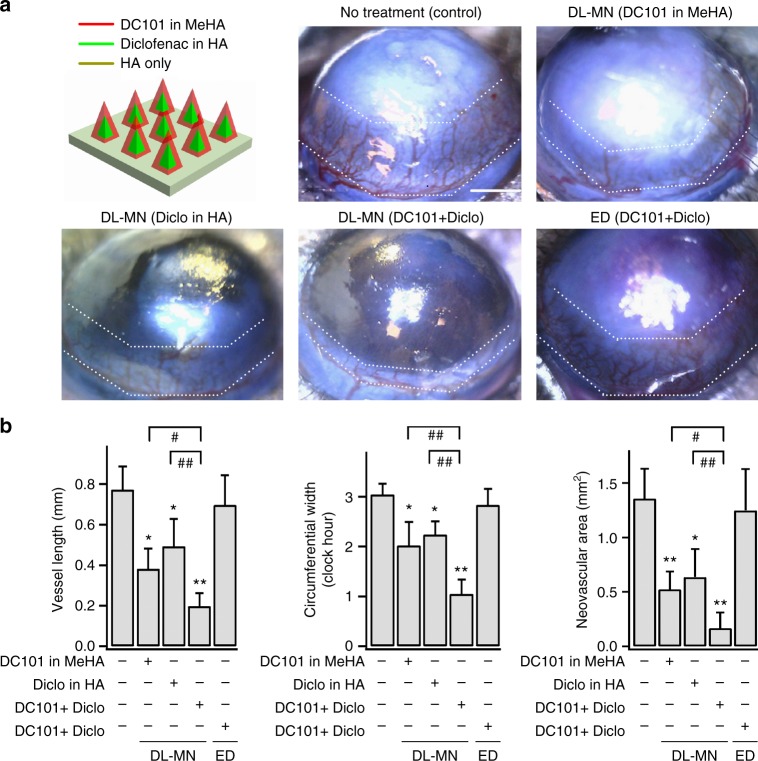
Eye diseases and injuries impose a significant clinical problem worldwide. Safe and effective ocular drug delivery is, however, challenging due to the presence of ocular barriers. Here we report a strategy using an eye patch equipped with an array of detachable microneedles. These microneedles can penetrate the ocular surface tissue, and serve as implanted micro-reservoirs for controlled drug delivery. The biphasic drug release kinetics enabled by the double-layered micro-reservoirs largely enhances therapeutic efficacy. Using corneal neovascularization as the disease model, we show that delivery of an anti-angiogenic monoclonal antibody (DC101) by such eye patch produces ~90% reduction of neovascular area. Furthermore, quick release of an anti-inflammatory compound (diclofenac) followed by a sustained release of DC101 provides synergistic therapeutic outcome. The eye patch application is easy and minimally invasive to ensure good patient compliance. Such intraocular drug delivery strategy promises effective home-based treatment of many eye diseases.
眼部疾病和损伤在全球范围内造成了重大的临床问题。然而,由于眼部存在屏障,安全有效的眼部药物输送具有挑战性。在这里,我们报告了一种使用配备有一系列可拆卸微针的眼贴的策略。这些微针可以穿透眼部表面组织,并作为植入式微储库用于控制药物输送。双层微储库实现的双相药物释放动力学极大地提高了治疗效果。使用角膜新生血管化为疾病模型,我们表明通过这种眼贴输送抗血管生成单克隆抗体(DC101)可使新生血管面积减少约 90%。此外,快速释放抗炎化合物(双氯芬酸),然后持续释放 DC101,可产生协同治疗效果。眼贴的应用简单且微创,可确保良好的患者依从性。这种眼内药物输送策略有望为许多眼部疾病提供有效的家庭治疗。