Department of Pathology, Immunology, and Key Laboratory of Xinjiang Endemic and Ethnic Diseases, Shihezi University School of Medicine, Shihezi, Xinjiang, China.
Department of Biomedical Sciences, Cornell University, Ithaca, NY, USA.
Oncogene. 2019 Mar;38(12):2042-2055. doi: 10.1038/s41388-018-0476-9. Epub 2018 Nov 6.
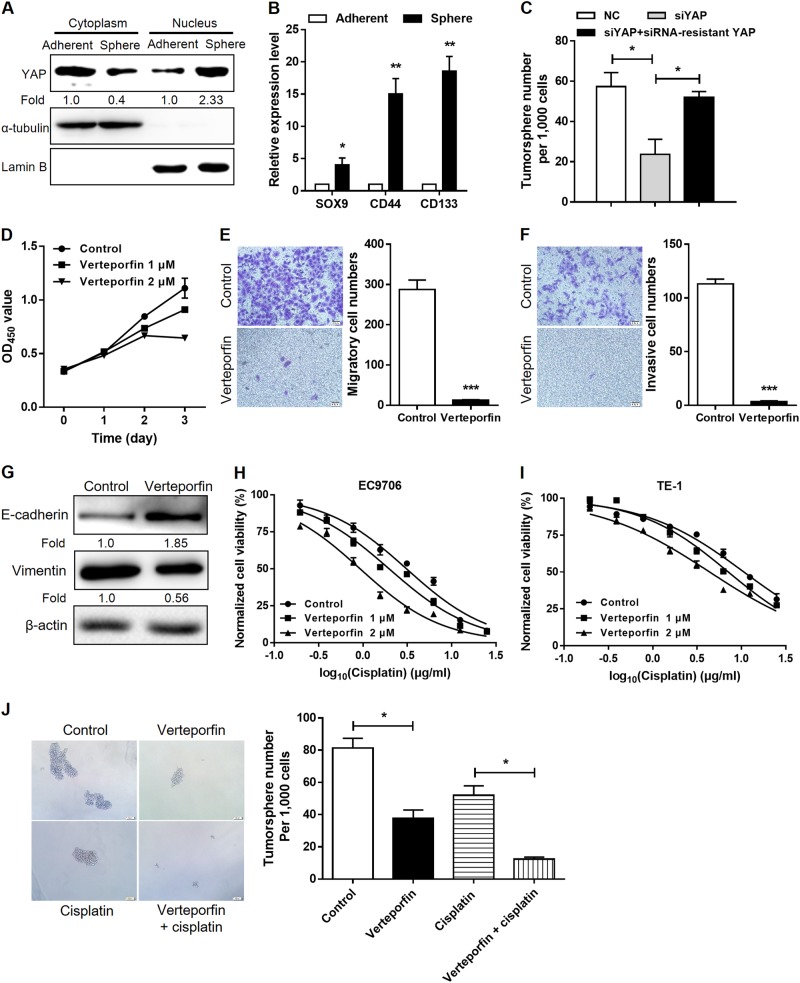
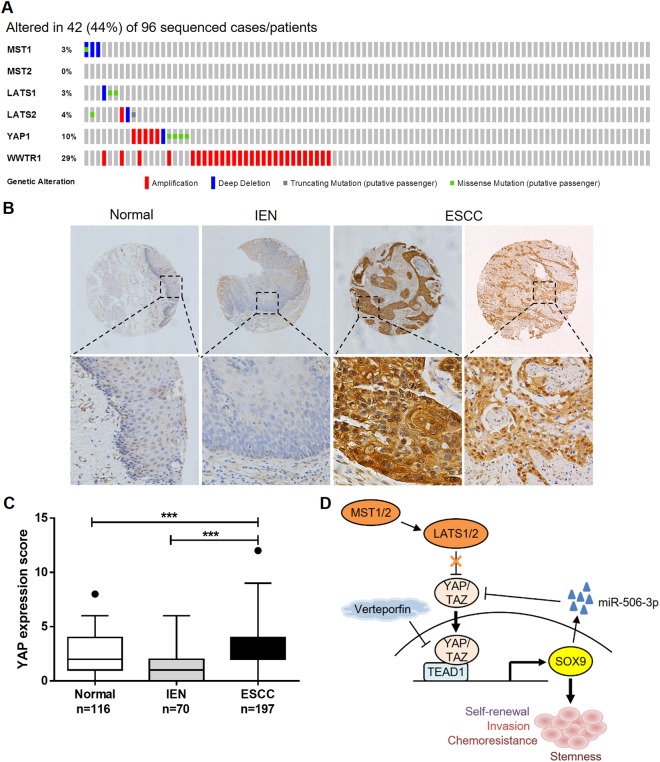
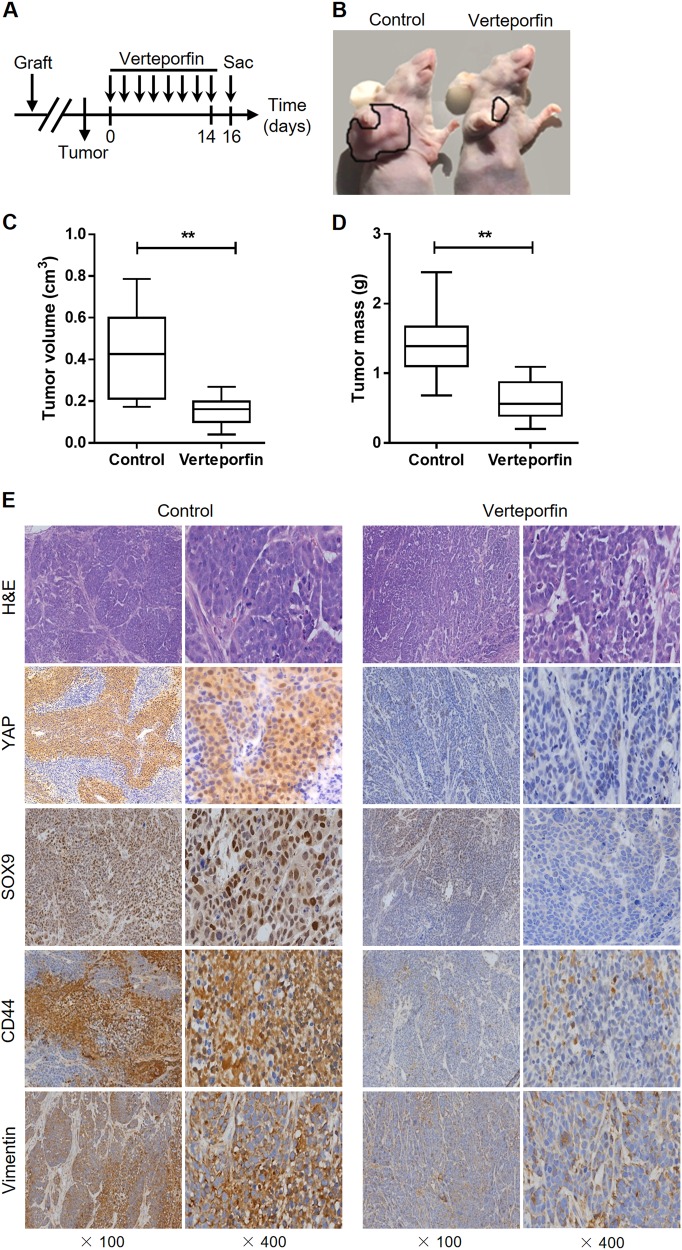
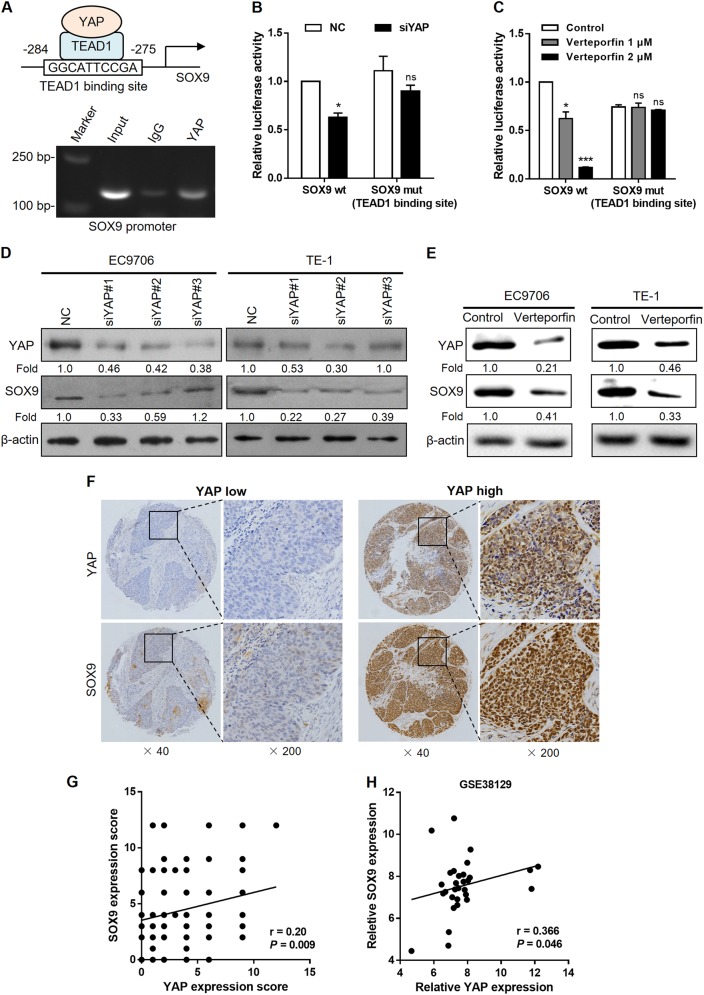
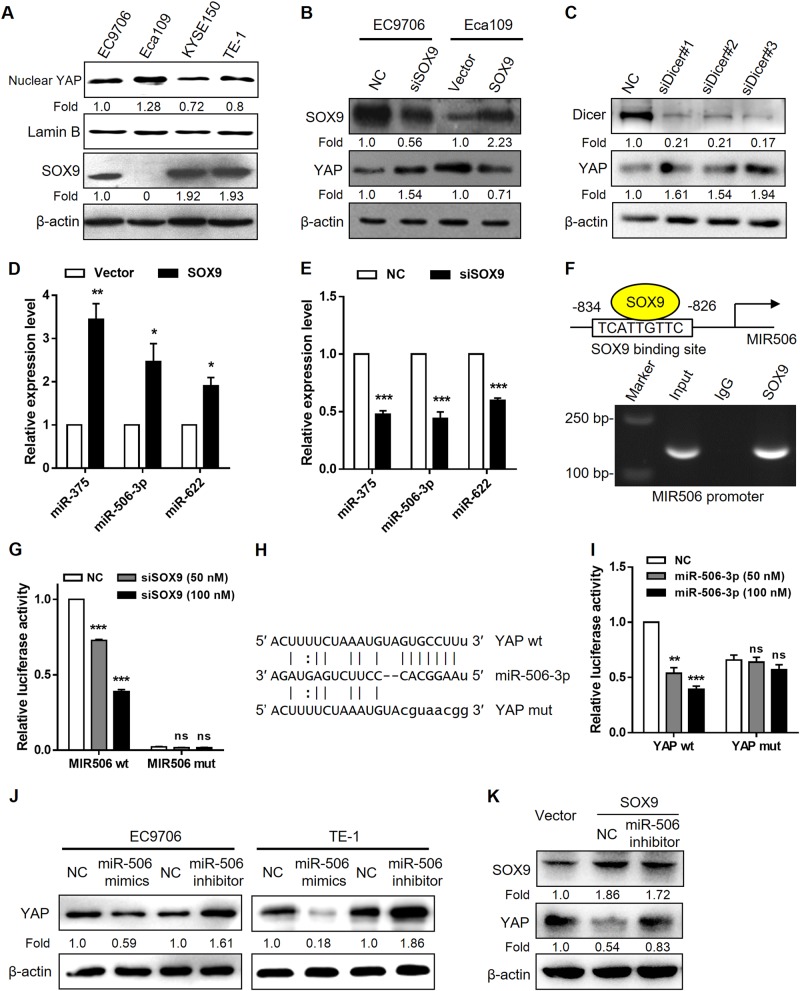
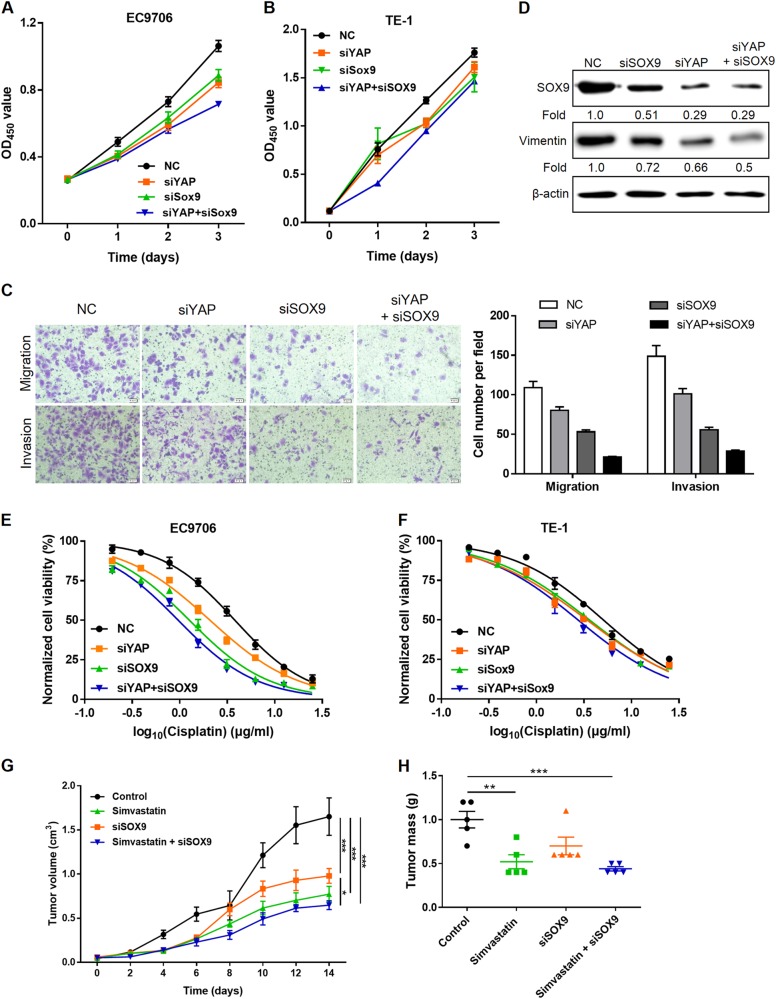
Yes-associated protein (YAP) has been identified as a key regulator of tissue homeostasis. However, the precise role and regulatory mechanism of YAP in esophageal squamous cell carcinoma (ESCC) remains unclear. Here we report that the genetic or pharmacological inhibition of YAP repressed cancer stem cell (CSC)-like properties, including tumorsphere-forming potential, cell motility, and chemoresistance in vitro, and was sufficient to attenuate tumor growth and CSC marker expression in ESCC xenografts. Mechanistically, YAP transcriptionally activated its downstream target SOX9 via TEAD1-mediated binding. We also observed a positive correlation between YAP signaling and SOX9 expression in two independent clinical cohorts. Intriguingly, YAP-targeting microRNAs, including miR-506-3p, which were induced by SOX9, post-transcriptionally repressed YAP expression, contributing to a negative feedback mechanism. Dual inhibition of YAP and SOX9 robustly suppressed malignant phenotypes. Notably, ESCC samples from The Cancer Genome Atlas (TCGA) dataset had frequent (44%) instances of YAP gene amplification and genetic inactivation of Hippo pathway regulators. Nuclear YAP expression was elevated in 197 ESCC tissues from a Chinese cohort. Together, our findings provide evidence that genetic hyperactivation of YAP unbalances the YAP-SOX9 feedback loop and confers CSC-like features in ESCC, suggesting that this YAP-SOX9 circuit represents a potential therapeutic target.
Yes 相关蛋白 (YAP) 已被鉴定为组织内稳态的关键调节因子。然而,YAP 在食管鳞状细胞癌 (ESCC) 中的确切作用和调节机制尚不清楚。在这里,我们报告遗传或药理学抑制 YAP 可抑制体外肿瘤干细胞 (CSC) 样特性,包括肿瘤球形成能力、细胞迁移和化学抗性,并足以减弱 ESCC 异种移植物中的肿瘤生长和 CSC 标志物表达。从机制上讲,YAP 通过 TEAD1 介导的结合转录激活其下游靶标 SOX9。我们还在两个独立的临床队列中观察到 YAP 信号和 SOX9 表达之间存在正相关。有趣的是,YAP 靶向 microRNAs,包括受 SOX9 诱导的 miR-506-3p,通过转录后抑制 YAP 表达,形成负反馈机制。YAP 和 SOX9 的双重抑制可强力抑制恶性表型。值得注意的是,来自癌症基因组图谱 (TCGA) 数据集的 ESCC 样本中经常发生 (44%) YAP 基因扩增和 Hippo 通路调节因子的遗传失活。在中国队列的 197 份 ESCC 组织中,核 YAP 表达升高。总之,我们的研究结果提供了证据,表明 YAP 的遗传过度激活破坏了 YAP-SOX9 反馈回路,并赋予 ESCC 中的 CSC 样特征,表明该 YAP-SOX9 回路代表了一个潜在的治疗靶点。