Department of Microbial Pathogenesis , Yale School of Medicine , New Haven , Connecticut 06536 , United States.
Chemical Biology Institute , Yale University , West Haven , Connecticut 06516 , United States.
ACS Chem Biol. 2018 Dec 21;13(12):3286-3293. doi: 10.1021/acschembio.8b00714. Epub 2018 Nov 20.
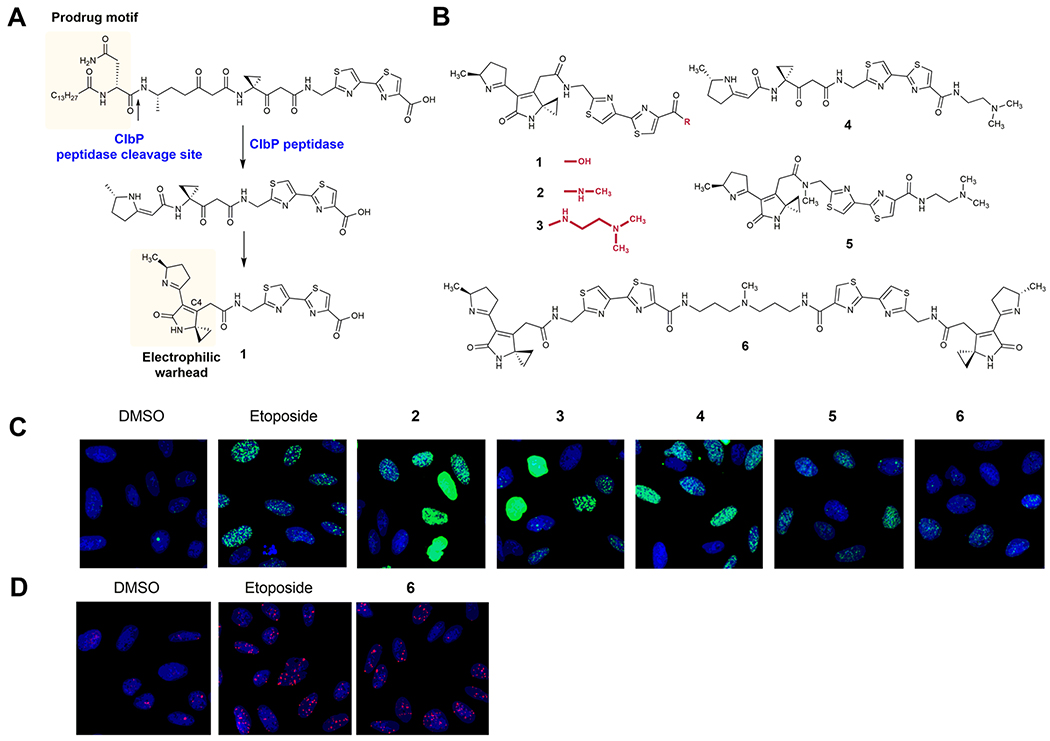
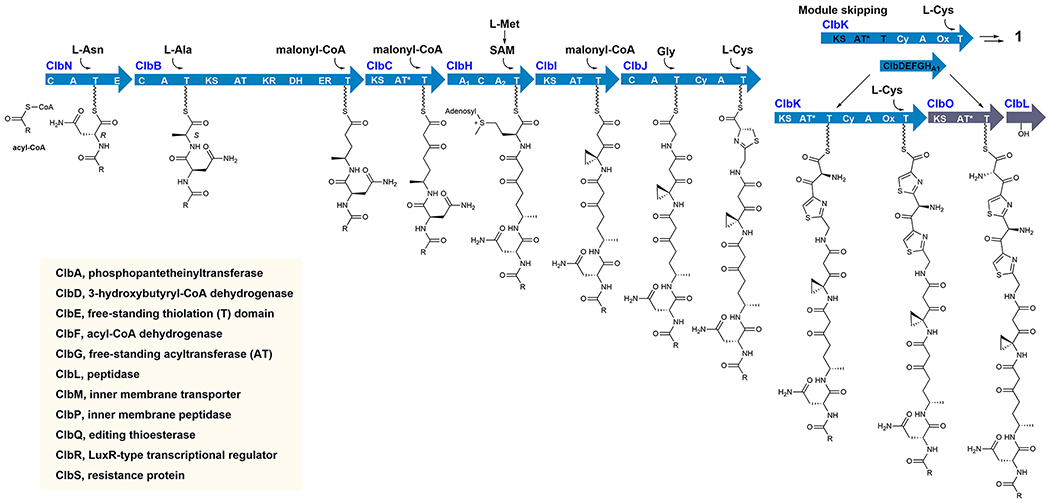
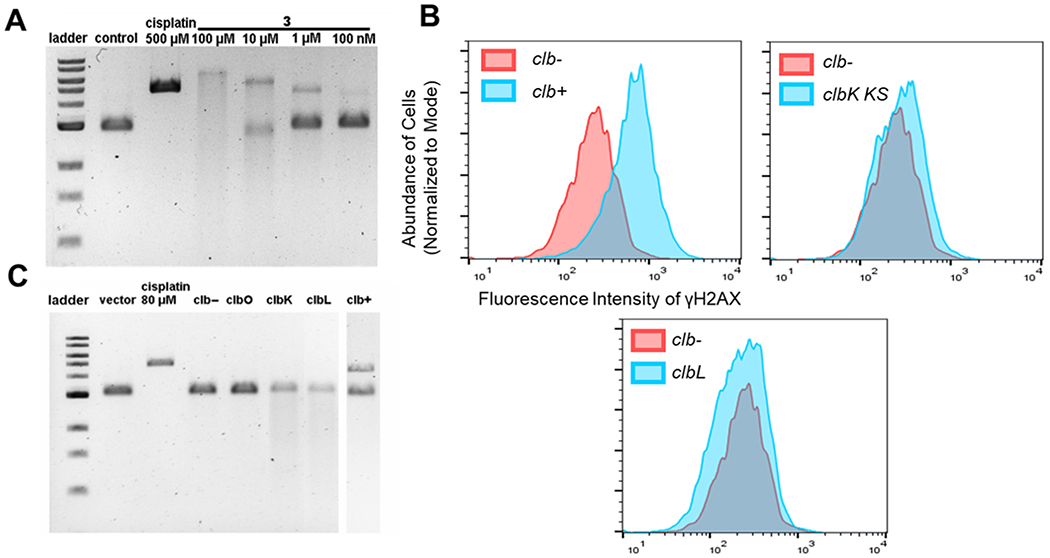
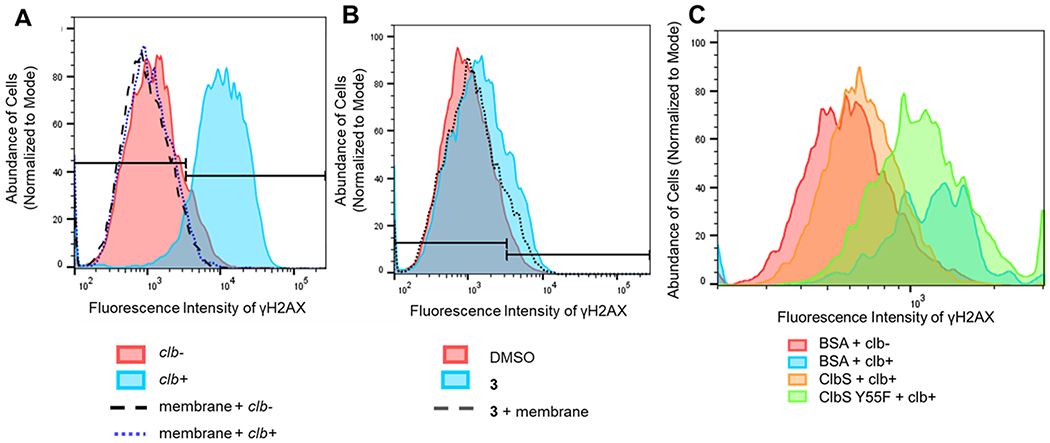
Colibactins are genotoxic secondary metabolites produced in select Enterobacteriaceae, which induce downstream DNA double-strand breaks (DSBs) in human cell lines and are thought to promote the formation of colorectal tumors. Although key structural and functional features of colibactins have been elucidated, the full molecular mechanisms regulating these phenotypes remain unknown. Here, we demonstrate that free model colibactins induce DSBs in human cell cultures and do not require delivery by host bacteria. Through domain-targeted editing, we demonstrate that a subset of native colibactins generated from observed module skipping in the nonribosomal peptide synthetase-polyketide synthase (NRPS-PKS) biosynthetic assembly line share DNA alkylation phenotypes with the model colibactins in vitro. However, module skipping eliminates the strong DNA interstrand cross-links formed by the wild-type pathway in cell culture. This product diversification during the modular NRPS-PKS biosynthesis produces a family of metabolites with varying observed mechanisms of action (DNA alkylation versus cross-linking) in cell culture. The presence of membranes separating human cells from model colibactins attenuated genotoxicity, suggesting that membrane diffusion limits colibactin activity and could account for the reported bacterium-human cell-to-cell contact phenotype. Additionally, extracellular supplementation of the colibactin resistance protein ClbS was able to intercept colibactins in an Escherichia coli-human cell transient infection model. Our studies demonstrate that free model colibactins recapitulate cellular phenotypes associated with module-skipped products in the native colibactin pathway and define specific protein domains that are required for efficient DNA interstrand cross-linking in the native pathway.
类细菌素是某些肠杆菌科产生的遗传毒性次级代谢产物,它在人细胞系中诱导下游 DNA 双链断裂(DSB),并被认为促进结直肠肿瘤的形成。尽管类细菌素的关键结构和功能特征已经阐明,但调节这些表型的完整分子机制仍不清楚。在这里,我们证明游离模型类细菌素在人细胞培养物中诱导 DSB,而不需要宿主细菌的传递。通过靶向结构域编辑,我们证明了在非核糖体肽合酶-聚酮合酶(NRPS-PKS)生物合成装配线中观察到的模块跳过产生的一组天然类细菌素,与体外模型类细菌素具有相同的 DNA 烷化表型。然而,模块跳过消除了细胞培养物中野生型途径形成的强 DNA 链间交联。这种模块化 NRPS-PKS 生物合成过程中的产物多样化产生了一组具有不同观察到的作用机制(DNA 烷化与交联)的代谢产物。在将人细胞与模型类细菌素隔开的膜的存在减弱了遗传毒性,这表明膜扩散限制了类细菌素的活性,这可以解释报告的细菌-人细胞-细胞接触表型。此外,在大肠杆菌-人细胞瞬时感染模型中,细胞外补充类细菌素抗性蛋白 ClbS 能够截获类细菌素。我们的研究表明,游离模型类细菌素再现了与天然类细菌素途径中模块跳过产物相关的细胞表型,并定义了在天然途径中有效进行 DNA 链间交联所必需的特定蛋白质结构域。