Department of Chemistry, Yale University , New Haven, Connecticut 06520, United States.
Chemical Biology Institute, Yale University , West Haven, Connecticut 06516, United States.
J Am Chem Soc. 2017 Mar 22;139(11):4195-4201. doi: 10.1021/jacs.7b00659. Epub 2017 Mar 10.
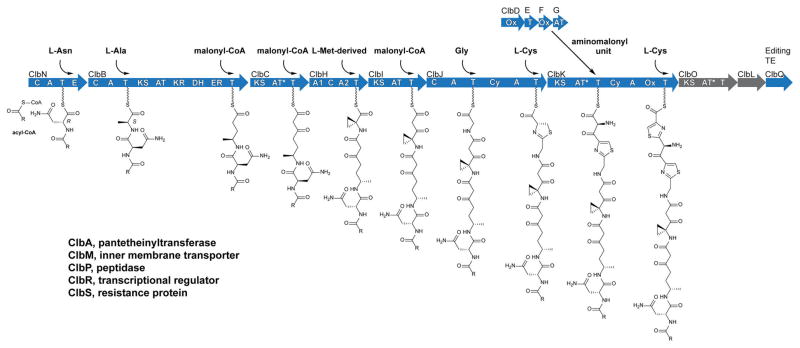
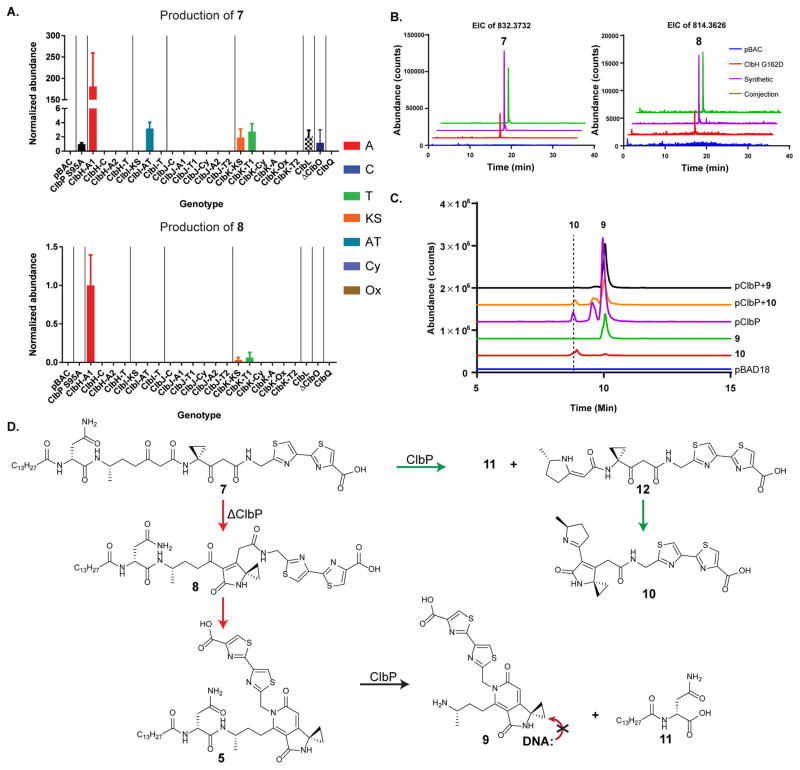
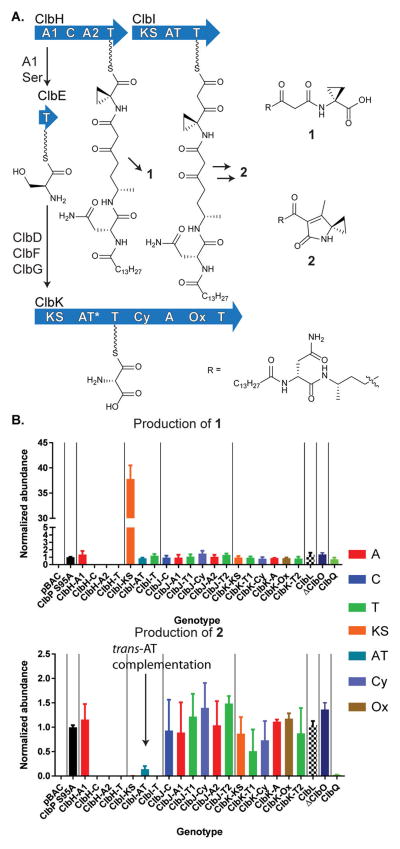
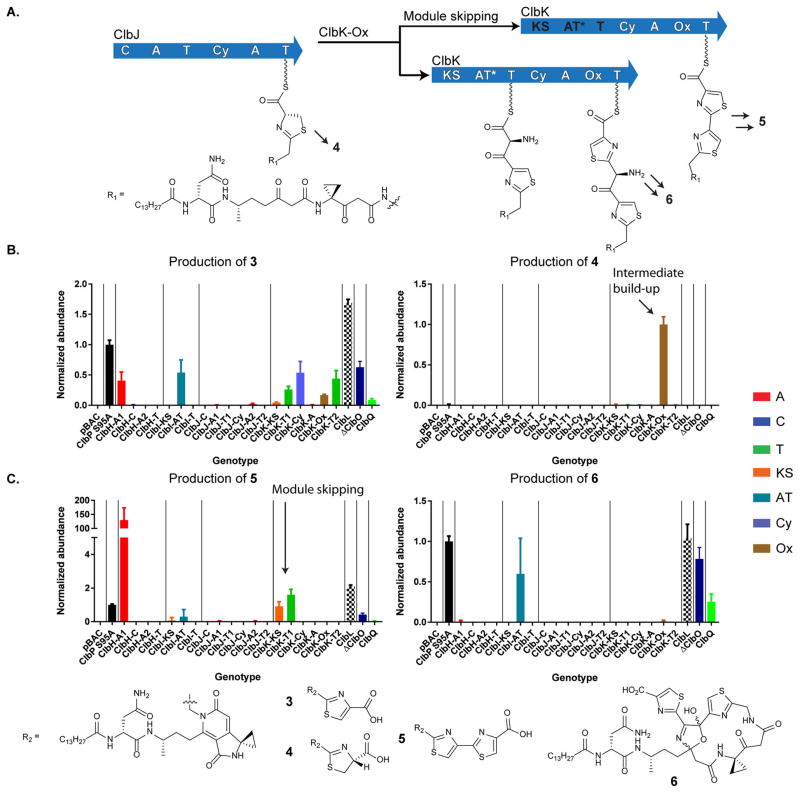
Modular polyketide synthases (PKSs) and nonribosomal peptide synthetases (NRPSs) comprise giant multidomain enzymes responsible for the "assembly line" biosynthesis of many genetically encoded small molecules. Site-directed mutagenesis, protein biochemical, and structural studies have focused on elucidating the catalytic mechanisms of individual multidomain proteins and protein domains within these megasynthases. However, probing their functions at the cellular level typically has invoked the complete deletion (or overexpression) of multidomain-encoding genes or combinations of genes and comparing those mutants with a control pathway. Here we describe a "domain-targeted" metabolomic strategy that combines genome editing with pathway analysis to probe the functions of individual PKS and NRPS catalytic domains at the cellular metabolic level. We apply the approach to the bacterial colibactin pathway, a genotoxic NRPS-PKS hybrid pathway found in certain Escherichia coli. The pathway produces precolibactins, which are converted to colibactins by a dedicated peptidase, ClbP. Domain-targeted metabolomics enabled the characterization of "multidomain signatures", or functional readouts of NRPS-PKS domain contributions to the pathway-dependent metabolome. These multidomain signatures provided experimental support for individual domain contributions to colibactin biosynthesis and delineated the assembly line timing events of colibactin heterocycle formation. The analysis also led to the structural characterization of two reactive precolibactin metabolites. We demonstrate the fate of these reactive intermediates in the presence and absence of ClbP, which dictates the formation of distinct product groups resulting from alternative cyclization cascades. In the presence of the peptidase, the reactive intermediates are converted to a known genotoxic scaffold, providing metabolic support of our mechanistic model for colibactin-induced genotoxicity. Domain-targeted metabolomics could be more widely used to characterize NRPS-PKS pathways with unprecedented genetic and metabolic precision.
模块化聚酮合酶 (PKSs) 和非核糖体肽合酶 (NRPSs) 组成了负责许多遗传编码小分子“装配线”生物合成的巨大多功能酶。定点突变、蛋白质生化和结构研究集中在阐明单个多功能蛋白和这些巨型合酶中蛋白结构域的催化机制上。然而,在细胞水平上探测它们的功能通常需要完全删除(或过表达)多功能编码基因或基因组合,并将这些突变体与对照途径进行比较。在这里,我们描述了一种“结构域靶向”代谢组学策略,该策略将基因组编辑与途径分析相结合,在细胞代谢水平上探测单个 PKS 和 NRPS 催化结构域的功能。我们将该方法应用于细菌 colibactin 途径,这是一种在某些大肠杆菌中发现的遗传毒性 NRPS-PKS 杂合途径。该途径产生 precolibactins,然后由专用肽酶 ClbP 将其转化为 colibactins。结构域靶向代谢组学使我们能够对“多功能签名”进行特征分析,或者对 NRPS-PKS 结构域对途径依赖性代谢组的功能贡献进行功能读取。这些多功能签名为 colibactin 生物合成中各个结构域的贡献提供了实验支持,并描绘了 colibactin 杂环形成的装配线时间事件。该分析还导致了两种反应性 precolibactin 代谢物的结构表征。我们在 ClbP 存在和不存在的情况下分析了这些反应性中间产物的命运,这决定了形成不同产物组的替代环化级联。在肽酶存在的情况下,反应性中间产物被转化为已知的遗传毒性支架,为我们的 colibactin 诱导遗传毒性的机制模型提供了代谢支持。结构域靶向代谢组学可以更广泛地用于以前所未有的遗传和代谢精度来表征 NRPS-PKS 途径。