Department of Stomatology, 307 Hospital, PLA, 8 Dongda Street, Beijing, 100071, China.
Stomatological Hospital, Southern Medical University, No. 366, South Jiangnan Avenue, Guangzhou, 510280, China.
BMC Complement Altern Med. 2018 Nov 7;18(1):296. doi: 10.1186/s12906-018-2353-z.
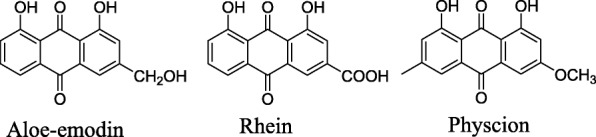
Oral and pharyngeal cancer is the most common malignant human cancers. Chemotherapy is an effective approach for anti-oral cancer therapy, while the drug tolerance and resistance remain a problem for oral cancer patients. Aloe-emodin, rhein and physcion are classified as anthraquinones, which are the main pharmacodynamic ingredients of Rheum undulatum L.. This study was undertaken to investigate whether aloe-emodin, rhein and physcion show inhibiting growth and inducing apoptosis in oral squamous cell carcinoma SCC15 cells. We found that aloe-emodin show inhibiting growth and inducing apoptosis in oral squamous cell carcinoma SCC15 cells, we also investigated the underlying mechanisms of apoptosis induced by aloe-emodin.
Thiazolyl blue tetrazolium bromide (MTT) test was used to detect cell proliferation. Cell apoptosis was detected by flow cytometry. We also used western blot analysis to detect the potential mechanisms of apoptosis.
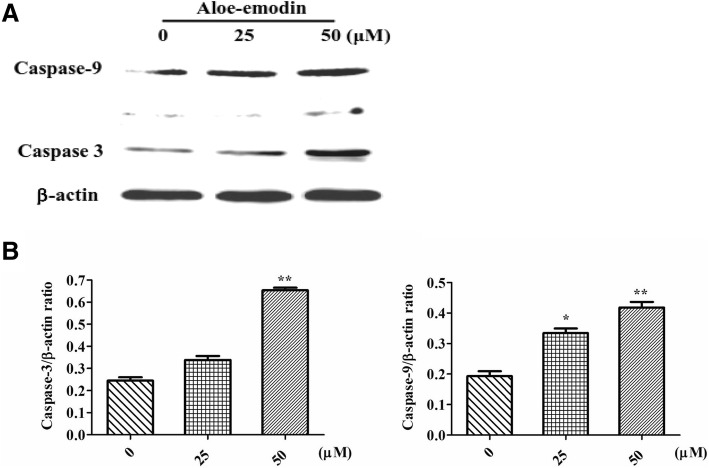
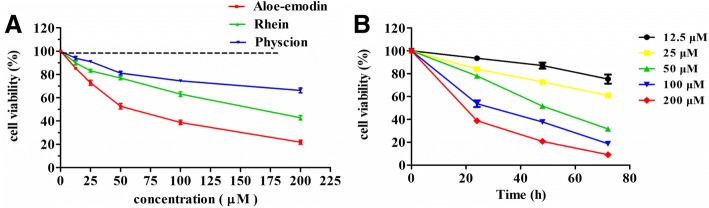
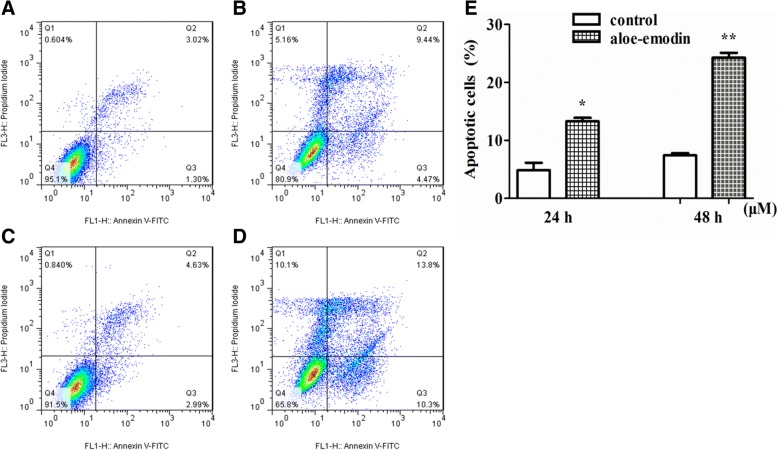
Aloe-emodin, rhein and physcion inhibit the proliferation of SCC15 cells and the order of inhibition level are aloe-emodin > Rhein > Physcion, the half maximal inhibitory concentrations (IC) value of aloe-emodin was 60.90 μM at 48 h of treatment. Aloe-emodin treatment resulted in a time- and dose-dependent decrease in cell viability and increased the apoptotic cell ratio. The results of western blotting showed the expression levels of caspase-9 and caspase-3 proteins increased following aloe-emodin treatment.
Our results revealed that aloe-emodin treatment could inhibit cell viability of SCC15 cells and the potential mechanism of inhibition might be through the induction of apoptosis by regulation of the expression levels of caspase-9 and caspase-3. This indicates that aloe-emodin may be a good agent for anti-oral cancer drug exploring.
口腔和咽癌是最常见的人类恶性肿瘤。化疗是口腔癌治疗的有效方法,而药物耐受和耐药性仍是口腔癌患者的问题。大黄素、大黄酸和大黄酚被归类为蒽醌类化合物,是大黄的主要药效成分。本研究旨在探讨大黄素、大黄酸和大黄酚对口腔鳞状细胞癌 SCC15 细胞的生长抑制和诱导凋亡作用。我们发现大黄素对口腔鳞状细胞癌 SCC15 细胞具有生长抑制和诱导凋亡作用,还研究了大黄素诱导凋亡的潜在机制。
噻唑蓝(MTT)比色法检测细胞增殖。流式细胞术检测细胞凋亡。我们还使用 Western blot 分析来检测凋亡的潜在机制。
大黄素、大黄酸和大黄酚抑制 SCC15 细胞的增殖,抑制水平的顺序为大黄素>大黄酸>大黄酚,大黄素在 48 小时的处理中,半数最大抑制浓度(IC)值为 60.90 μM。大黄素处理导致细胞活力呈时间和剂量依赖性下降,并增加凋亡细胞比例。Western blot 结果显示,大黄素处理后 caspase-9 和 caspase-3 蛋白的表达水平增加。
我们的结果表明,大黄素处理可抑制 SCC15 细胞的活力,其抑制机制可能是通过调节 caspase-9 和 caspase-3 的表达水平诱导细胞凋亡。这表明大黄素可能是一种用于探索抗口腔癌药物的良好药物。