Zheng Dao-Qiong, Petes Thomas D
Ocean College, Zhejiang University, Zhoushan 316021, Zhejiang, China.
Department of Molecular Genetics and Microbiology, Duke University School of Medicine, Durham, NC 27710, USA.
Genes (Basel). 2018 Nov 7;9(11):539. doi: 10.3390/genes9110539.
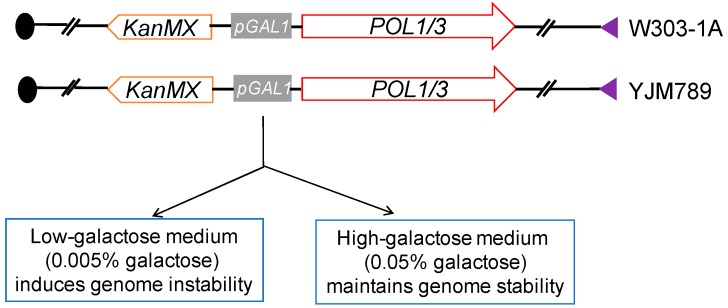
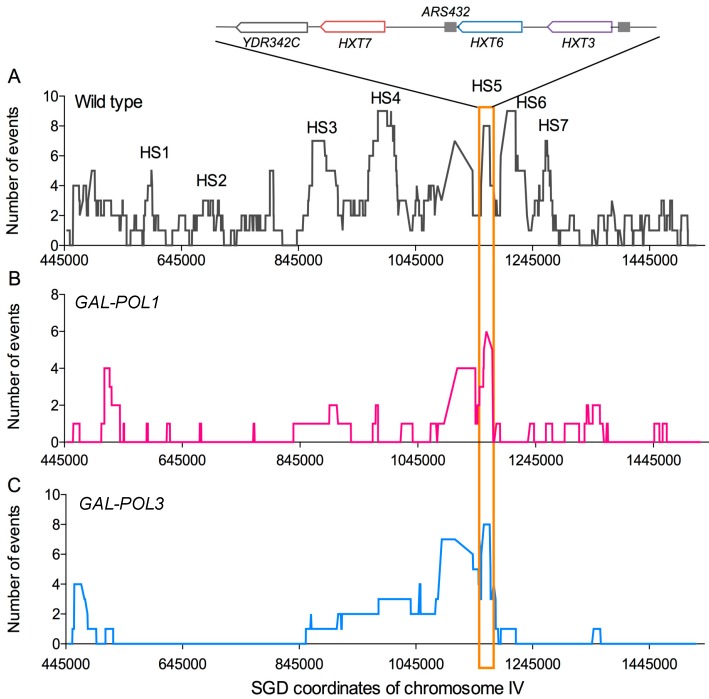
Most cells of solid tumors have very high levels of genome instability of several different types, including deletions, duplications, translocations, and aneuploidy. Much of this instability appears induced by DNA replication stress. As a model for understanding this type of instability, we have examined genome instability in yeast strains that have low levels of two of the replicative DNA polymerases: DNA polymerase α and DNA polymerase δ (Polα and Polδ). We show that low levels of either of these DNA polymerases results in greatly elevated levels of mitotic recombination, chromosome rearrangements, and deletions/duplications. The spectrum of events in the two types of strains, however, differs in a variety of ways. For example, a reduced level of Polδ elevates single-base alterations and small deletions considerably more than a reduced level of Polα. In this review, we will summarize the methods used to monitor genome instability in yeast, and how this analysis contributes to understanding the linkage between genome instability and DNA replication stress.
大多数实体瘤细胞具有多种不同类型的高度基因组不稳定性,包括缺失、重复、易位和非整倍体。这种不稳定性大多似乎是由DNA复制应激诱导的。作为理解此类不稳定性的模型,我们研究了两种复制性DNA聚合酶(DNA聚合酶α和DNA聚合酶δ,即Polα和Polδ)水平较低的酵母菌株中的基因组不稳定性。我们发现,这两种DNA聚合酶中任何一种水平较低都会导致有丝分裂重组、染色体重排以及缺失/重复水平大幅升高。然而,这两种类型菌株中的事件谱在多种方面存在差异。例如,Polδ水平降低比Polα水平降低更能显著提高单碱基改变和小缺失的发生率。在本综述中,我们将总结用于监测酵母基因组不稳定性的方法,以及这种分析如何有助于理解基因组不稳定性与DNA复制应激之间的联系。