Röhner Franziska, Breitling Carolin, Rufener Katharina S, Heinze Hans-Jochen, Hinrichs Hermann, Krauel Kerstin, Sweeney-Reed Catherine M
Neurocybernetics and Rehabilitation, Department of Neurology and Stereotactic Neurosurgery, Otto von Guericke University Magdeburg, Magdeburg, Germany.
Department of Child and Adolescent Psychiatry and Psychotherapy, Otto von Guericke University Magdeburg, Magdeburg, Germany.
Front Neurosci. 2018 Oct 23;12:761. doi: 10.3389/fnins.2018.00761. eCollection 2018.
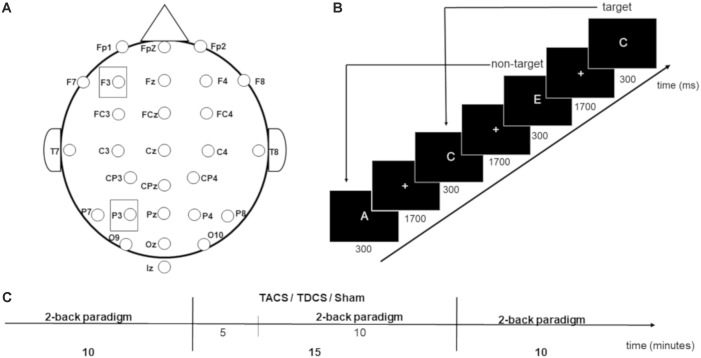
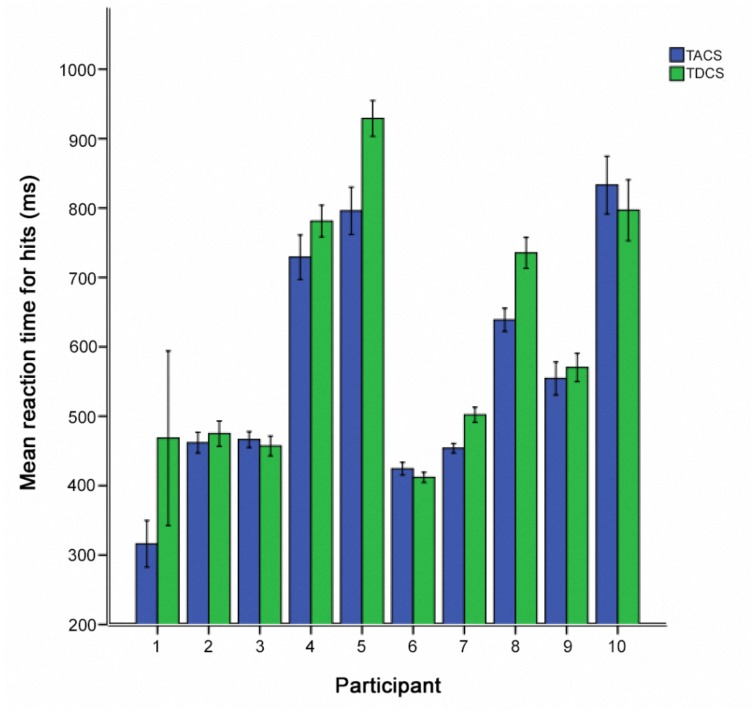
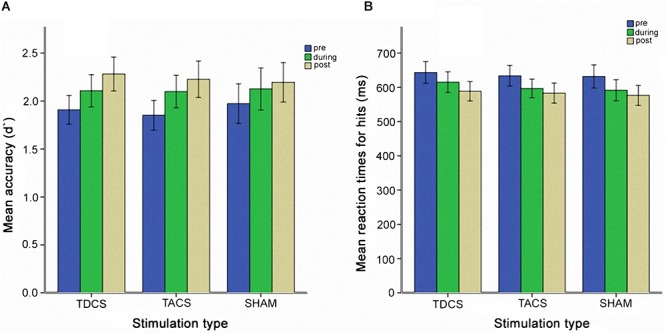
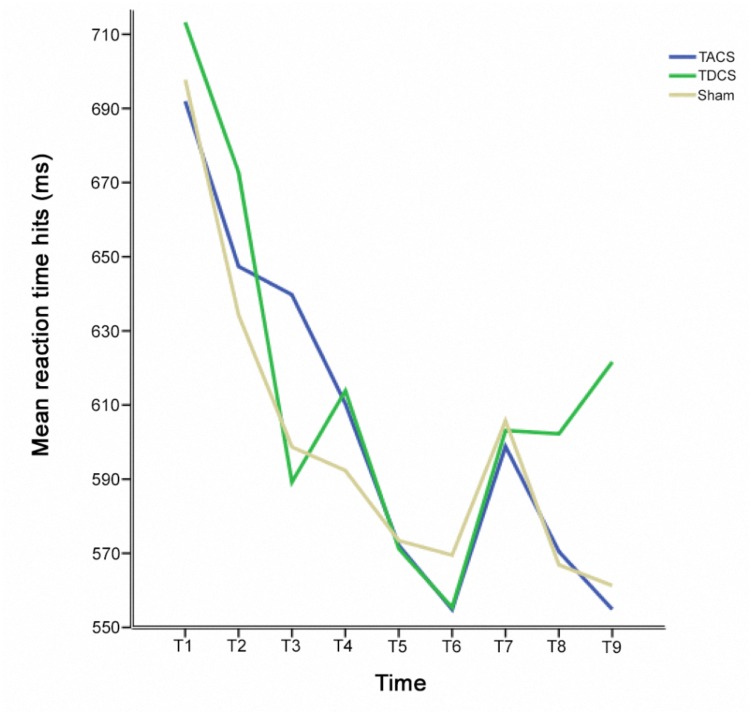
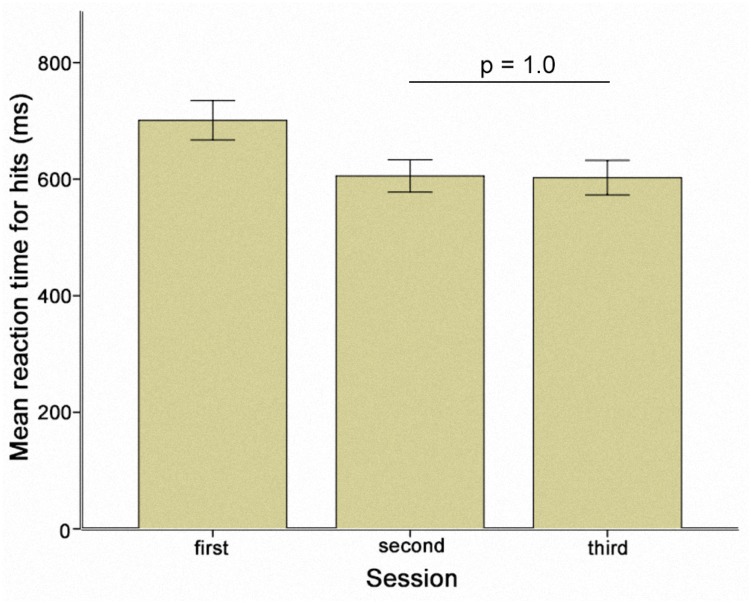
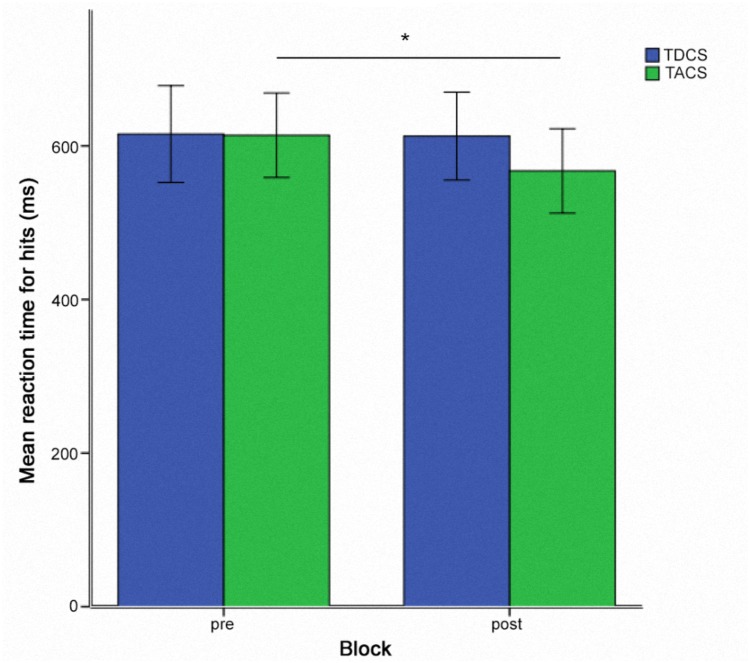
Transcranial electrical stimulation (TES) has been considered a promising tool for improving working memory (WM) performance. Recent studies have demonstrated modulation of networks underpinning WM processing through application of transcranial alternating current (TACS) as well as direct current (TDCS) stimulation. Differences between study designs have limited direct comparison of the efficacy of these approaches, however. Here we directly compared the effects of theta TACS (6 Hz) and anodal TDCS on WM, applying TACS to the frontal-parietal loop and TDCS to the dorsolateral prefrontal cortex (DLPFC). WM was evaluated using a visual 2-back WM task. A within-subject, crossover design was applied ( = 30) in three separate sessions. TACS, TDCS, and sham stimulation were administered in a counterbalanced order, and the WM task was performed before, during, and after stimulation. Neither reaction times for hits (RT-hit) nor accuracy differed according to stimulation type with this study design. A marked practice effect was noted, however, with improvement in RT-hit irrespective of stimulation type, which peaked at the end of the second session. Pre-stimulation RT-hits in session three returned to the level observed pre-stimulation in session two, irrespective of stimulation type. The participants who received sham stimulation in session one and had therefore improved their performance due to practice alone, had thus reached a plateau by session two, enabling us to pool RT-hits from sessions two and three for these participants. The pooling allowed implementation of a within-subject crossover study design, with a direct comparison of the effects of TACS and TDCS in a subgroup of participants ( = 10), each of whom received both stimulation types, in a counterbalanced order, with pre-stimulation performance the same for both sessions. TACS resulted in a greater improvement in RT-hits than TDCS ((2,18) = 4.31 = 0.03). Our findings suggest that future work optimizing the application of TACS has the potential to facilitate WM performance.
经颅电刺激(TES)被认为是改善工作记忆(WM)表现的一种有前景的工具。最近的研究表明,通过应用经颅交流电(TACS)以及直流电(TDCS)刺激,可以调节支持WM处理的神经网络。然而,研究设计的差异限制了对这些方法疗效的直接比较。在这里,我们直接比较了θ波TACS(6赫兹)和阳极TDCS对WM的影响,将TACS应用于额顶叶环路,将TDCS应用于背外侧前额叶皮层(DLPFC)。使用视觉2-back WM任务评估WM。在三个独立的实验环节中采用了被试内交叉设计(n = 30)。TACS、TDCS和假刺激以平衡的顺序进行,并且在刺激前、刺激期间和刺激后进行WM任务。在本研究设计中,根据刺激类型,命中反应时间(RT-命中)和准确性均无差异。然而,注意到有显著的练习效应,无论刺激类型如何,RT-命中均有改善,在第二个实验环节结束时达到峰值。第三个实验环节中的刺激前RT-命中恢复到第二个实验环节中刺激前观察到的水平,无论刺激类型如何。在第一个实验环节中接受假刺激并因此仅因练习而提高了表现的参与者,到第二个实验环节时已达到平台期,这使我们能够将这些参与者在第二个和第三个实验环节中的RT-命中合并。这种合并允许实施被试内交叉研究设计,在一组参与者(n = 10)中直接比较TACS和TDCS的效果,其中每个参与者以平衡的顺序接受两种刺激类型,两个实验环节的刺激前表现相同。TACS导致RT-命中的改善比TDCS更大(F(2,18) = 4.31,p = 0.03)。我们的研究结果表明,未来优化TACS应用的工作有可能促进WM表现。