Godoy-Vitorino Filipa, Romaguera Josefina, Zhao Chunyu, Vargas-Robles Daniela, Ortiz-Morales Gilmary, Vázquez-Sánchez Frances, Sanchez-Vázquez Maria, de la Garza-Casillas Manuel, Martinez-Ferrer Magaly, White James Robert, Bittinger Kyle, Dominguez-Bello Maria Gloria, Blaser Martin J
Microbiome Lab, Department of Microbiology and Medical Zoology, School of Medicine, Medical Sciences Campus, University of Puerto Rico, San Juan, PR, United States.
Microbial Ecology and Genomics Laboratory, Department of Natural Sciences, Inter American University of Puerto Rico, San Juan, PR, United States.
Front Microbiol. 2018 Oct 23;9:2533. doi: 10.3389/fmicb.2018.02533. eCollection 2018.
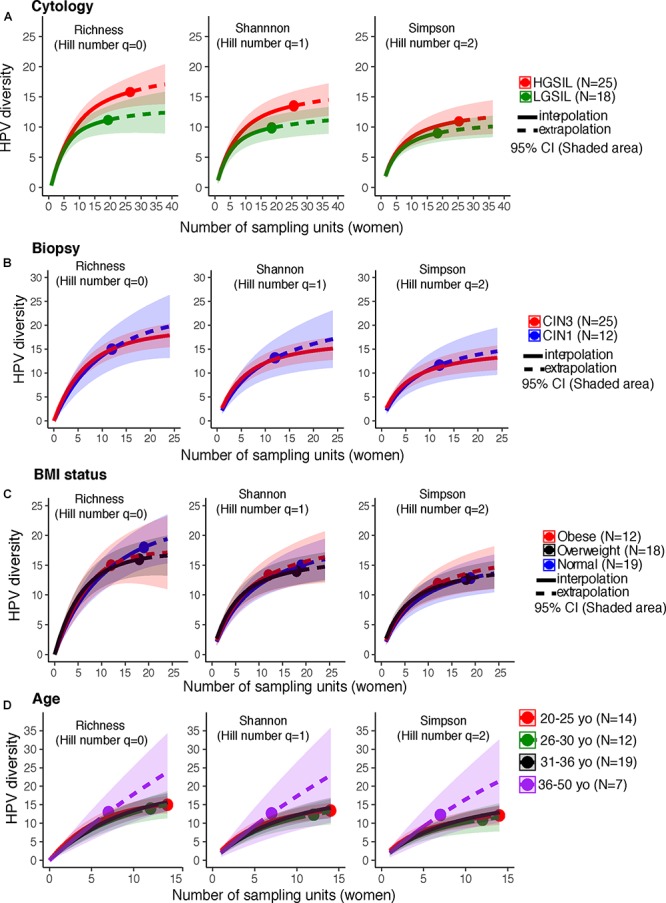
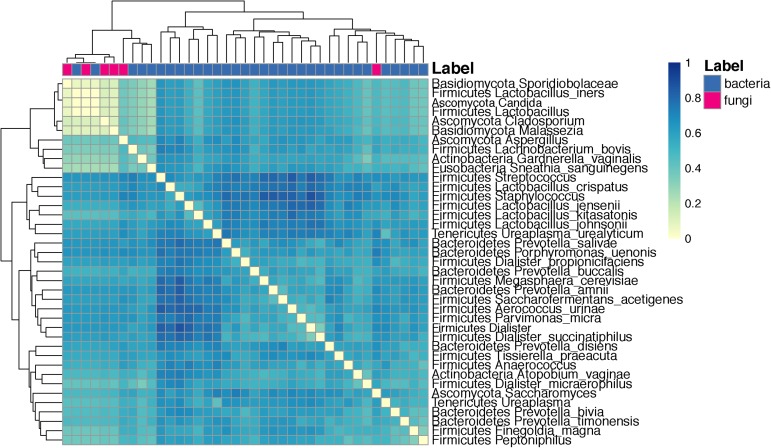
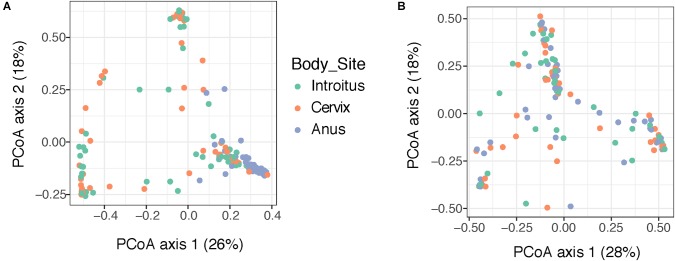
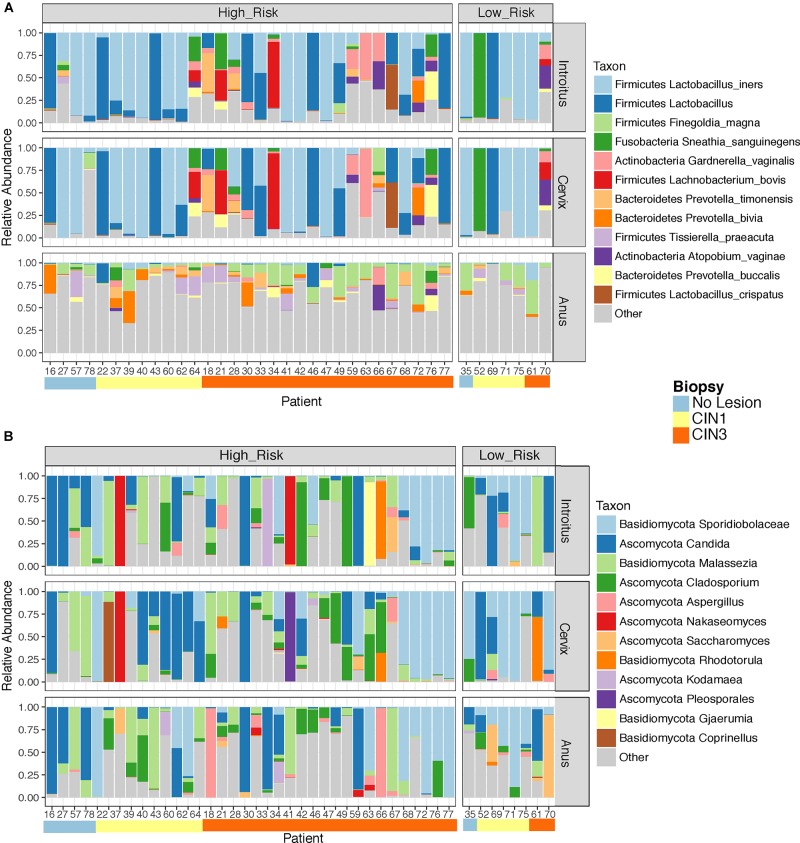
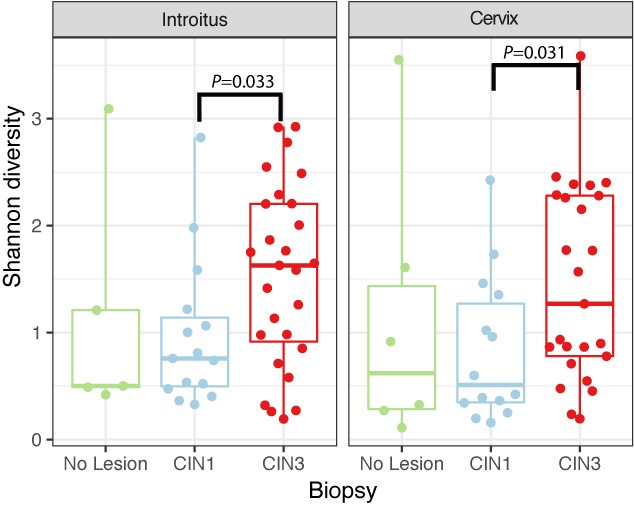
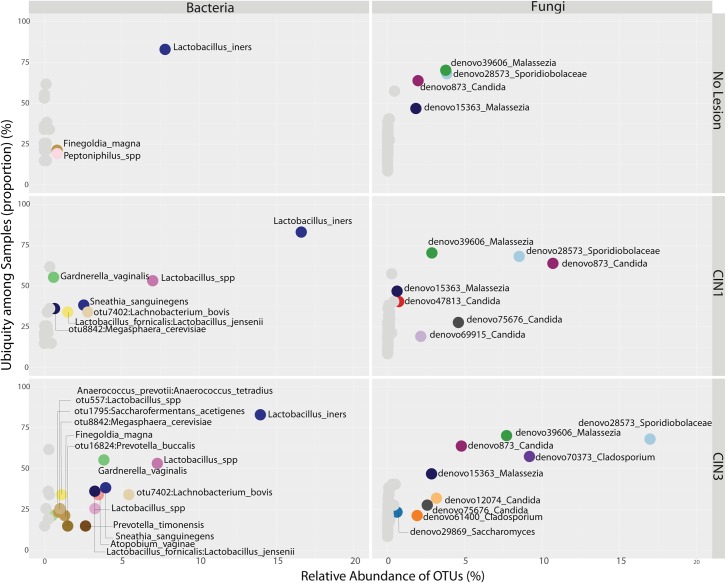
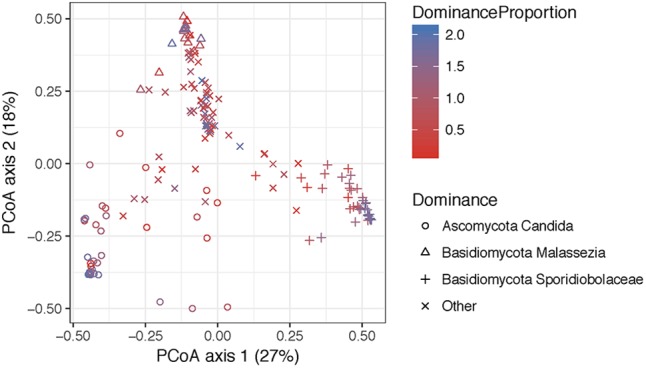
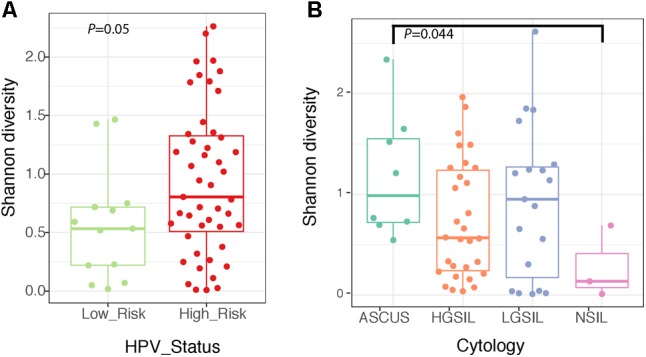
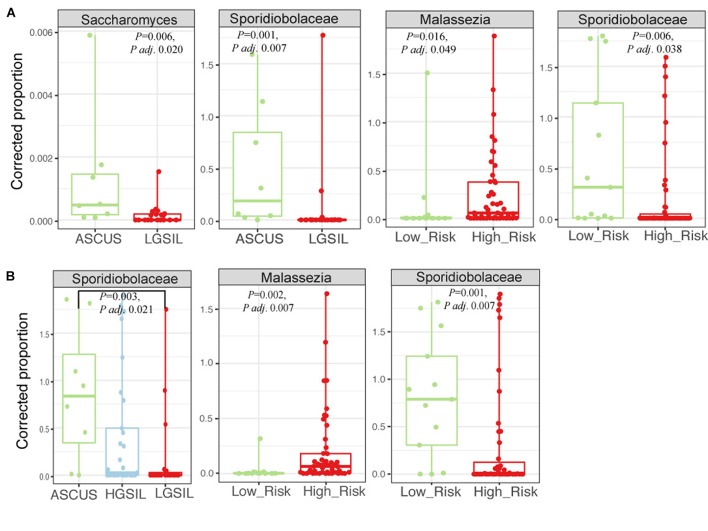
The human cervicovaginal microbiota resides at an interface between the host and the environment and may affect susceptibility to disease. Puerto Rican women have high human papillomavirus (HPV) infection and cervical cancer rates. We hypothesized that the population structure of the cervicovaginal bacterial and fungal biota changed with cervical squamous intraepithelial lesions and HPV infections. DNA was extracted from cervix, introitus, and anal sites of 62 patients attending high-risk San Juan clinics. The 16S rRNA V4 region and ITS-2 fungal regions were amplified and sequenced using Illumina technology. HPV genotyping was determined by reverse hybridization with the HPV SPF10-LiPA25 kit. HPV prevalence was 84% of which ∼44% subjects were infected with high-risk HPV, ∼35% were co-infected with as many as 9 HPV types and ∼5% were infected with exclusively low-risk HPV types. HPV diversity did not change with cervical dysplasia. Cervical bacteria were more diverse in patients with CIN3 pre-cancerous lesions. We found enrichment of and in patients with CIN3 lesions. We found no significant bacterial biomarkers associated with HPV infections. Fungal diversity was significantly higher in cervical samples with high-risk HPV and introitus samples of patients with Atypical Squamous Cells of Undetermined Significance (ASCUS). Fungal biomarker signatures for vagina and cervix include Sporidiobolaceae and for ASCUS, and for high-risk HPV infections. Our combined data suggests that specific cervicovaginal bacterial and fungal populations are related to the host epithelial microenvironment, and could play roles in cervical dysplasia.
人类宫颈阴道微生物群存在于宿主与环境的界面处,可能会影响疾病易感性。波多黎各女性的人乳头瘤病毒(HPV)感染率和宫颈癌发病率较高。我们假设宫颈阴道细菌和真菌生物群的种群结构会随着宫颈鳞状上皮内病变和HPV感染而发生变化。从圣胡安高危诊所就诊的62名患者的宫颈、阴道口和肛门部位提取DNA。使用Illumina技术对16S rRNA V4区域和ITS-2真菌区域进行扩增和测序。通过与HPV SPF10-LiPA25试剂盒进行反向杂交来确定HPV基因分型。HPV感染率为84%,其中约44%的受试者感染高危HPV,约35%的受试者同时感染多达9种HPV类型,约5%的受试者仅感染低危HPV类型。HPV多样性并未随宫颈发育异常而改变。CIN3癌前病变患者的宫颈细菌种类更多。我们发现CIN3病变患者中 和 有所富集。我们未发现与HPV感染相关的显著细菌生物标志物。高危HPV宫颈样本和意义不明确的非典型鳞状细胞(ASCUS)患者的阴道口样本中的真菌多样性显著更高。阴道和宫颈的真菌生物标志物特征包括,ASCUS样本中的掷孢酵母科和 ,以及高危HPV感染样本中的 。我们的综合数据表明,特定的宫颈阴道细菌和真菌种群与宿主上皮微环境相关,并可能在宫颈发育异常中发挥作用。