Peterson P K, Sharp B, Gekker G, Brummitt C, Keane W F
J Clin Invest. 1987 Sep;80(3):824-31. doi: 10.1172/JCI113140.
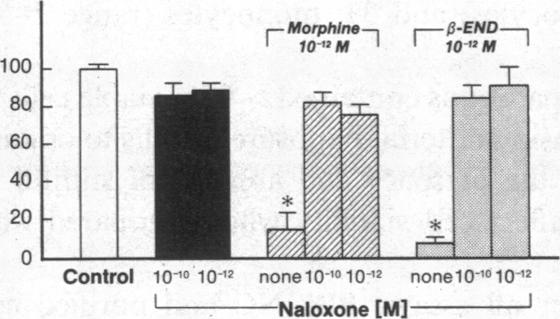
Mounting evidence suggests that opiate addiction and stress are associated with impaired cell-mediated immunity. We tested the hypothesis that morphine and the endogenous opioid beta-endorphin (beta-END), a pituitary peptide released in increased concentrations during stress, can suppress the production of the key macrophage-activating lymphokine interferon-gamma (IFN-gamma) by cultured human peripheral blood mononuclear cells (PBMNC). Using a radioimmunoassay to measure IFN-gamma, we found that exposure of PBMNC to biologically relevant concentrations of both opioids significantly inhibited IFN-gamma generation by cells stimulated with concanavalin A and varicella zoster virus. Studies of the mechanism of suppression revealed (a) a classical opioid receptor is involved (suppression was antagonized by naloxone and was specific for the NH2 terminus of beta-END), (b) monocytes are the primary target cell for opioids (monocyte-depleted lymphocyte preparations showed little suppression), and (c) reactive oxygen intermediates (ROI) and prostaglandin E2 are important mediators (scavengers of ROI and indomethacin eliminated the suppression). Based on these findings we suggest that opioid-triggered release of inhibitory monocyte metabolites may play a role in the immunodeficiency associated with narcotic addiction and stress.
越来越多的证据表明,阿片类药物成瘾和应激与细胞介导的免疫功能受损有关。我们检验了以下假设:吗啡和内源性阿片肽β-内啡肽(β-END),一种在应激期间浓度升高时释放的垂体肽,可抑制培养的人外周血单核细胞(PBMNC)产生关键的巨噬细胞激活细胞因子γ干扰素(IFN-γ)。使用放射免疫测定法测量IFN-γ,我们发现将PBMNC暴露于两种阿片类药物的生物学相关浓度下,可显著抑制伴刀豆球蛋白A和水痘带状疱疹病毒刺激的细胞产生IFN-γ。对抑制机制的研究表明:(a)涉及一种经典的阿片受体(抑制作用可被纳洛酮拮抗,且对β-END的NH2末端具有特异性);(b)单核细胞是阿片类药物的主要靶细胞(去除单核细胞的淋巴细胞制剂几乎没有抑制作用);(c)活性氧中间体(ROI)和前列腺素E2是重要的介质(ROI清除剂和吲哚美辛可消除抑制作用)。基于这些发现,我们认为阿片类药物触发的抑制性单核细胞代谢产物的释放可能在与麻醉品成瘾和应激相关的免疫缺陷中起作用。