NICM Health Research Institute, Western Sydney University, Locked Bag 1797, Penrith, NSW, 2751, Australia.
School of Women's and Children's Health, UNSW, Royal Hospital for Women, Barker St, Randwick, NSW, 2013, Australia.
BMC Complement Altern Med. 2018 Nov 8;18(1):298. doi: 10.1186/s12906-018-2358-7.
Polycystic Ovary Syndrome (PCOS) is a common female reproductive disorder with multiple manifestations. Weight management is a key therapeutic goal. Acupuncture is a potential adjunctive weight loss treatment in non-PCOS populations. We aimed to engage patients in co-design and assess the feasibility and acceptability of methods for a randomised controlled trial (RCT) on acupuncture and telephone-based health coaching for weight management in overweight or obese women with PCOS using qualitative methods.
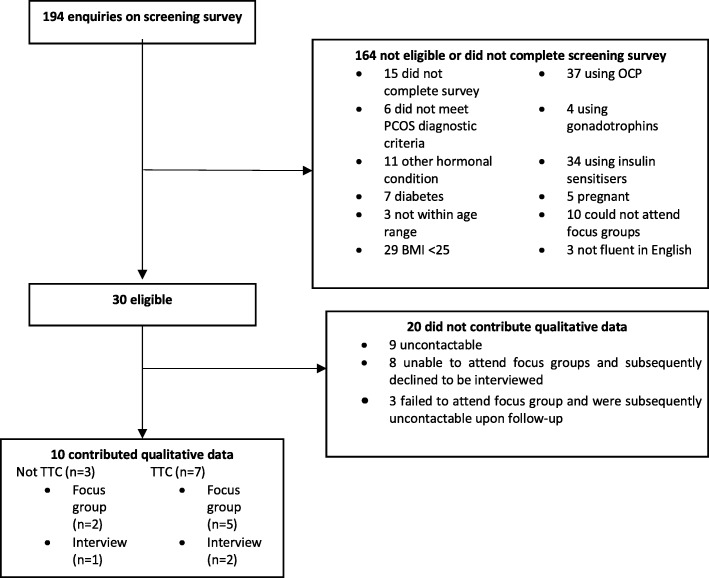
We recruited women who had PCOS and were aged 18-45 years and with a body mass index of 25 kg/m and over, using social media. Two face-to-face focus group meetings and three semi-structured telephone interviews were conducted (n = 10). We analysed data using thematic analysis and aimed to compare and contrast motivations for joining the trial between women who were actively trying to conceive (n = 7) and not trying to conceive (n = 3). Attitudes to, knowledge and experiences of acupuncture; perceptions and attitudes towards the interventions in the RCT (real acupuncture, sham acupuncture and telephone-based health coaching); the outcomes of importance; and barriers and facilitators to successful trial recruitment and retention were collected.
Women were both acupuncture-naive and acupuncture-experienced. Overall, attitudes towards acupuncture were positive, and the trial design was acceptable with appointment flexibility requested. Ideal enrolment time, if women were trying to conceive, was six months prior to conception. Women supported three-month intervention and the use of sham acupuncture as a control. Financial incentives were not believed to be necessary, and women spoke of altruistic intentions in enrolling for such a trial. Women who were trying to conceive voiced a need for support from their family, health coaches, and peers. The telephone-based health coaching offered welcome support and accountability, noted as possible facilitators of weight loss.
Our findings show that acupuncture is a likely acceptable adjunct to lifestyle interventions for weight loss in PCOS, and that a sham-controlled trial is feasible and acceptable to PCOS women. Further research is required in order to evaluate the efficacy of acupuncture together with lifestyle for weight management in PCOS.
多囊卵巢综合征(PCOS)是一种常见的女性生殖系统疾病,具有多种表现。体重管理是一个关键的治疗目标。针灸是一种潜在的非 PCOS 人群辅助减肥治疗方法。我们旨在让患者参与共同设计,并使用定性方法评估超重或肥胖的 PCOS 女性接受针灸和基于电话的健康指导进行体重管理的随机对照试验(RCT)的可行性和可接受性。
我们通过社交媒体招募年龄在 18-45 岁之间、体重指数(BMI)为 25kg/m2 及以上且患有 PCOS 的女性。我们进行了两次面对面的焦点小组会议和三次半结构化电话访谈(n=10)。我们使用主题分析对数据进行分析,并旨在比较和对比积极尝试怀孕(n=7)和不尝试怀孕(n=3)的女性参加试验的动机。收集了对针灸的态度、知识和经验;对 RCT 中干预措施的看法和态度(真实针灸、假针灸和基于电话的健康指导);重要的结果;以及成功招募和保留试验参与者的障碍和促进因素。
女性对针灸既不了解也有经验。总体而言,对针灸的态度是积极的,试验设计是可以接受的,并要求预约灵活。如果女性试图怀孕,理想的入组时间是怀孕前六个月。女性支持三个月的干预和使用假针灸作为对照。不认为需要经济激励,女性提到了参加此类试验的利他主义意图。试图怀孕的女性表示需要来自家人、健康教练和同龄人的支持。基于电话的健康指导提供了受欢迎的支持和问责制,被认为是减肥的可能促进因素。
我们的研究结果表明,针灸可能是 PCOS 患者生活方式干预减肥的一种可接受的辅助方法,假对照试验对 PCOS 女性是可行和可接受的。需要进一步研究以评估针灸结合生活方式治疗 PCOS 患者体重管理的疗效。