Centre for Research in Agricultural Genomics (CRAG) CSIC-IRTA-UAB-UB, 08193, Barcelona, Spain.
Max Planck Institute of Molecular Plant Physiology, D-14476, Potsdam-Golm, Germany.
Nat Commun. 2018 Nov 8;9(1):4680. doi: 10.1038/s41467-018-06861-3.
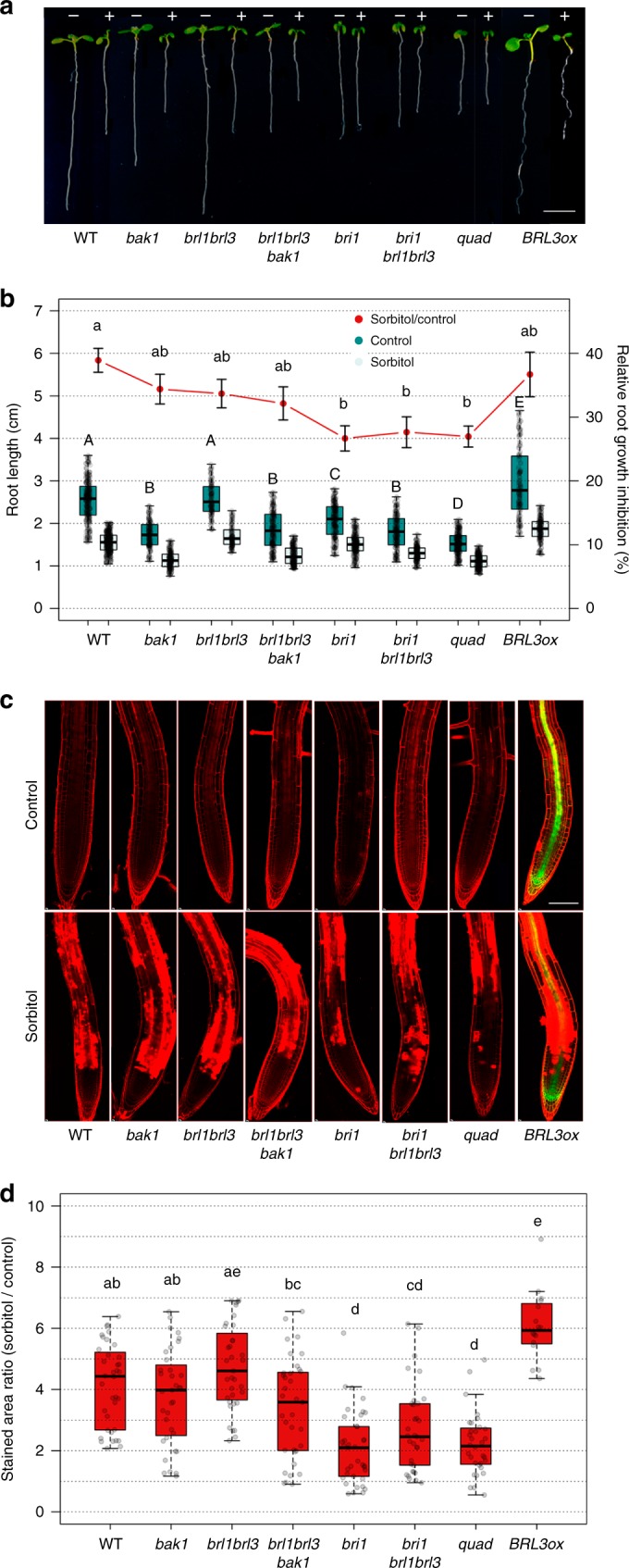
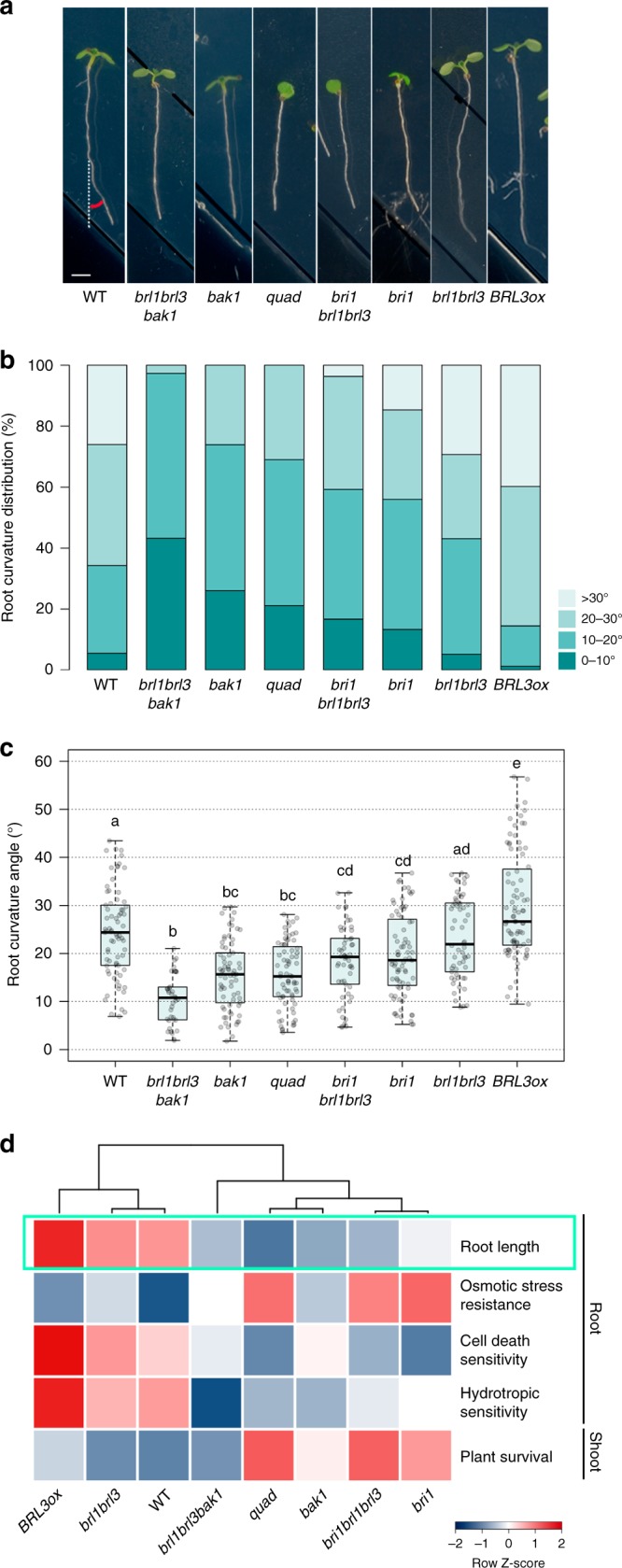
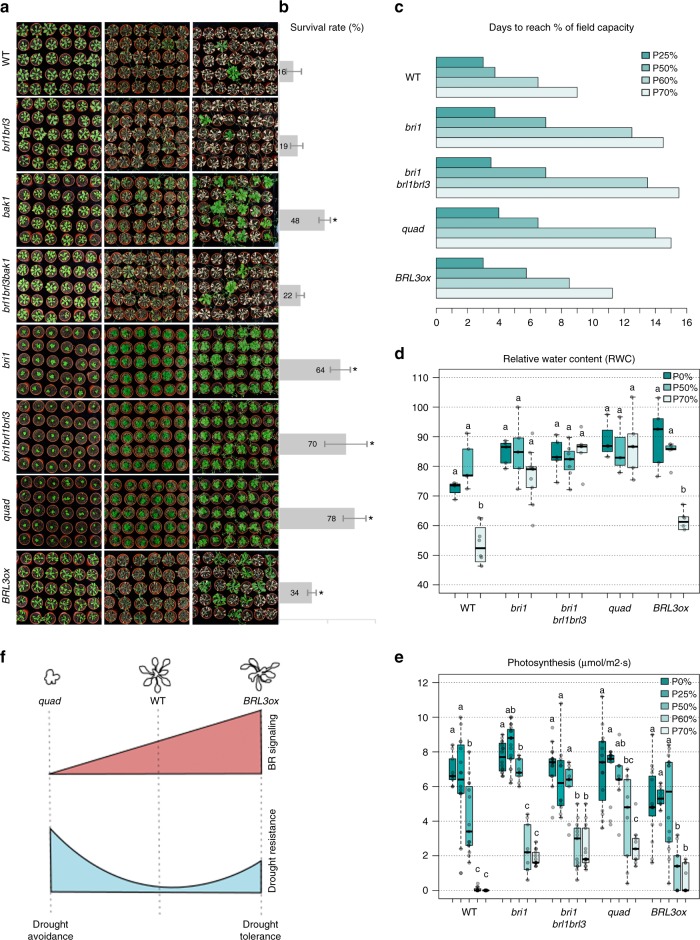
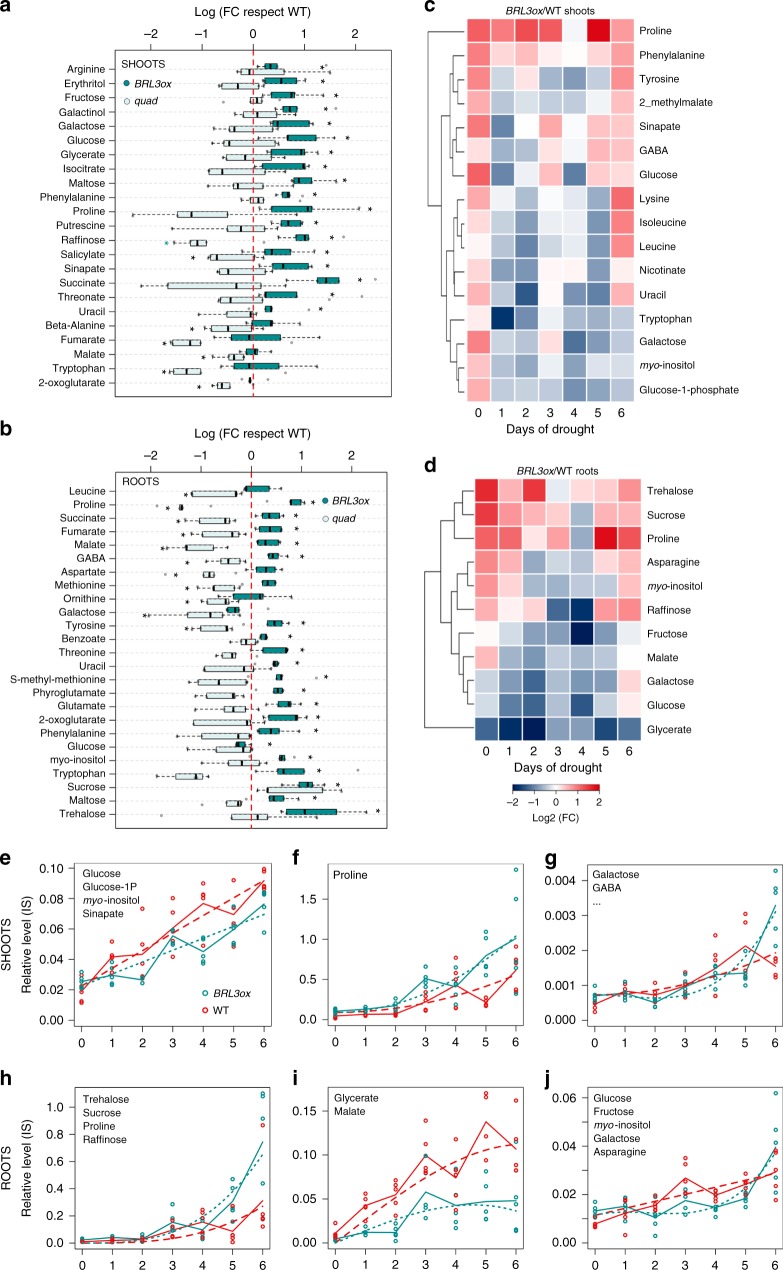
Drought represents a major threat to food security. Mechanistic data describing plant responses to drought have been studied extensively and genes conferring drought resistance have been introduced into crop plants. However, plants with enhanced drought resistance usually display lower growth, highlighting the need for strategies to uncouple drought resistance from growth. Here, we show that overexpression of BRL3, a vascular-enriched member of the brassinosteroid receptor family, can confer drought stress tolerance in Arabidopsis. Whereas loss-of-function mutations in the ubiquitously expressed BRI1 receptor leads to drought resistance at the expense of growth, overexpression of BRL3 receptor confers drought tolerance without penalizing overall growth. Systematic analyses reveal that upon drought stress, increased BRL3 triggers the accumulation of osmoprotectant metabolites including proline and sugars. Transcriptomic analysis suggests that this results from differential expression of genes in the vascular tissues. Altogether, this data suggests that manipulating BRL3 expression could be used to engineer drought tolerant crops.
干旱是粮食安全的主要威胁。人们已经对描述植物对干旱响应的机制数据进行了广泛研究,并将赋予抗旱性的基因导入到作物中。然而,具有增强抗旱性的植物通常表现出较低的生长,这凸显了需要采取策略将抗旱性与生长解耦。在这里,我们表明,过量表达 BRASSINOSTEROID 受体家族中血管富集的成员 BRL3 可以在拟南芥中赋予耐旱性。而在广泛表达的 BRI1 受体中功能丧失突变会导致以生长为代价的抗旱性,而过量表达 BRL3 受体则赋予耐旱性而不会损害整体生长。系统分析表明,在干旱胁迫下,增加的 BRL3 会触发包括脯氨酸和糖在内的渗透保护剂代谢物的积累。转录组分析表明,这是由于血管组织中基因的差异表达所致。总的来说,这些数据表明,操纵 BRL3 的表达可以用于工程耐旱作物。