Kulkarni Anshul K, Louie Ke'ale W, Yatabe Marilia, Ruellas Antonio Carlos de Oliveira, Mochida Yoshiyuki, Cevidanes Lucia H S, Mishina Yuji, Zhang Honghao
Department of Biologic and Materials Sciences, School of Dentistry, University of Michigan, Ann Arbor, MI, United States.
Department of Orthodontics and Pediatric Dentistry, School of Dentistry, University of Michigan, Ann Arbor, MI, United States.
Front Physiol. 2018 Oct 25;9:1484. doi: 10.3389/fphys.2018.01484. eCollection 2018.
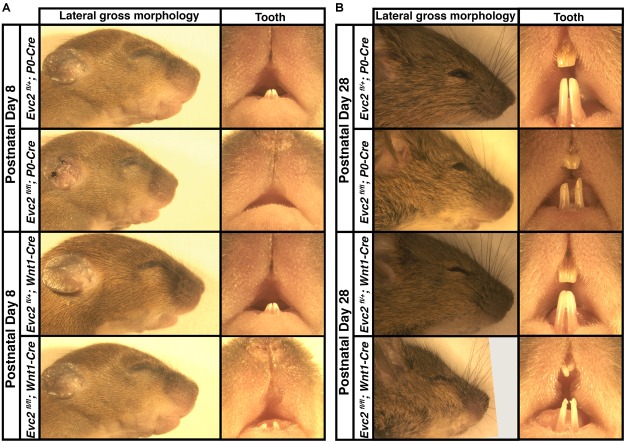
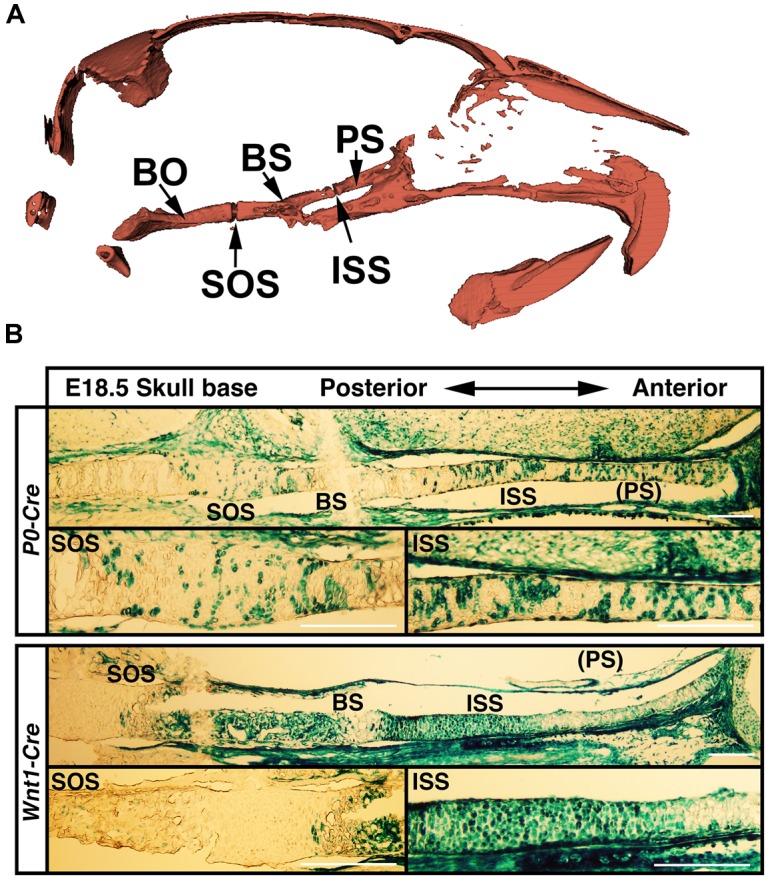
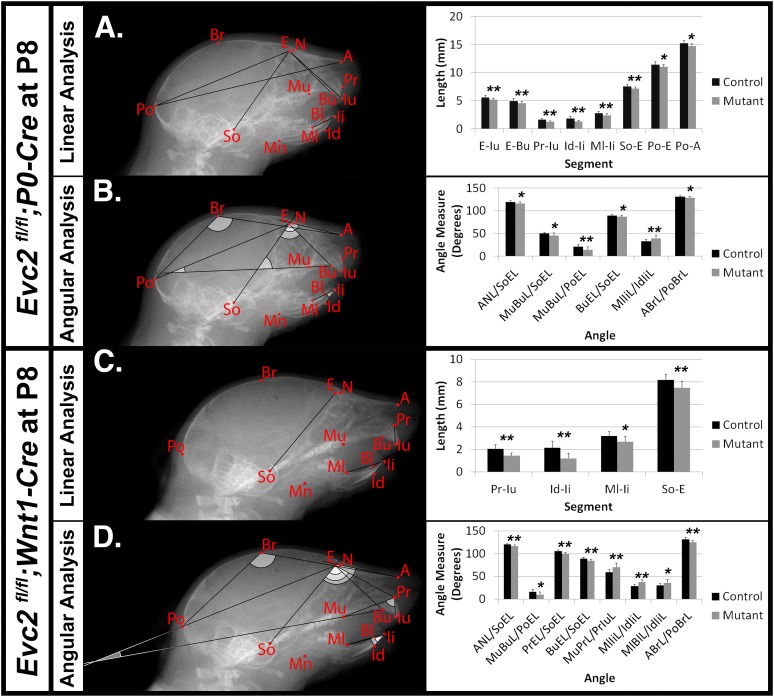
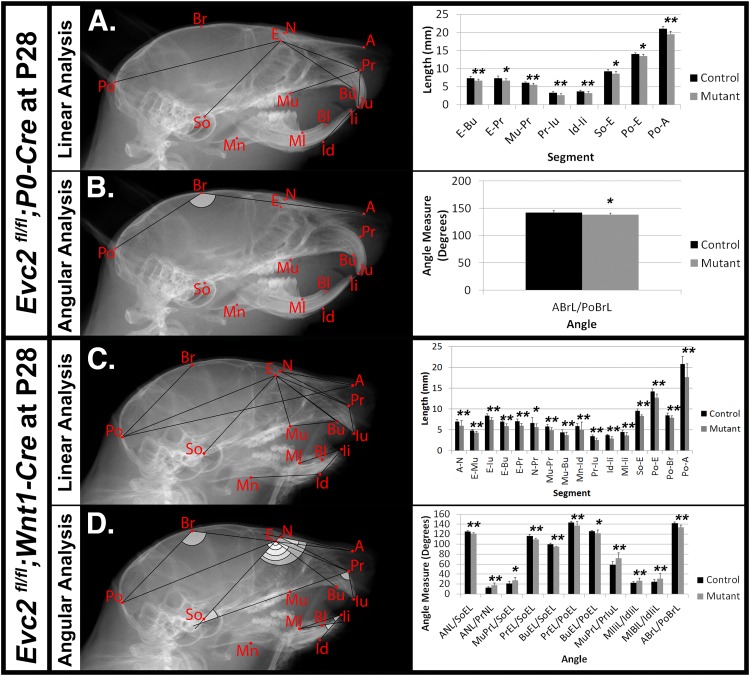
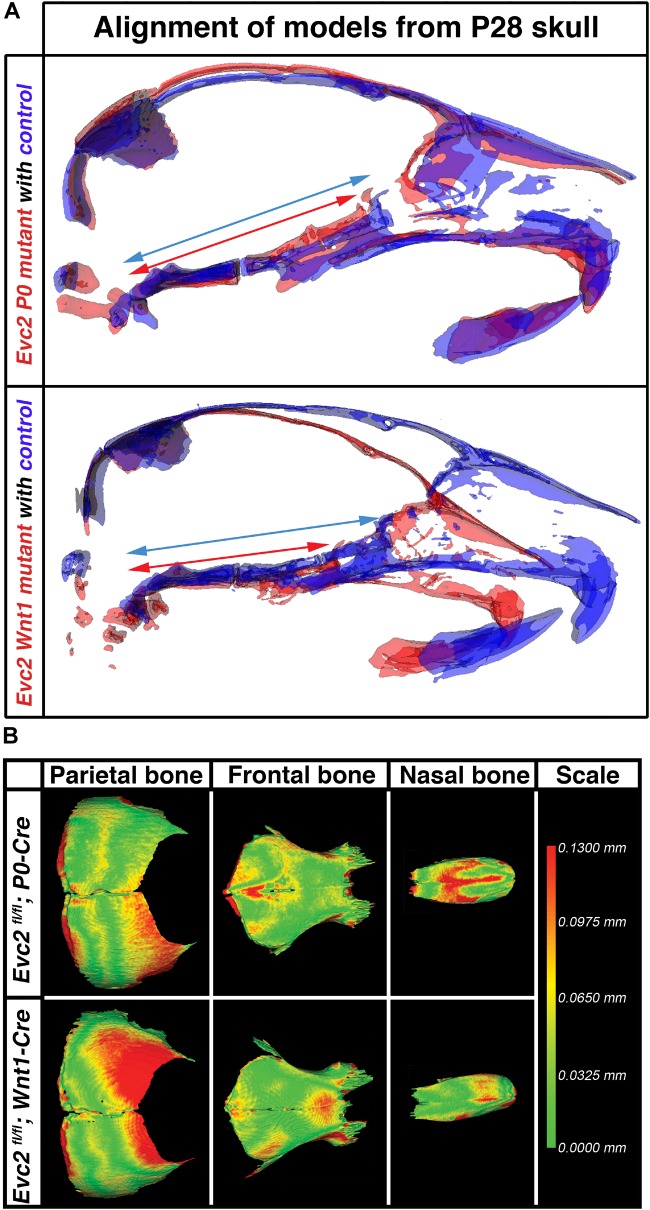
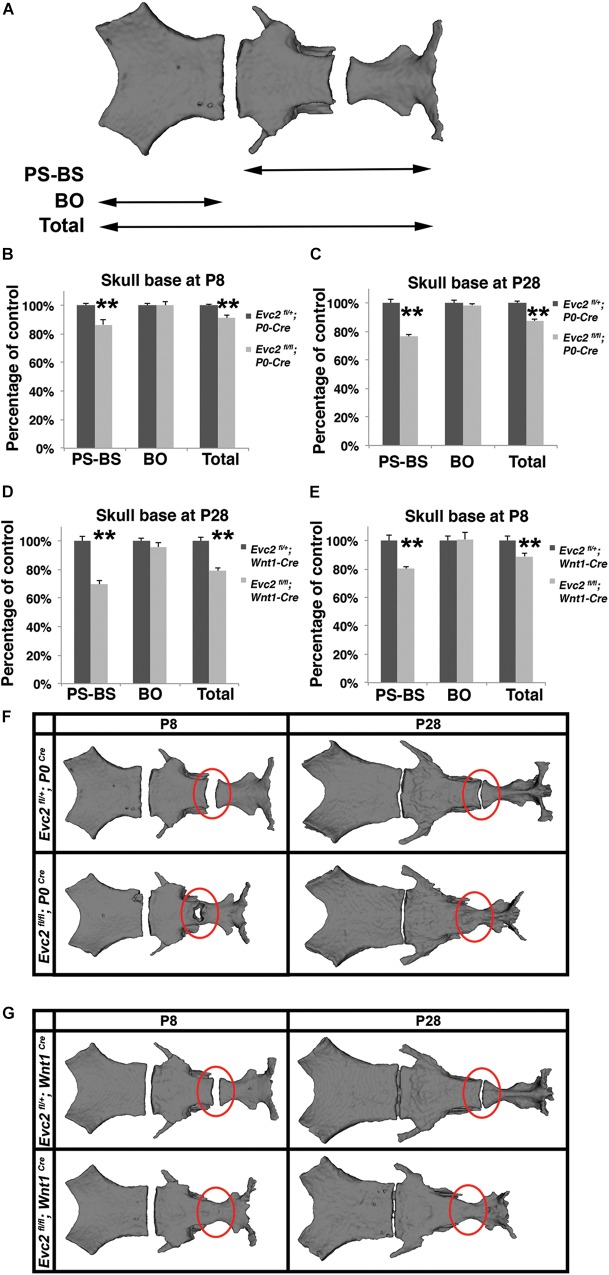
Ellis-van Creveld (EvC) syndrome is an autosomal recessive chondrodysplastic disorder. Affected patients present a wide spectrum of symptoms including short stature, postaxial polydactyly, and dental abnormalities. We previously disrupted , one of the causative genes for EvC syndrome, in mice using a neural crest-specific, -mediated approach (i.e., P0-, referred to as mutants). Despite the fact that predominantly targets the mid-facial region, we reported that many mid-facial defects identified in global mutants are not present in mutants at postnatal day 8 (P8). In the current study, we used multiple Cre lines ( and , respectively), to specifically delete in neural crest-derived tissues and compared the resulting mid-facial defects at multiple time points (P8 and P28, respectively). While both Cre lines indistinguishably targeted the mid-facial region, they differentially targeted the anterior portion of the skull base. By comprehensively analyzing the shapes of conditional mutant skulls, we detected differentially affected mid-facial defects in mutants and mutants. Micro-CT analysis of the skull base further revealed that the mutation leads to a differentially affected skull base, caused by premature closure of the intersphenoid synchondrosis (presphenoidal synchondrosis), which limited the elongation of the anterior skull base during the postnatal development of the skull. Given the importance of the skull base in mid-facial bone development, our results suggest that loss of function of within the skull base secondarily leads to many aspects of the mid-facial defects developed by the EvC syndrome.
埃利斯-范克里维尔德(EvC)综合征是一种常染色体隐性软骨发育不良疾病。受影响的患者表现出广泛的症状,包括身材矮小、轴后多指畸形和牙齿异常。我们之前使用神经嵴特异性、介导的方法(即P0 -,称为突变体)在小鼠中破坏了EvC综合征的致病基因之一。尽管主要靶向面部中部区域,但我们报告称,在出生后第8天(P8),在全球突变体中发现的许多面部中部缺陷在突变体中并不存在。在当前研究中,我们使用了多种Cre系(分别为和),以特异性删除神经嵴衍生组织中的,并在多个时间点(分别为P8和P28)比较由此产生的面部中部缺陷。虽然两种Cre系都无差别地靶向面部中部区域,但它们对颅底前部的靶向有所不同。通过全面分析条件性突变体颅骨的形状,我们在突变体和突变体中检测到了不同程度受影响的面部中部缺陷。颅底的微CT分析进一步显示,突变导致颅底受到不同程度的影响,这是由蝶骨间软骨结合(蝶前软骨结合)过早闭合引起的,这限制了颅骨出生后发育过程中颅底前部的伸长。鉴于颅底在面部中部骨骼发育中的重要性,我们的结果表明,颅底内功能丧失继而导致了EvC综合征所出现的面部中部缺陷的许多方面。