State Key Laboratory of Systematic and Evolutionary Botany, Institute of Botany, Chinese Academy of Sciences, 20 Nanxincun, Xiangshan, Beijing, 100093, China.
College of Life Sciences, Shanxi Normal University, 1 Gongyuan, Yaodu, Linfen, 041000, China.
BMC Evol Biol. 2018 Nov 9;18(1):166. doi: 10.1186/s12862-018-1277-z.
Drylands cover nearly 41% of Earth's land surface and face a high risk of degradation worldwide. However, the actual timeframe during which dryland floras rose on a global scale remains unknown. Zygophyllaceae, an important characteristic component of dryland floras worldwide, offers an ideal model group to investigate the diversification of dryland floras. Here, we used an integration of the phylogenetic, molecular dating, biogeographic, and diversification methods to investigate the timing and patterns of lineage accumulation for Zygophyllaceae overall and regionally. We then incorporated the data from other dominant components of dryland floras in different continents to investigate the historical construction of dryland floras on a global scale.
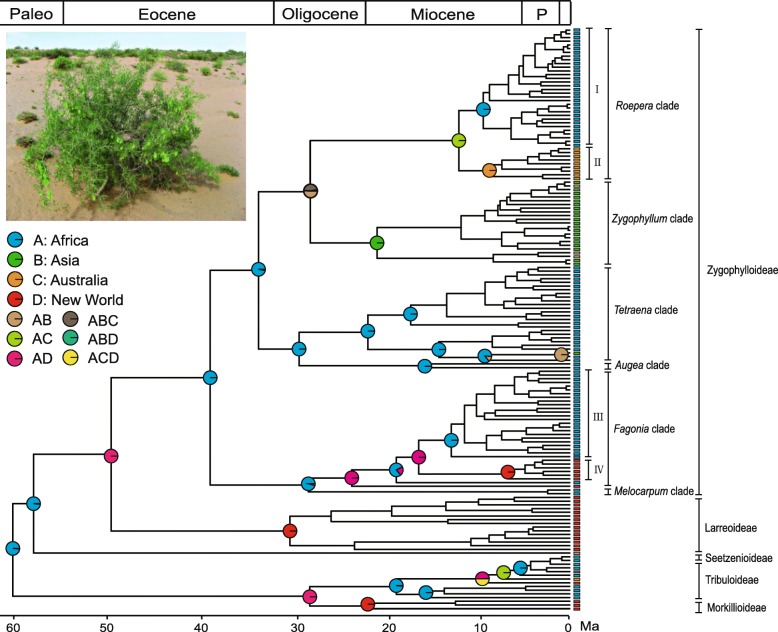
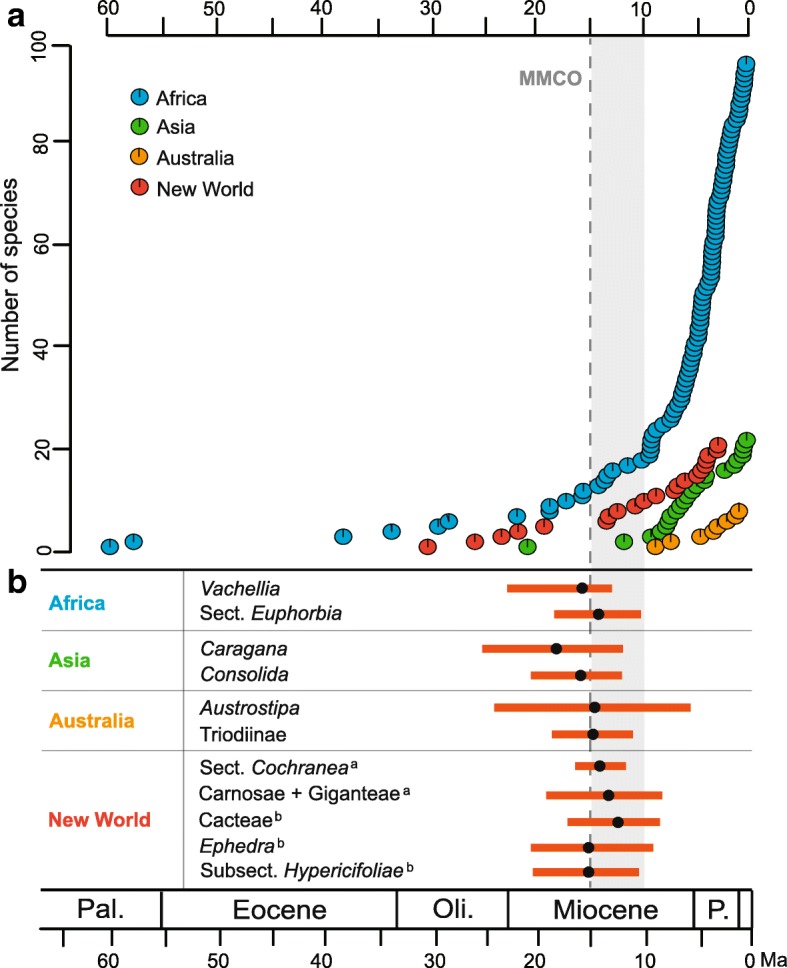
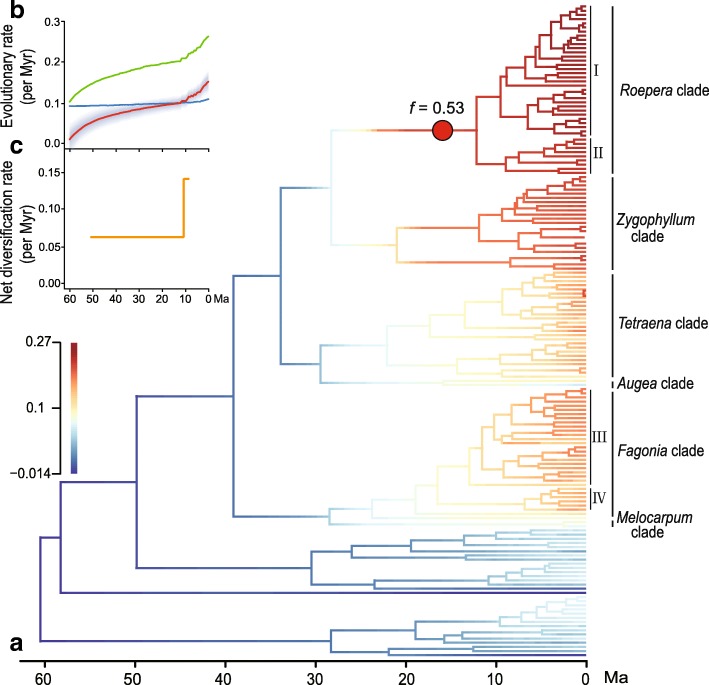
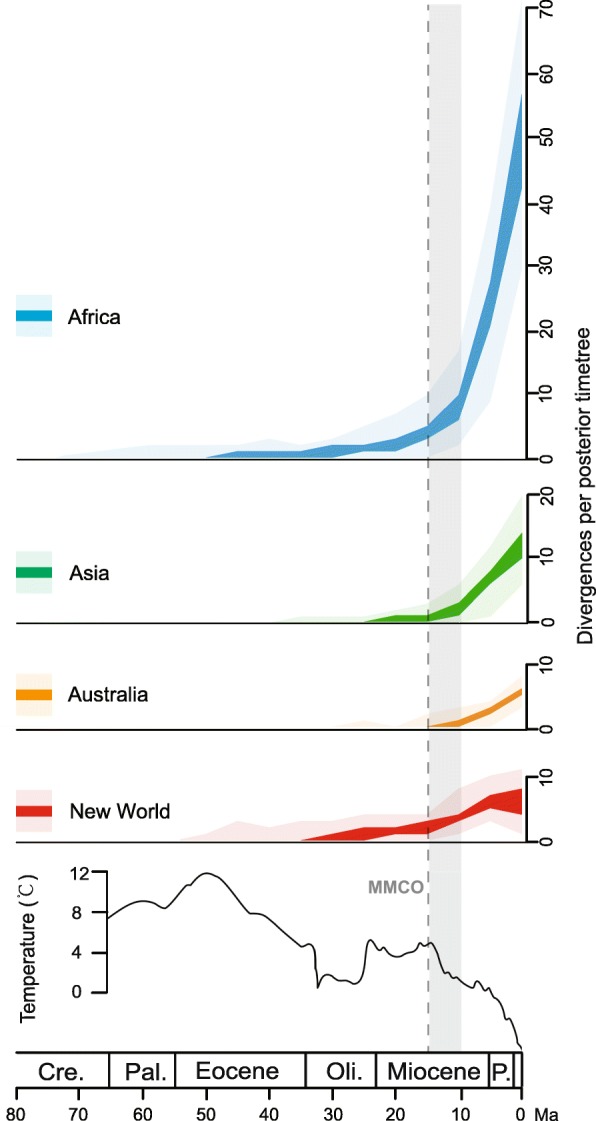
We provide the most comprehensive phylogenetic tree for Zygophyllaceae so far based on four plastid and nuclear markers. Detailed analyses indicate that Zygophyllaceae colonized Africa, Asia, Australia, and the New World at different periods, sometimes multiple times, but Zygophyllaceae lineages in the four regions all experienced a rapid accumulation beginning at the mid-late Miocene (~ 15-10 Ma). Other eleven essential elements of dryland floras become differentiated at the same time.
Our results suggest that the rise of global dryland floras is near-synchronous and began at the mid-late Miocene, possibly resulting from the mid-Miocene global cooling and regional orogenetic and climate changes. The mid-late Miocene is an essential period for the assembly and evolution of global dryland floras.
旱地覆盖了地球陆地表面的近 41%,在全球范围内面临着严重的退化风险。然而,旱地植物区系在全球范围内大规模崛起的实际时间框架仍然未知。蒺藜科是全球旱地植物区系的一个重要特征组成部分,为研究旱地植物区系的多样化提供了一个理想的模式群体。在这里,我们综合运用系统发育、分子定年、生物地理和多样化方法,研究了蒺藜科整体和区域的谱系积累的时间和模式。然后,我们将来自不同大陆旱地植物区系其他主要组成部分的数据纳入其中,以研究全球旱地植物区系的历史构建。
我们提供了迄今为止最全面的蒺藜科系统发育树,基于四个质体和核标记。详细分析表明,蒺藜科在不同时期,有时是多次,分别在非洲、亚洲、澳大利亚和新大陆进行了殖民化,但四个地区的蒺藜科谱系都在中新世中期至晚期(约 15-10 百万年前)经历了快速的积累。其他十一个旱地植物区系的重要组成部分也在同一时间分化。
我们的研究结果表明,全球旱地植物区系的崛起是近乎同步的,始于中新世中期至晚期,可能是由于中新世中期的全球降温以及区域性造山运动和气候变化导致的。中新世中期至晚期是全球旱地植物区系的组装和进化的关键时期。