European Molecular Biology Laboratory (EMBL), Genome Biology Unit, Meyerhofstrasse 1, Heidelberg 69117, Germany.
European Molecular Biology Laboratory (EMBL), Genome Biology Unit, Meyerhofstrasse 1, Heidelberg 69117, Germany.
Cell Syst. 2018 Nov 28;7(5):482-495.e10. doi: 10.1016/j.cels.2018.09.003. Epub 2018 Nov 7.
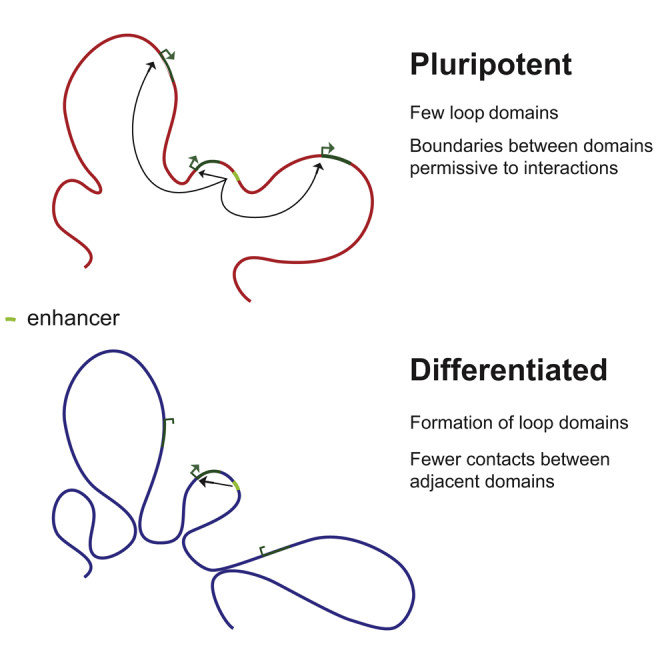
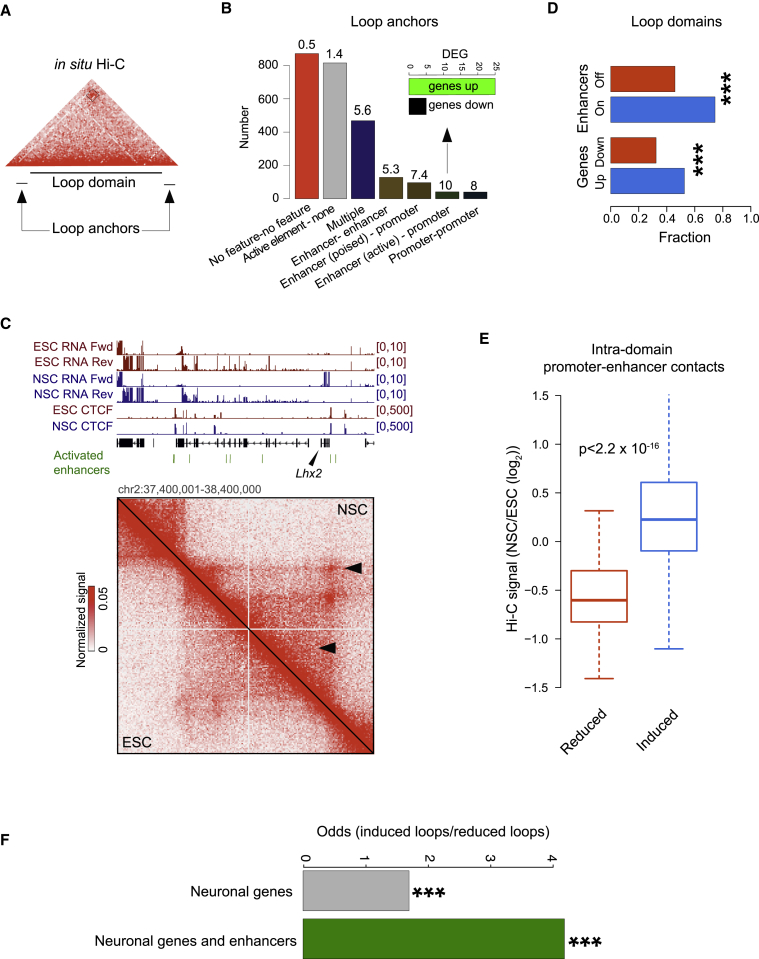
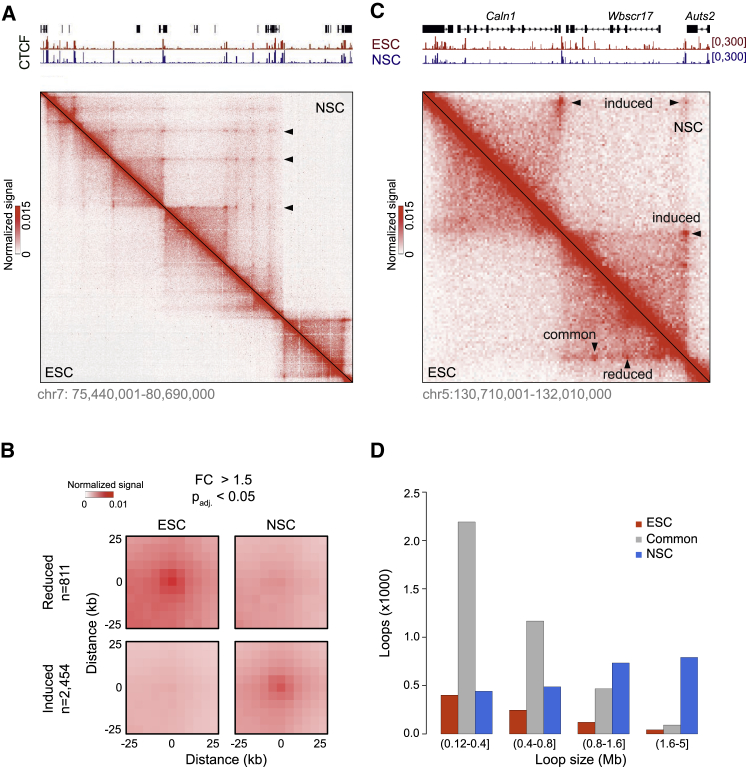
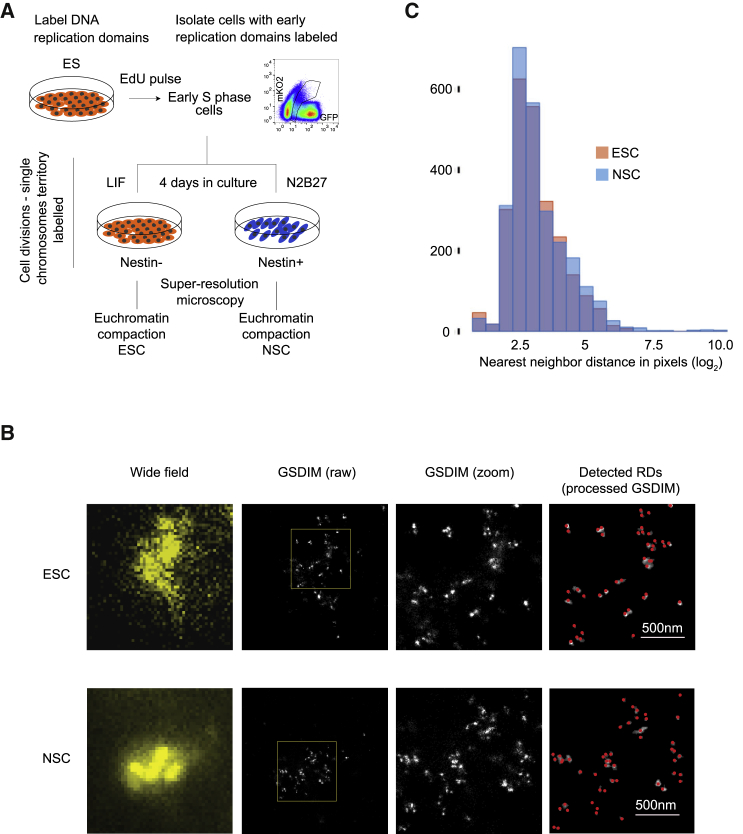
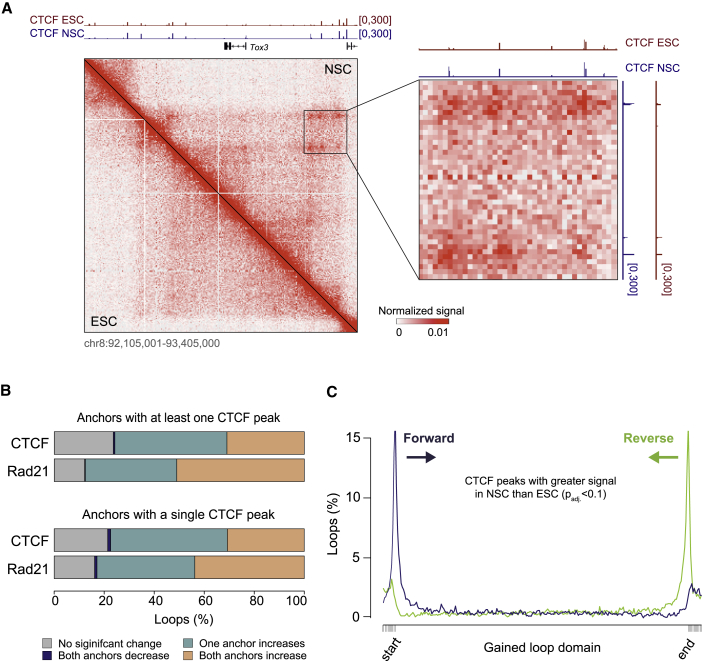
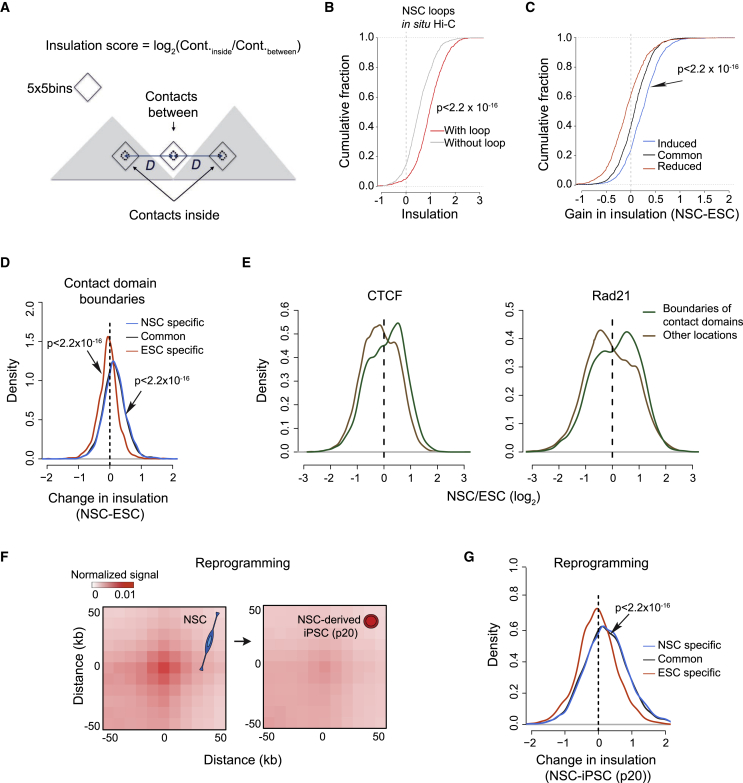
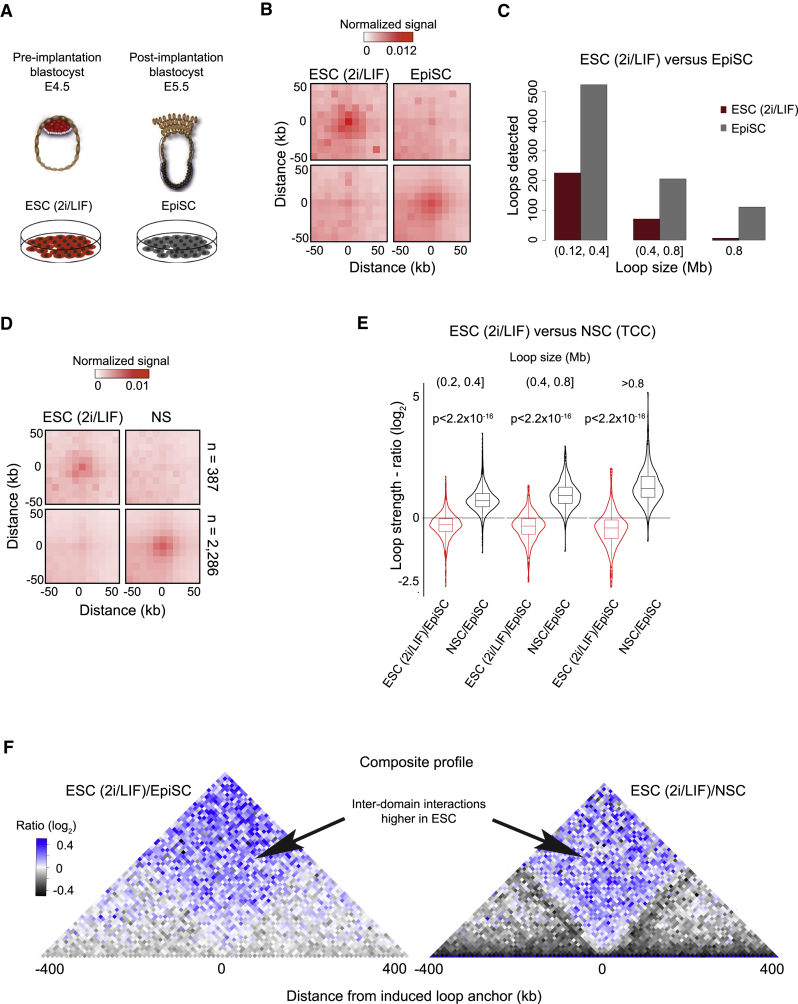
The genome of pluripotent stem cells adopts a unique three-dimensional architecture featuring weakly condensed heterochromatin and large nucleosome-free regions. Yet, it is unknown whether structural loops and contact domains display characteristics that distinguish embryonic stem cells (ESCs) from differentiated cell types. We used genome-wide chromosome conformation capture and super-resolution imaging to determine nuclear organization in mouse ESC and neural stem cell (NSC) derivatives. We found that loss of pluripotency is accompanied by widespread gain of structural loops. This general architectural change correlates with enhanced binding of CTCF and cohesins and more pronounced insulation of contacts across chromatin boundaries in lineage-committed cells. Reprogramming NSCs to pluripotency restores the unique features of ESC domain topology. Domains defined by the anchors of loops established upon differentiation are enriched for developmental genes. Chromatin loop formation is a pervasive structural alteration to the genome that accompanies exit from pluripotency and delineates the spatial segregation of developmentally regulated genes.
多能干细胞的基因组采用一种独特的三维结构,其特征是异染色质弱凝聚和大核小体自由区。然而,目前尚不清楚结构环和接触域是否具有将胚胎干细胞 (ESC) 与分化细胞类型区分开来的特征。我们使用全基因组染色体构象捕获和超分辨率成像来确定小鼠 ESC 和神经干细胞 (NSC) 衍生物中的核组织。我们发现多能性的丧失伴随着结构环的广泛获得。这种普遍的架构变化与 CTCF 和黏连蛋白结合的增强以及在谱系定向细胞中染色质边界跨越接触的更明显隔离相关。将 NSCs 重编程为多能性可恢复 ESC 结构域拓扑的独特特征。在分化过程中建立的环的锚定点定义的域富含发育基因。染色质环形成是基因组的普遍结构改变,伴随着多能性的退出,并描绘了发育调节基因的空间分离。