*Preluha consultancy, Namiwawa street, Newroad location, Zomba, Malawi.
University of Pretoria, Faculty of Health Sciences, School of Health Systems and Public Health, Epidemiology & Biostatistics Track, Pretoria, South Africa.
PLoS One. 2018 Nov 12;13(11):e0207207. doi: 10.1371/journal.pone.0207207. eCollection 2018.
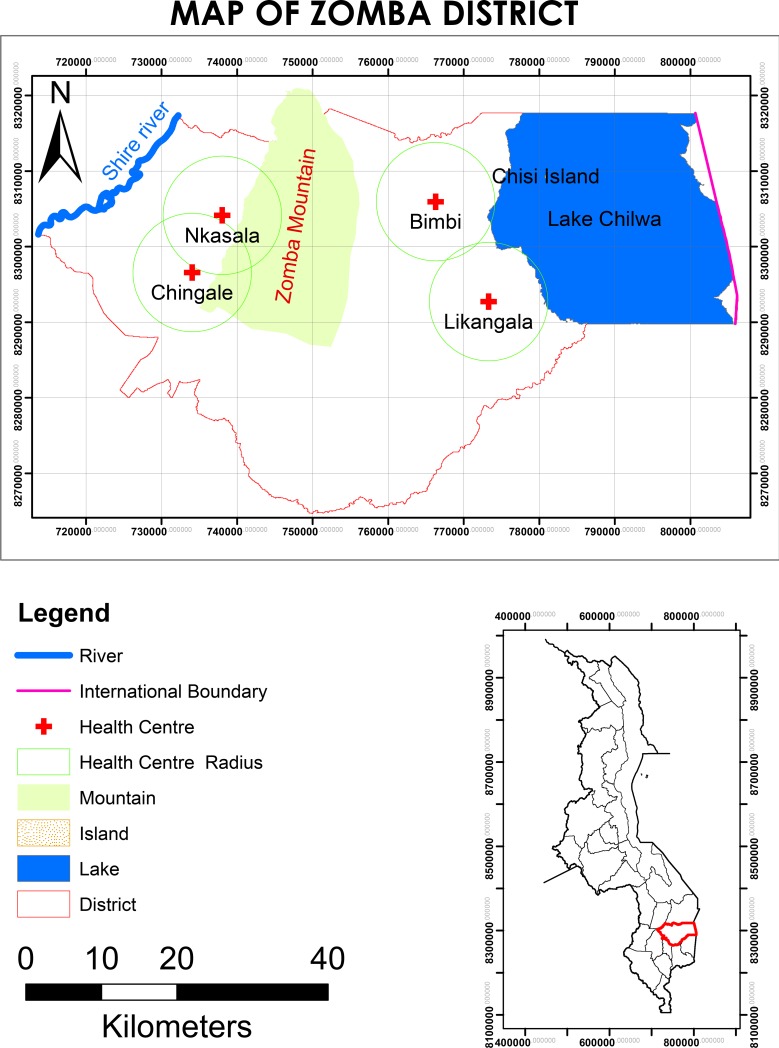
In Malawi, children under the age of five living in different geographical areas may experience different malaria risk factors. We compare the risk factors of malaria experienced by children under the age of five from Zomba district, who reside in lakeshore and highland areas.
We conducted a case control study of 765 caregivers, cases being children under-five who were diagnosed with malaria, and obtained matched controls from local health facilities and communities. We used a multivariate logistic regression to identify individual and household risk factors.
In lakeshore areas, risk factors were households located one kilometer or less away from stagnant water (AOR: 2.246 95% CI: 1.269 to 3.975 P-value: 0.005); or if the household had obtained a mosquito bed net more than one year ago (AOR: 1.946 95% CI: 1.073 to 3.529 P-value: 0.028). In highland areas, risk factors were households which used a borehole/unprotected well (AOR: 1.962 95% CI: 1.001 to 3.844 P-value 0.050), communal standpipe (AOR: 3.293 95% CI: 1.301 to 8.332 P-value 0.012), and un-protected dug well in their yards (AOR: 16.195 95% CI: 2.585 to 101.464 P-value 0.003) as their drinking water sources. In highland areas, caregivers not attending health talks on malaria prevention messages was a risk factor (AOR: 2.518 95% CI: 1.439 to 4.406 P-value: 0.001).
Children under the age of five living in highland areas experience different malaria risk factors compared to children living in lakeshore areas. Settling away from stagnant/open water source in lakeshore and encouraging caregivers to attend health talks on malaria prevention in highlands can help reduce malaria transmission. Nevertheless, using a mosquito bed net that is more than one year old is a common risk factor in both locations. Using new mosquito bed nets can significantly reduce the risk of contracting malaria in children under the age of five.
在马拉维,生活在不同地理区域的五岁以下儿童可能经历不同的疟疾风险因素。我们比较了居住在赞比西河湖滨和高地区域的五岁以下儿童所经历的疟疾风险因素。
我们对 765 名照顾者进行了病例对照研究,病例为被诊断患有疟疾的五岁以下儿童,并从当地卫生机构和社区获得了匹配的对照者。我们使用多变量逻辑回归来确定个体和家庭风险因素。
在湖滨地区,风险因素包括居住在距离死水一公里或更近距离内的家庭(比值比[OR]:2.246,95%置信区间[CI]:1.269 至 3.975,P 值:0.005);或者家庭获得蚊帐超过一年(OR:1.946,95%CI:1.073 至 3.529,P 值:0.028)。在高地区域,风险因素包括使用钻孔/无保护水井(OR:1.962,95%CI:1.001 至 3.844,P 值:0.050)、公共水龙头(OR:3.293,95%CI:1.301 至 8.332,P 值:0.012)和院子里无保护的土井(OR:16.195,95%CI:2.585 至 101.464,P 值:0.003)作为饮用水源的家庭。在高地区域,不参加疟疾预防信息健康讲座的照顾者是一个风险因素(OR:2.518,95%CI:1.439 至 4.406,P 值:0.001)。
与生活在湖滨地区的五岁以下儿童相比,生活在高地区域的五岁以下儿童经历了不同的疟疾风险因素。在湖滨地区远离死水/开放水源,鼓励照顾者参加疟疾预防健康讲座,可以帮助减少疟疾传播。然而,在两个地区,使用超过一年的蚊帐都是一个常见的风险因素。使用新的蚊帐可以显著降低五岁以下儿童感染疟疾的风险。