School of Kinesiology and Health Studies, Queen's University, Kingston, ON K7L 3N6, Canada.
Department of Epidemiology, Biostatistics and Occupational Health, McGill University, Montreal, QC H3A 0B9, Canada.
Int J Environ Res Public Health. 2018 Nov 9;15(11):2511. doi: 10.3390/ijerph15112511.
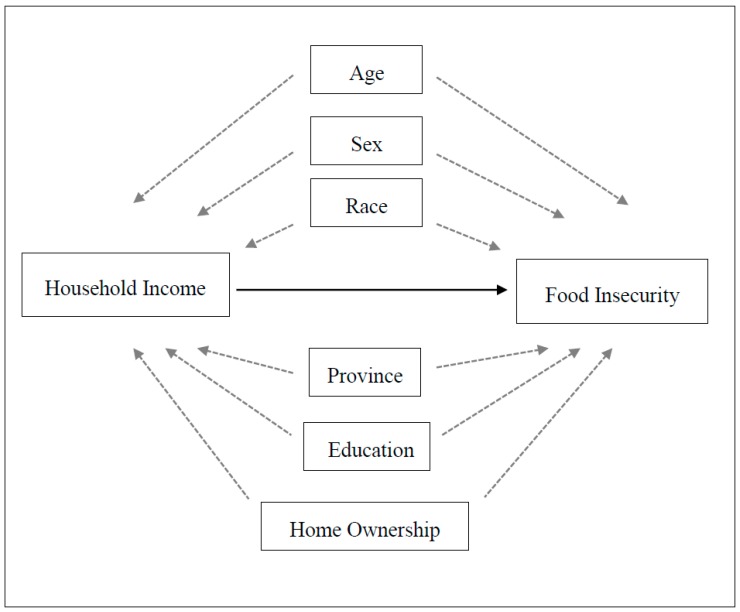
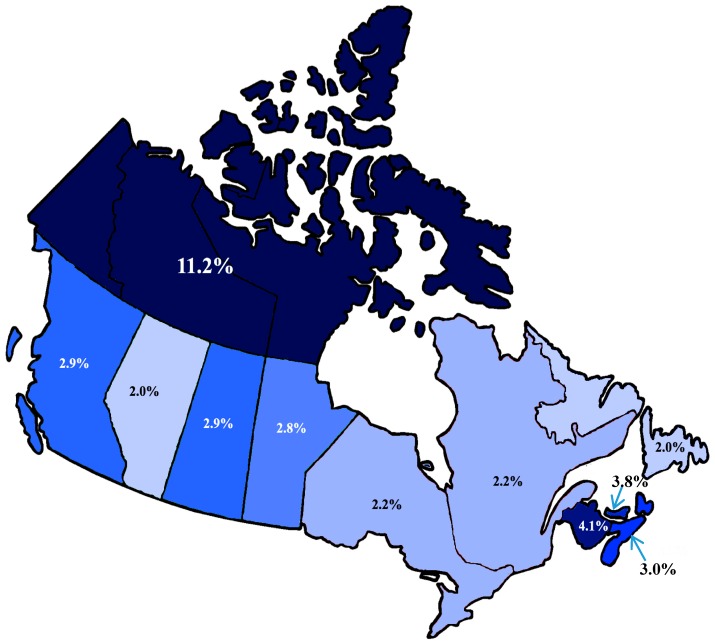
: Food insecurity research has been mainly examined among young people. The root causes of food insecurity are closely linked to poverty, and social policies and income supplements, including public and private pensions, have been shown to sharply curb food insecurity into later life. However, social, economic, and political trends that are closely connected to social and health inequalities threaten to undermine the conditions that have limited food insecurity among older people until now. Exploring the prevalence and predictors of food insecurity among older people across Canada has important implications for domestic policies concerning health, healthcare, and social welfare. : Data come from the Canadian Community Health Survey 2012 Annual Component ( = 14,890). Descriptive statistics and a generalized linear model approach were used to determine prevalence and estimate the associations between food insecurity-as measured by the Household Food Security Survey Module-and social, demographic, geographic, and economic factors. Results: Approximately 2.4% of older Canadians are estimated to be moderately or severely food insecure. Income was by far the strongest predictor of food insecurity (total household income <$20,000 compared to >$60,000, OR: 46.146, 95% CI: 12.523⁻170.041, < 0.001). Younger older people, and those with a non-white racial background also had significantly greater odds of food insecurity (ages 75+ compared to 65⁻74, OR: 0.322, 95% CI: 0.212⁻0.419, < 0.001; and OR: 2.429, 95% CI: 1.438⁻4.102, < 0.001, respectively). Sex, home ownership, marital status, and living arrangement were all found to confound the relationship between household income and food insecurity. Prevalence of food insecurity varied between provinces and territories, and odds of food insecurity were approximately five times greater for older people living in northern Canada as compared to central Canada (OR: 5.189, 95% CI: 2.329⁻11.562, < 0.001). : Disaggregating overall prevalence of food insecurity among older people demonstrates how disparities exist among sub-groups of older people. The seemingly negligible existence of food insecurity among older people has obscured the importance, practicality, and timeliness of including this age group in research on food insecurity. The current research underscores the critical importance of an income floor in preventing food insecurity among older people, and contributes a Canadian profile of the prevalence and predictors of food insecurity among older people to the broader international literature.
食物不安全问题的研究主要集中在年轻人身上。食物不安全的根本原因与贫困密切相关,社会政策和收入补贴(包括公共和私人养老金)已被证明可以显著减少老年人的食物不安全问题。然而,与社会和健康不平等密切相关的社会、经济和政治趋势,有可能破坏迄今为止限制老年人食物不安全的条件。探索加拿大老年人食物不安全的流行程度和预测因素,对国内有关健康、医疗保健和社会福利的政策具有重要意义。
数据来自于 2012 年加拿大社区健康调查年度部分(=14890)。采用描述性统计和广义线性模型方法,确定食物不安全的流行程度,并估计其与社会、人口统计学、地理和经济因素之间的关联。结果:约有 2.4%的加拿大老年人被认为存在中度或重度食物不安全问题。收入是食物不安全的最强预测因素(家庭总收入<20000 美元与>60000 美元相比,OR:46.146,95%CI:12.523-170.041,<0.001)。年轻的老年人,以及具有非白色种族背景的老年人,食物不安全的几率也显著更高(75 岁及以上与 65-74 岁相比,OR:0.322,95%CI:0.212-0.419,<0.001;OR:2.429,95%CI:1.438-4.102,<0.001)。性别、住房所有权、婚姻状况和居住安排都被发现混淆了家庭收入与食物不安全之间的关系。各省和地区之间食物不安全的流行程度存在差异,与居住在加拿大中部的老年人相比,居住在加拿大北部的老年人食物不安全的几率大约高出五倍(OR:5.189,95%CI:2.329-11.562,<0.001)。
对老年人食物不安全总体流行程度的细分,表明老年人亚群之间存在差异。老年人中食物不安全现象似乎微不足道,这掩盖了将这一年龄组纳入食物不安全研究的重要性、实用性和及时性。目前的研究强调了为老年人提供收入保障对于预防食物不安全的至关重要性,并为更广泛的国际文献提供了加拿大老年人食物不安全的流行程度和预测因素的概况。