Boas Liliana Vilas, Faustino Vera, Lima Rui, Miranda João Mário, Minas Graça, Fernandes Carla Sofia Veiga, Catarino Susana Oliveira
Microelectromechanical Systems Research Unit (CMEMS-UMinho), University of Minho, 4800-058 Guimarães, Portugal.
Instituto Politécnico de Bragança, ESTiG, C. Sta. Apolónia, 5300-253 Bragança, Portugal.
Micromachines (Basel). 2018 Aug 2;9(8):384. doi: 10.3390/mi9080384.
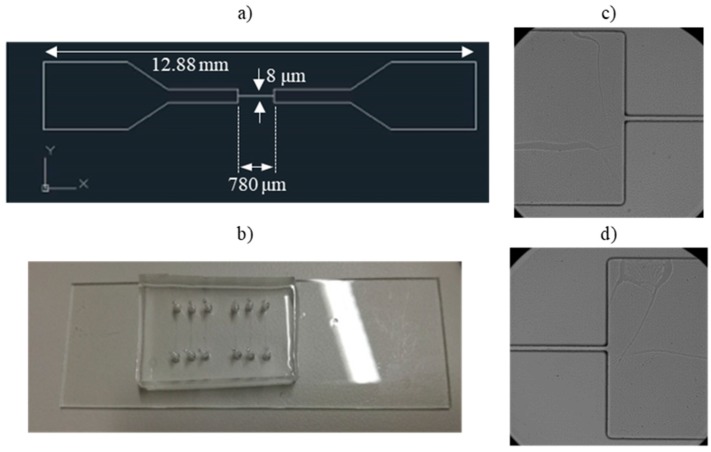
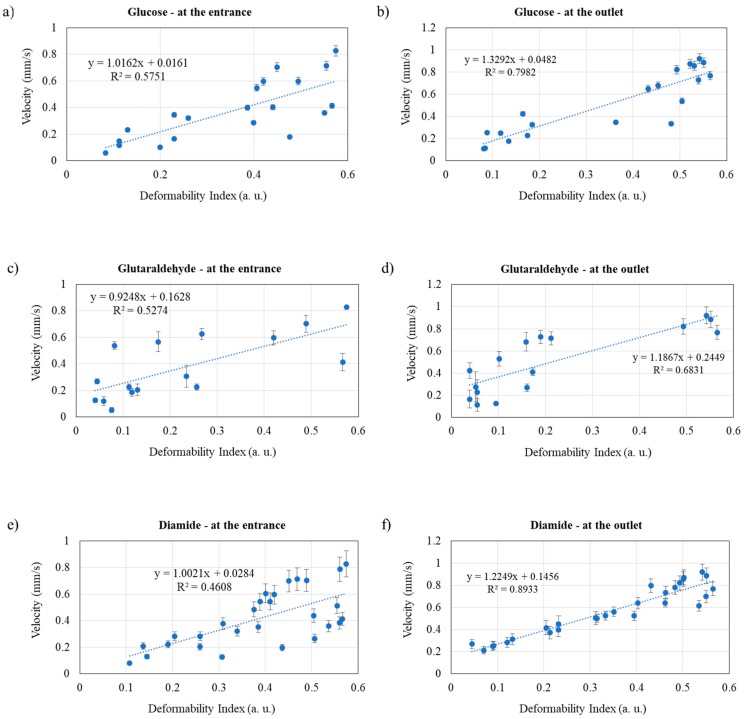
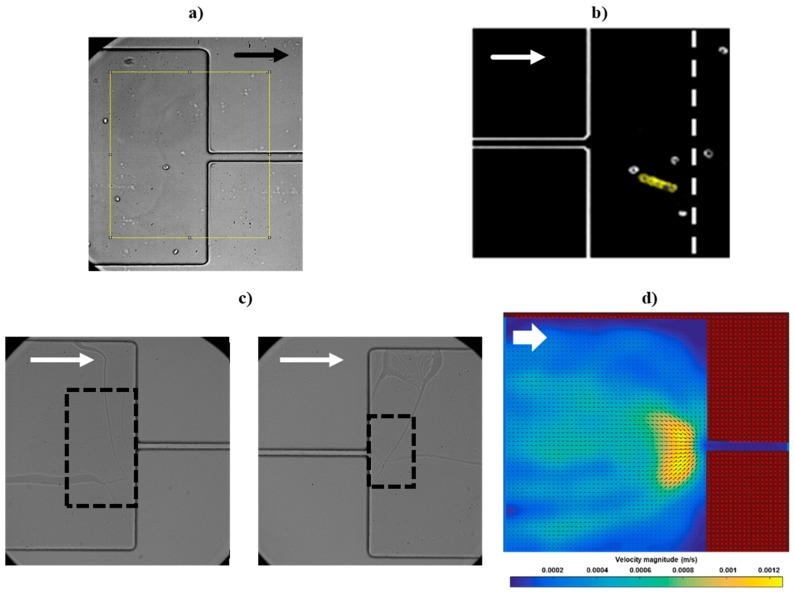
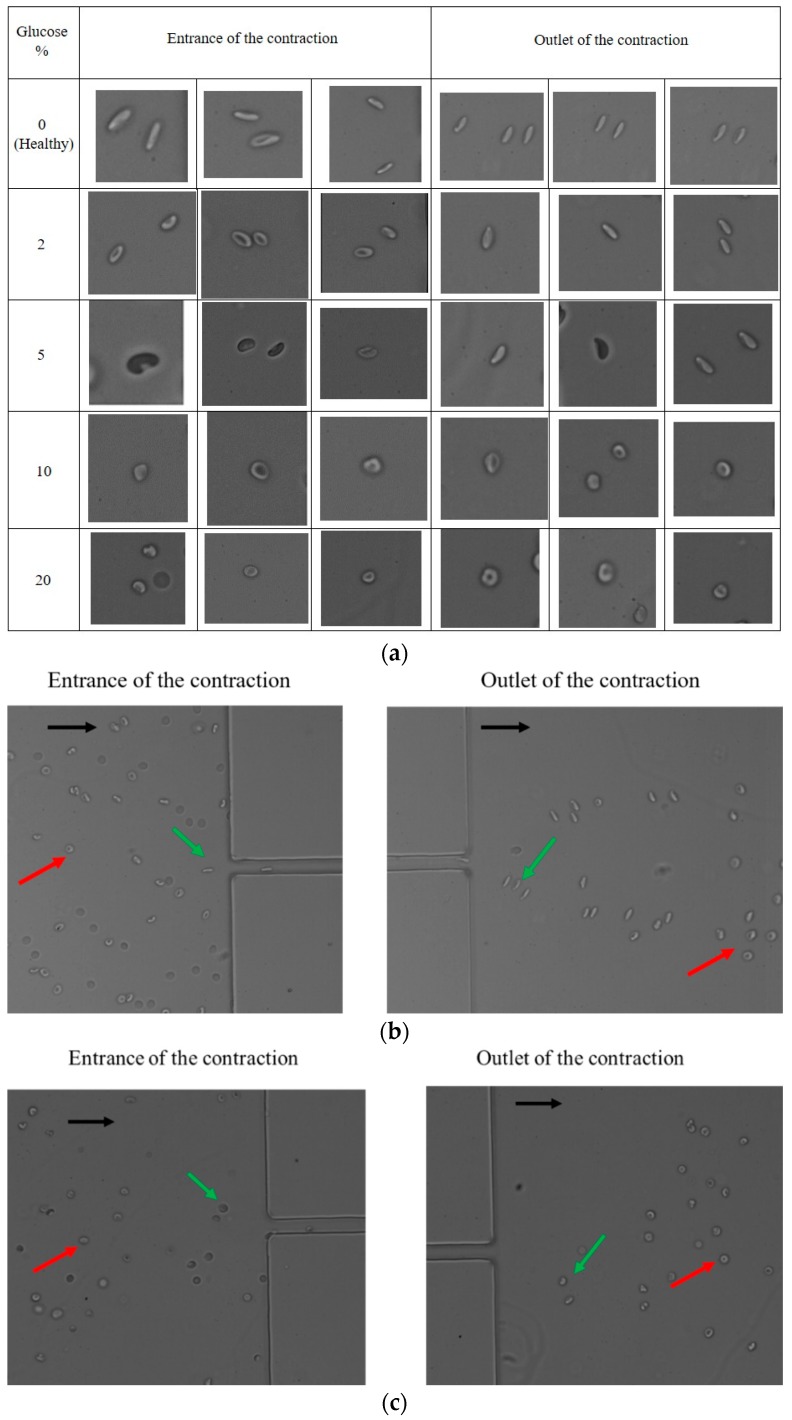
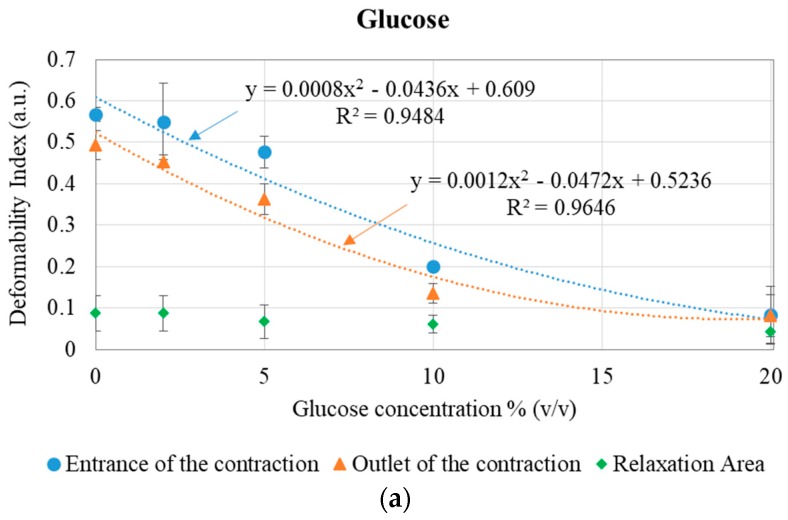
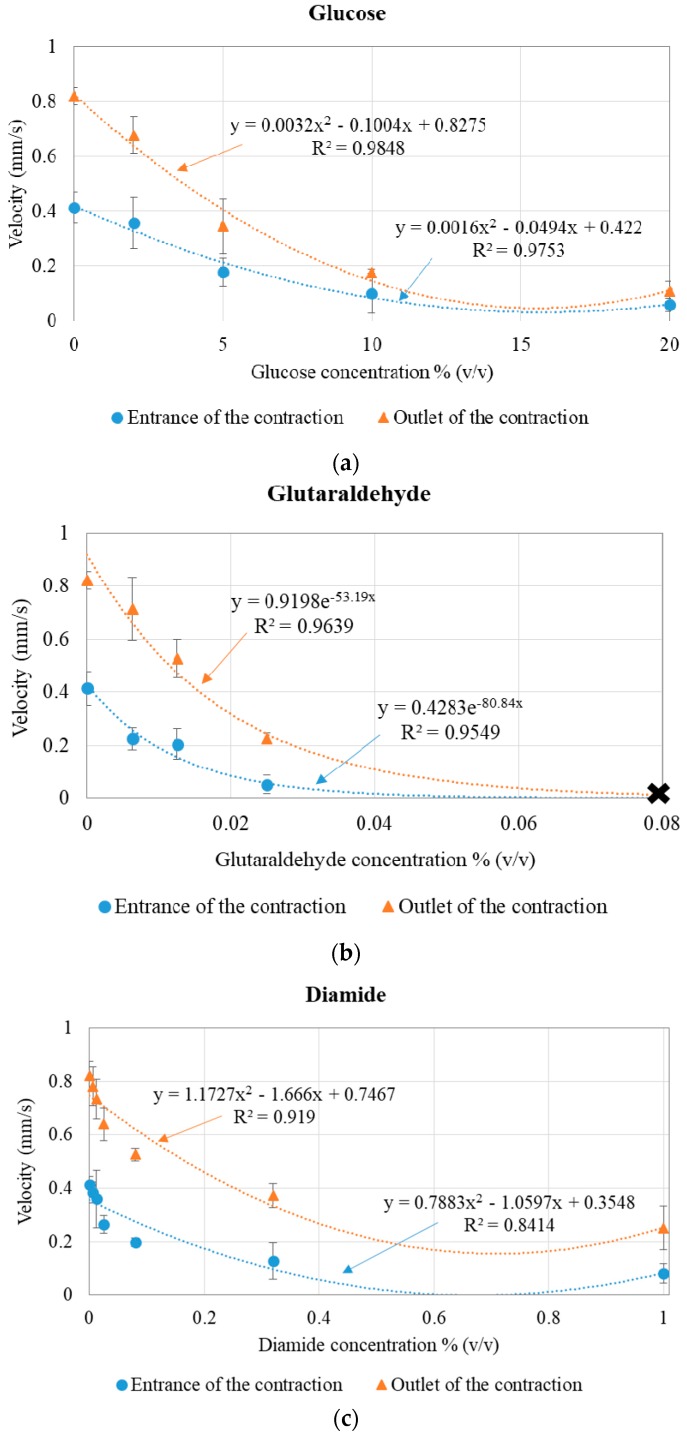
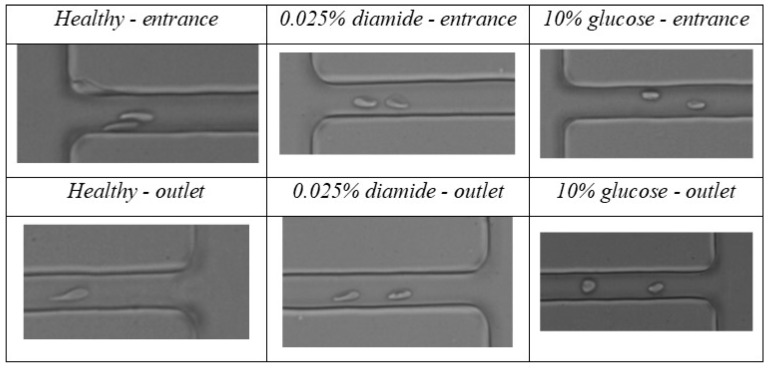
Malaria is one of the leading causes of death in underdeveloped regions. Thus, the development of rapid, efficient, and competitive diagnostic techniques is essential. This work reports a study of the deformability and velocity assessment of healthy and artificially impaired red blood cells (RBCs), with the purpose of potentially mimicking malaria effects, in narrow polydimethylsiloxane microchannels. To obtain impaired RBCs, their properties were modified by adding, to the RBCs, different concentrations of glucose, glutaraldehyde, or diamide, in order to increase the cells' rigidity. The effects of the RBCs' artificial stiffening were evaluated by combining image analysis techniques with microchannels with a contraction width of 8 µm, making it possible to measure the cells' deformability and velocity of both healthy and modified RBCs. The results showed that healthy RBCs naturally deform when they cross the contractions and rapidly recover their original shape. In contrast, for the modified samples with high concentration of chemicals, the same did not occur. Additionally, for all the tested modification methods, the results have shown a decrease in the RBCs' deformability and velocity as the cells' rigidity increases, when compared to the behavior of healthy RBCs samples. These results show the ability of the image analysis tools combined with microchannel contractions to obtain crucial information on the pathological blood phenomena in microcirculation. Particularly, it was possible to measure the deformability of the RBCs and their velocity, resulting in a velocity/deformability relation in the microchannel. This correlation shows great potential to relate the RBCs' behavior with the various stages of malaria, helping to establish the development of new diagnostic systems towards point-of-care devices.
疟疾是欠发达地区主要的死亡原因之一。因此,开发快速、高效且具有竞争力的诊断技术至关重要。这项工作报告了一项关于健康和人工损伤的红细胞(RBC)在狭窄的聚二甲基硅氧烷微通道中的变形能力和速度评估的研究,目的是潜在地模拟疟疾效应。为了获得受损的红细胞,通过向红细胞中添加不同浓度的葡萄糖、戊二醛或二酰胺来改变其特性,以增加细胞的刚性。通过将图像分析技术与收缩宽度为8 µm的微通道相结合,评估红细胞人工硬化的效果,从而能够测量健康红细胞和修饰红细胞的变形能力和速度。结果表明,健康的红细胞在通过收缩处时会自然变形,并迅速恢复其原始形状。相比之下,对于高浓度化学物质修饰的样本,情况并非如此。此外,对于所有测试的修饰方法,结果表明,与健康红细胞样本的行为相比,随着细胞刚性的增加,红细胞的变形能力和速度会降低。这些结果表明,图像分析工具与微通道收缩相结合能够获取有关微循环中病理性血液现象的关键信息。特别是,可以测量红细胞的变形能力及其速度,从而得到微通道中的速度/变形能力关系。这种相关性显示出将红细胞行为与疟疾各个阶段联系起来的巨大潜力,有助于推动新型即时检测诊断系统的开发。