Department of Bioproducts and Biosystems, Aalto University, Espoo, Finland.
Department of Aquatic Biotechnology and Bioproduct Engineering, Groningen, The Netherlands.
BMC Genomics. 2018 Nov 13;19(1):815. doi: 10.1186/s12864-018-5210-z.
The basidiomycete Phanerochaete carnosa is a white-rot species that has been mainly isolated from coniferous softwood. Given the particular recalcitrance of softwoods to bioconversion, we conducted a comparative transcriptomic analysis of P. carnosa following growth on wood powder from one softwood (spruce; Picea glauca) and one hardwood (aspen; Populus tremuloides). P. carnosa was grown on each substrate for over one month, and mycelia were harvested at five time points for total RNA sequencing. Residual wood powder was also analyzed for total sugar and lignin composition.
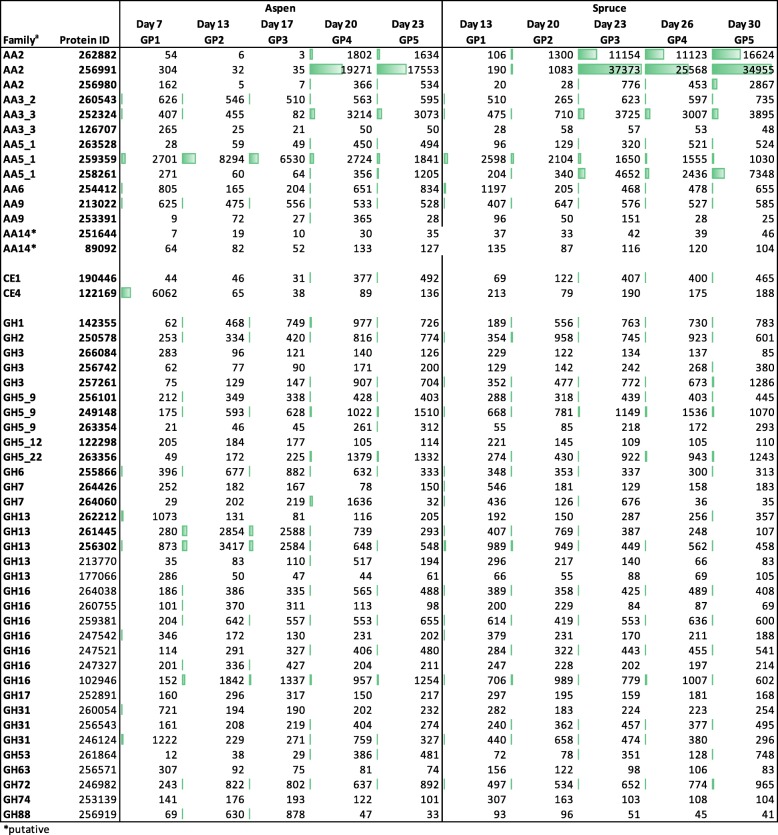
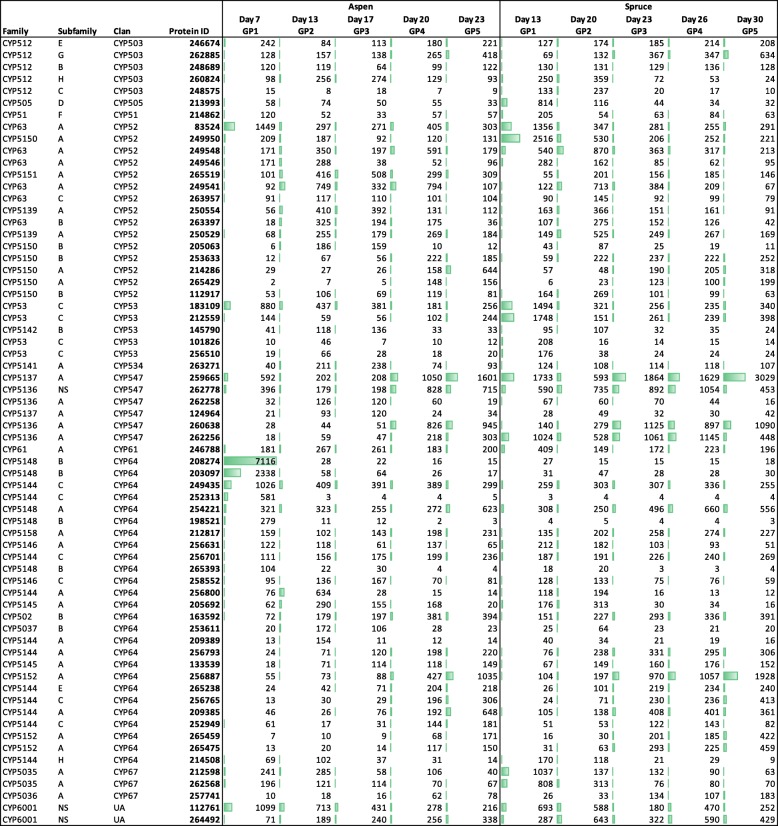
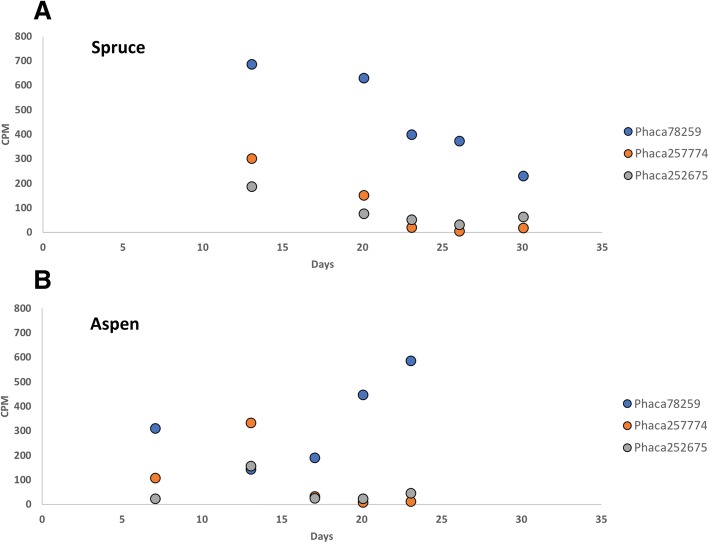
Following a slightly longer lag phase of growth on spruce, radial expansion of the P. carnosa colony was similar on spruce and aspen. Consistent with this observation, the pattern of gene expression by P. carnosa on each substrate converged following the initial adaptation. On both substrates, highest transcript abundances were attributed to genes predicted to encode manganese peroxidases (MnP), along with auxiliary activities from carbohydrate-active enzyme (CAZy) families AA3 and AA5. In addition, a lytic polysaccharide monooxygenase from family AA9 was steadily expressed throughout growth on both substrates. P450 sequences from clans CPY52 and CYP64 accounted for 50% or more of the most highly expressed P450s, which were also the P450 clans that were expanded in the P. carnosa genome relative to other white-rot fungi.
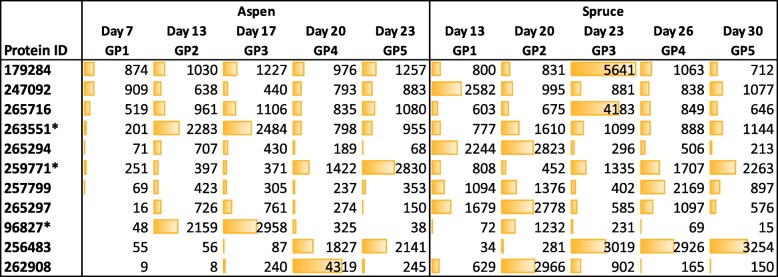
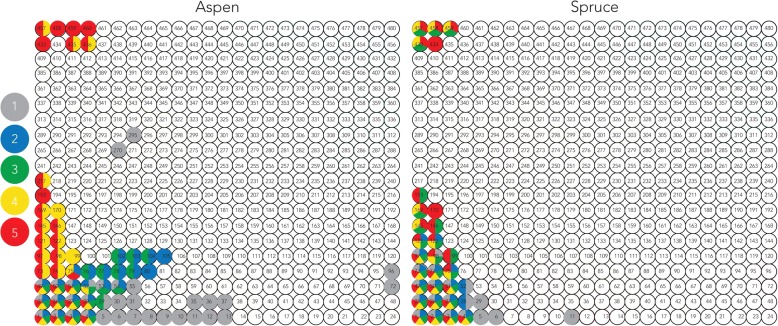
The inclusion of five growth points and two wood substrates was important to revealing differences in the expression profiles of specific sequences within large glycoside hydrolase families (e.g., GH5 and GH16), and permitted co-expression analyses that identified new targets for study, including non-catalytic proteins and proteins with unknown function.
担子菌 Phanerochaete carnosa 是一种白腐菌,主要从针叶树软木中分离得到。鉴于软木对生物转化的特殊顽固性,我们对 P. carnosa 在生长于一种软木(云杉;Picea glauca)和一种硬木(白杨;Populus tremuloides)的木屑上后的转录组进行了比较分析。P. carnosa 在每种基质上生长超过一个月,在五个时间点收获菌丝体进行总 RNA 测序。还分析了剩余的木屑的总糖和木质素组成。
在云杉上生长的略微较长的迟滞期后,P. carnosa 菌落的径向扩展在云杉和白杨上相似。与这一观察结果一致,P. carnosa 在每种基质上的基因表达模式在最初适应后趋于一致。在两种基质上,最高的转录丰度归因于预测编码锰过氧化物酶 (MnP)的基因,以及碳水化合物活性酶 (CAZy)家族 AA3 和 AA5 的辅助活性。此外,AA9 家族的溶菌多糖单加氧酶在两种基质上的整个生长过程中都稳定表达。来自 CPY52 和 CYP64 族的 P450 序列占最高度表达的 P450 的 50%或更多,这些 P450 族也在 P. carnosa 基因组中相对于其他白腐真菌扩展。
包括五个生长点和两种木材基质对于揭示特定序列在大糖苷水解酶家族(例如 GH5 和 GH16)中的表达谱差异很重要,并允许进行共表达分析,确定了新的研究目标,包括非催化蛋白和具有未知功能的蛋白。