Department of Ophthalmology, The Jikei University School of Medicine, Tokyo, Japan.
Department of Ophthalmology, Katsushika Medical Center, The Jikei University School of Medicine, Tokyo, Japan.
Sci Rep. 2018 Nov 13;8(1):16733. doi: 10.1038/s41598-018-35152-6.
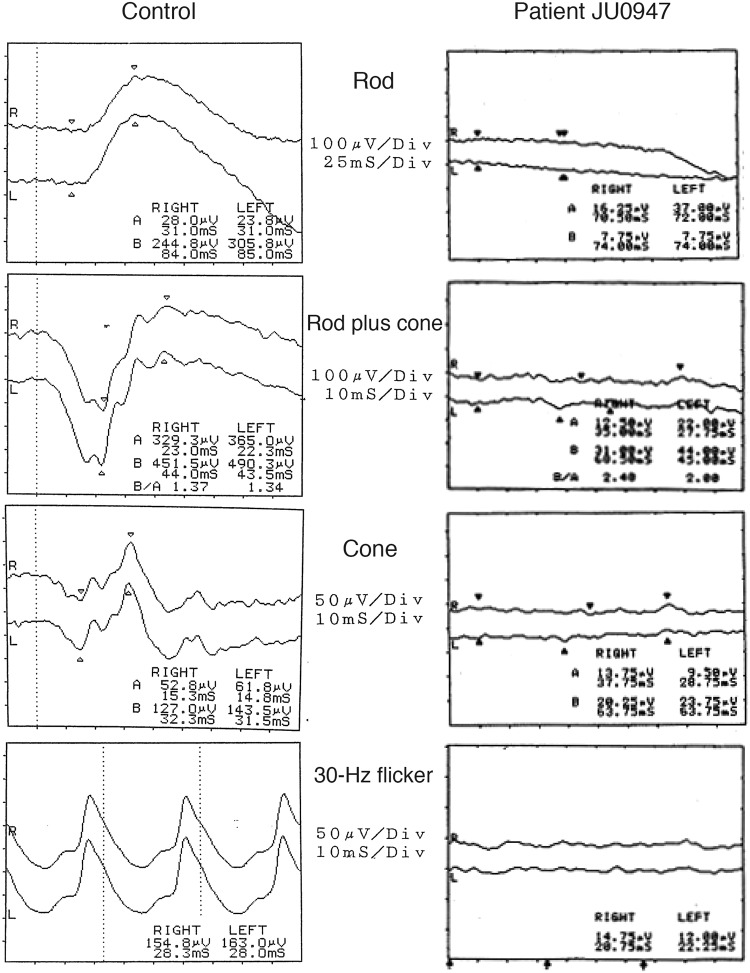
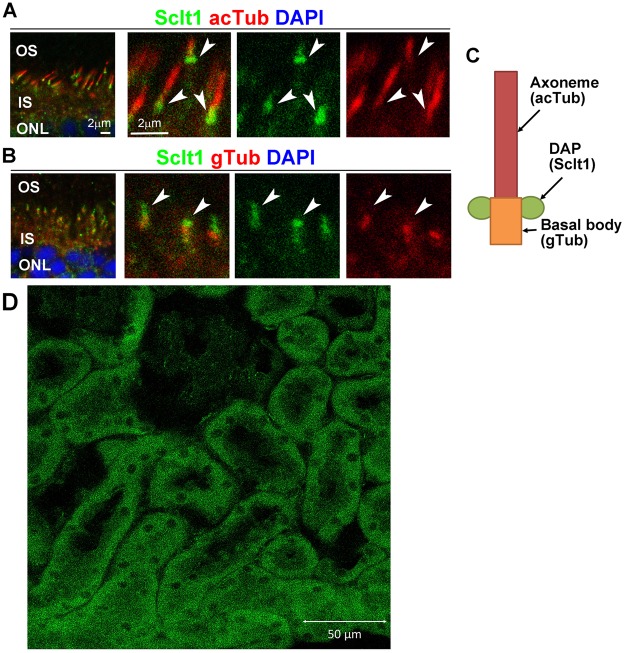
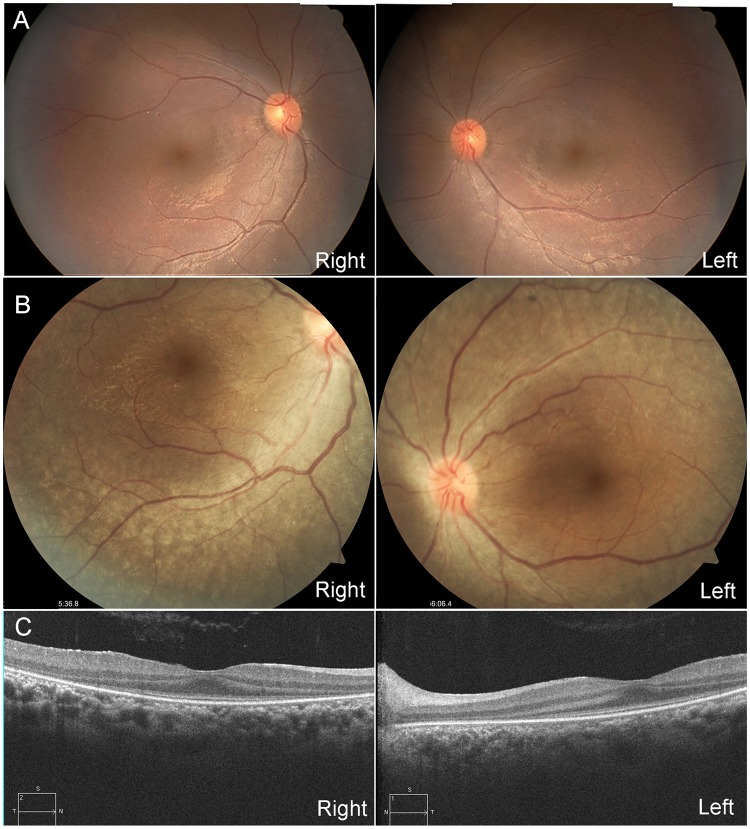
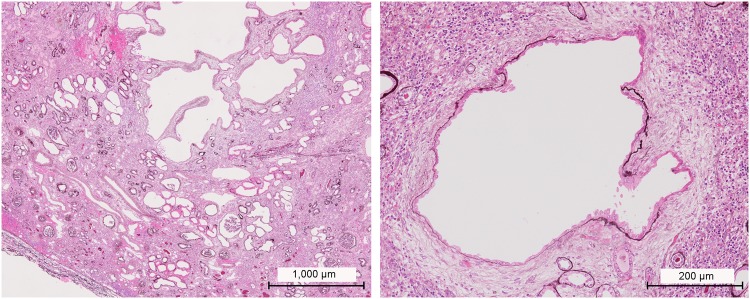
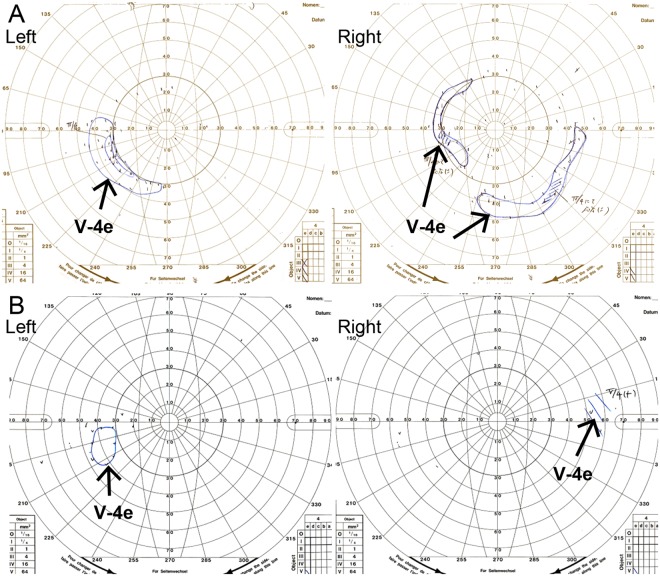
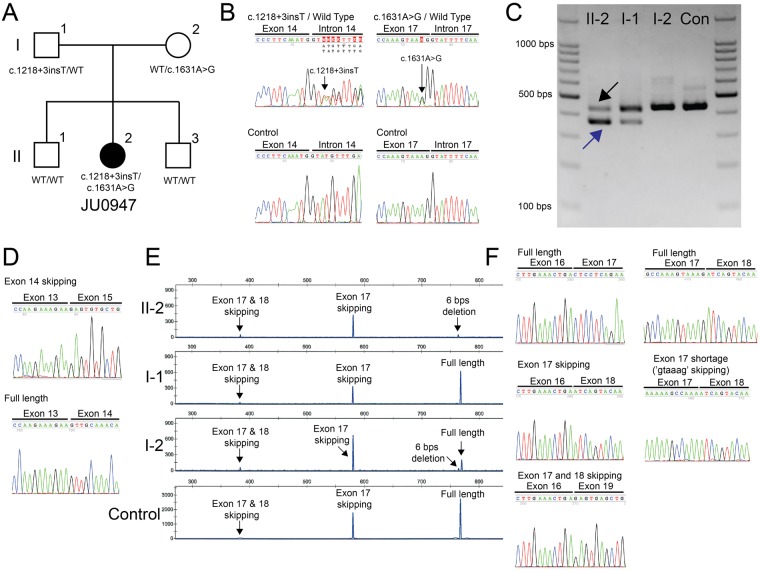
Senior Løken syndrome (SLS) is a heterogeneous disorder characterized by severe retinal degenerations and juvenile-onset nephronophthisis. Genetic variants in ten different genes have been reported as the causes of SLS. Clinical evaluation of a patient with SLS and her unaffected parents revealed that the patient had infantile-onset retinal dystrophy and juvenile-onset nephronophthisis. Other systemic abnormalities included hepatic dysfunction, megacystis, mild learning disability, autism, obesity, and hyperinsulinemia. Whole-exome sequencing identified compound heterozygous SCLT1 variants (c.1218 + 3insT and c.1631A > G) in the patient. The unaffected parents were heterozygous for each variant. Transcript analysis using reverse transcription PCR demonstrated that the c.1218 + 3insT variant leads to exon 14 skipping (p.V383_M406del), while the other variant (c.1631A > G) primarily leads to exon 17 skipping (p.D480EfsX11) as well as minor amounts of two transcripts (6 bps deletion in the last of exon 17 [p.V543_K544del] and exons 17 and 18 skipping [p.D480E, S481_K610del]). Immunohistochemical analysis demonstrated that the Sclt1 protein was localized to the distal appendage of the photoreceptor basal body, indicating a ciliary protein. In conclusion, we identified compound heterozygous splice site variants of SCLT1 in a patient with a new form of ciliopathies that exhibits clinical features of SLS.
高级 Løken 综合征(SLS)是一种异质性疾病,其特征为严重的视网膜退行性变和青少年起病的肾单位肾痨。已有十种不同基因的遗传变异被报道为 SLS 的病因。对一名 SLS 患者及其未受影响的父母进行临床评估显示,患者患有婴儿起病的视网膜营养不良和青少年起病的肾单位肾痨。其他全身异常包括肝功能障碍、巨膀胱、轻度学习障碍、自闭症、肥胖和高胰岛素血症。全外显子组测序在患者中发现了 SCLT1 复合杂合变异(c.1218 + 3insT 和 c.1631A > G)。未受影响的父母均为每个变异的杂合子。使用逆转录 PCR 的转录分析表明,c.1218 + 3insT 变异导致外显子 14 跳跃(p.V383_M406del),而另一个变异(c.1631A > G)主要导致外显子 17 跳跃(p.D480EfsX11)以及少量两种转录本(外显子 17 的最后 6bp 缺失[p.V543_K544del]和外显子 17 和 18 跳跃[p.D480E,S481_K610del])。免疫组织化学分析表明,Sclt1 蛋白定位于光感受器基底体的远端附属物,表明其为一种纤毛蛋白。总之,我们在一名具有新形式的纤毛病患者中鉴定了 SCLT1 的复合杂合剪接位点变异,该患者表现出 SLS 的临床特征。