Xie Yanyun, Zheng Linfeng, Tao Lijian
Division of Nephrology, Xiangya Hospital, Central South University, Hunan, Changsha, China.
Division of Nephrology, Xiangya Hospital, Central South University, Hunan, Changsha, China.
Transl Oncol. 2019 Feb;12(2):236-244. doi: 10.1016/j.tranon.2018.10.009. Epub 2018 Nov 11.
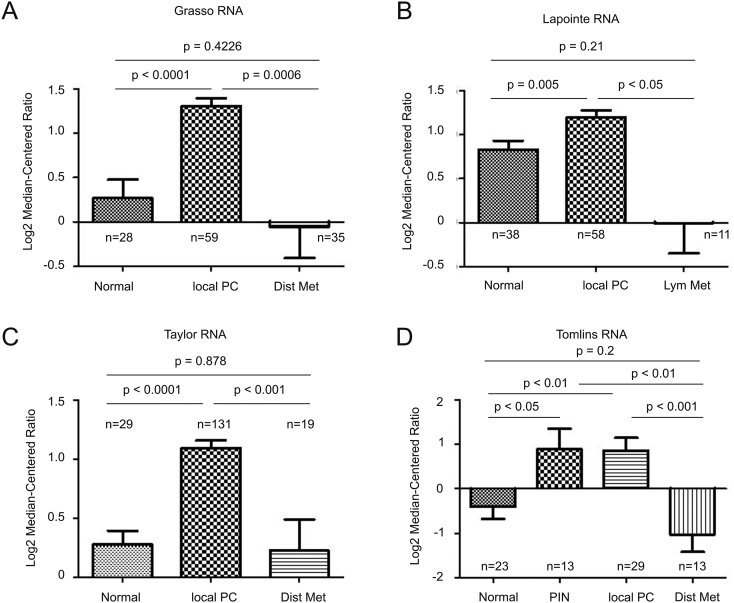
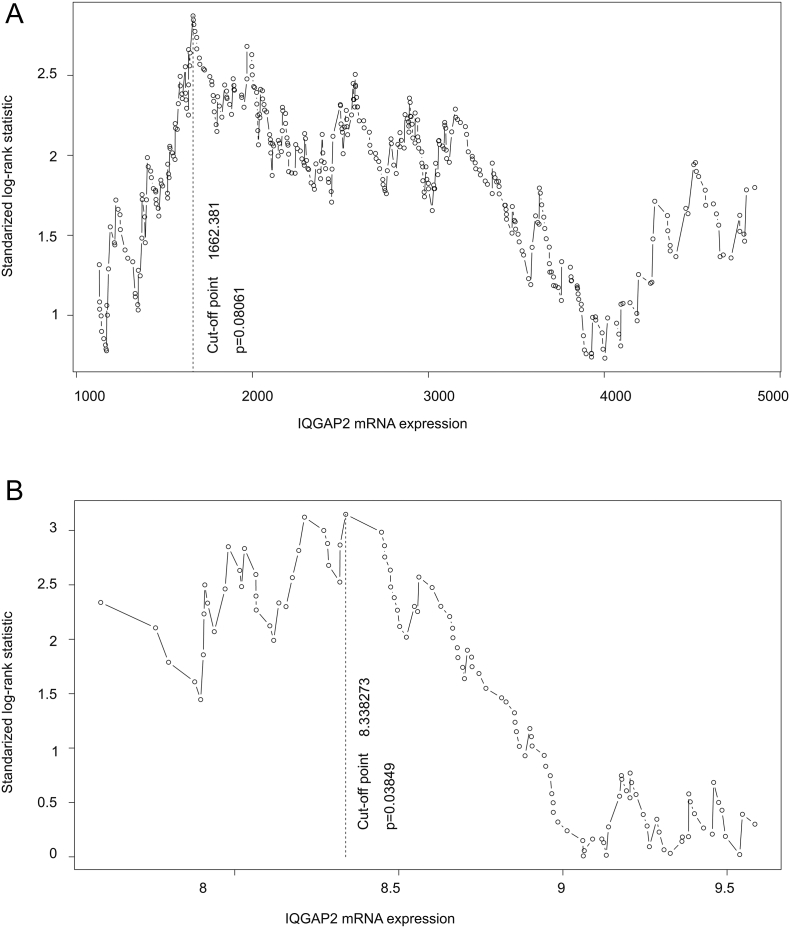
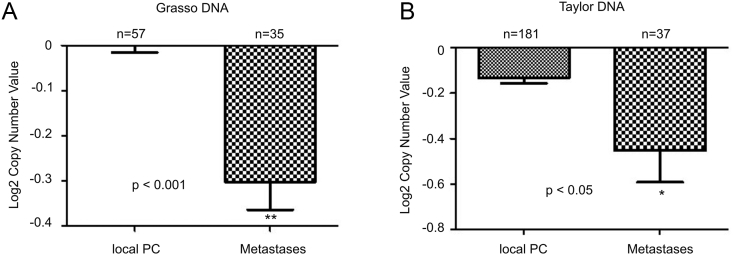
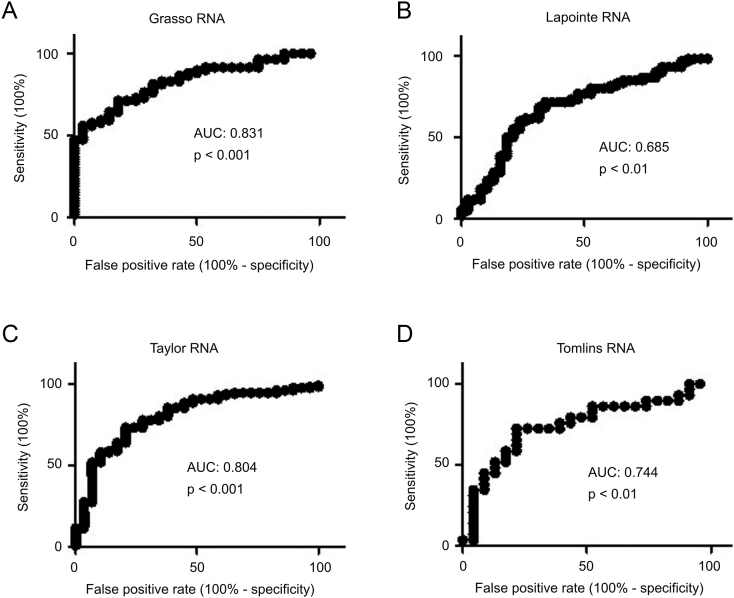
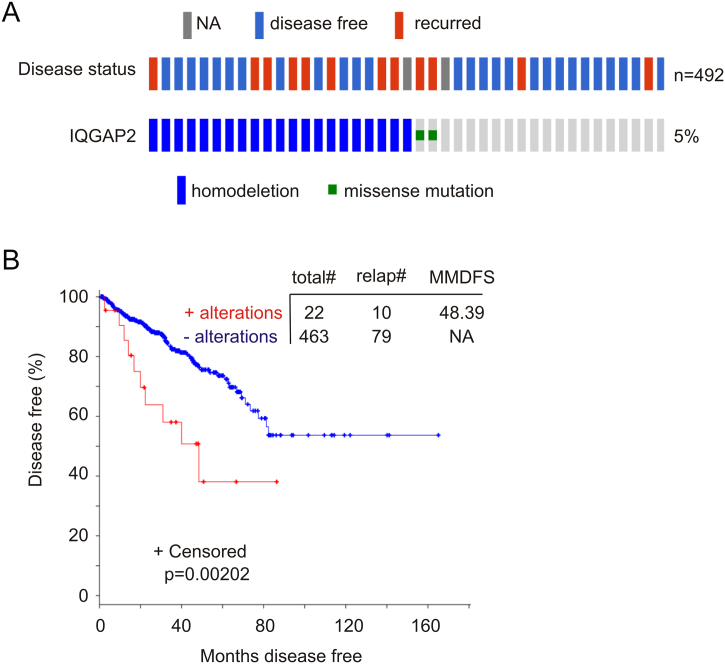
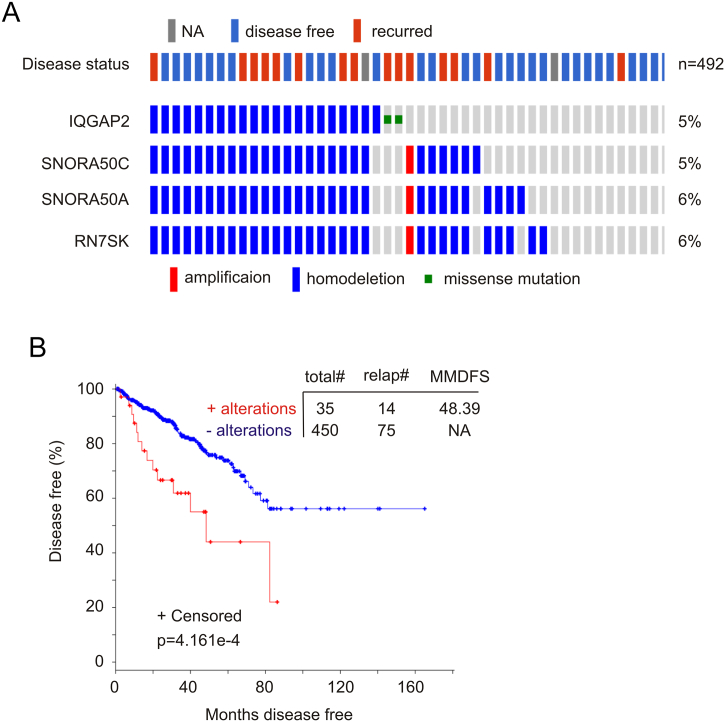
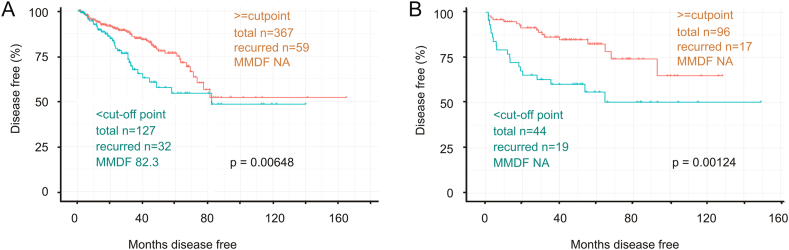
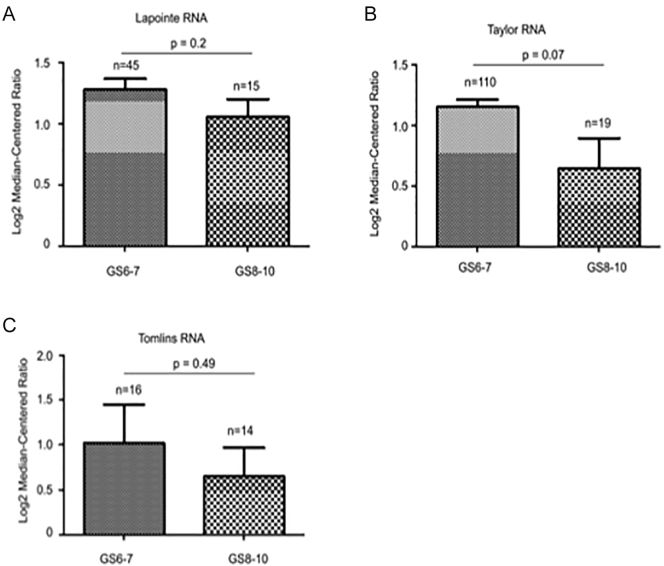
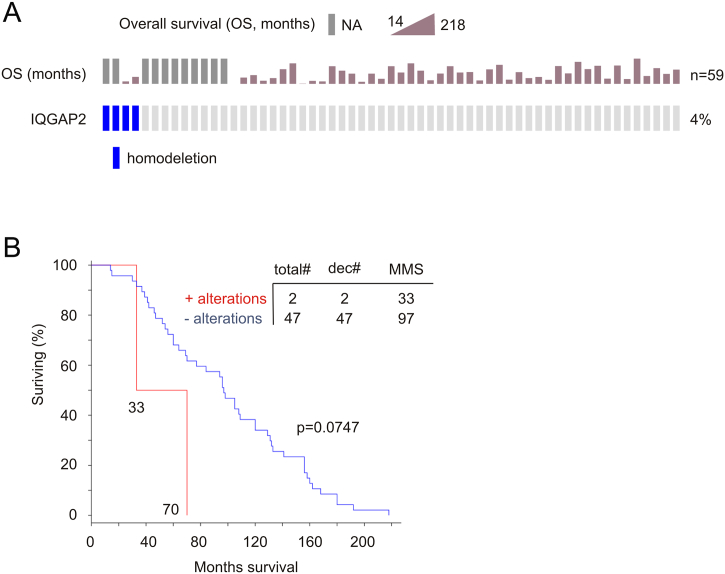
IQGAP2 was recently reported as a tumor suppressor of prostate cancer (PC). Nonetheless, its clinical implications remain unknown. To address this issue, we extracted data related to IQGAP2 mRNA expression and genomic alterations from multiple large datasets within the Oncomine and cBioPortal databases and performed in silico analyses to determine a potential association of IQGAP2 mRNA expression and its genomic alterations with PC progression. In 4 cohorts consisting of 118 normal prostate tissues and 277 PCs, IQGAP2 mRNA expression was significantly elevated particularly in low-grade (primary Gleason score ≤3) PCs; these changes separate PC from normal tissues with area under curve values of 0.7-0.8. Significant reductions in IQGAP2 mRNA levels and gene copy number occurred in more than 70 metastases compared to at least 230 local PCs. This duo-alteration in IQGAP2 expression supports IQGAP2 elevation suppressing and its downregulation facilitating PC progression. Deletion and missense mutations were detected in 23 of 492 primary PCs; these alterations significantly associate with PC recurrence (HR=2.71; 95% CI: 1.35-5.44; P=.005) after adjusting for known risk factors and correlate with reductions in disease-free survival (DFS, P=.002). IQGAP2 (5q13.3) genomic alterations were observed in SPOP-marked PCs and co-occurred with deletion in the RN7SK (16p12.2), SNORA50A (16q21), and SNORA50C (17q23.3) genes; the co-occurrence associated with reductions in DFS (P=4.14e-4). In two independent PC populations, MSKCC (n=130) and TCGA provisional (n=490), reductions in IQGAP2 mRNA expression were significantly associated with DFS. Collectively, this investigation reveals an association of IQGAP2 with PC progression.
IQGAP2最近被报道为前列腺癌(PC)的一种肿瘤抑制因子。然而,其临床意义仍不明确。为解决这一问题,我们从Oncomine和cBioPortal数据库中的多个大型数据集中提取了与IQGAP2 mRNA表达和基因组改变相关的数据,并进行了生物信息学分析,以确定IQGAP2 mRNA表达及其基因组改变与PC进展之间的潜在关联。在由118个正常前列腺组织和277个PC组成的4个队列中,IQGAP2 mRNA表达显著升高,尤其是在低级别(原发性Gleason评分≤3)的PC中;这些变化以0.7 - 0.8的曲线下面积值将PC与正常组织区分开来。与至少230个局部PC相比,在70多个转移灶中IQGAP2 mRNA水平和基因拷贝数显著降低。IQGAP2表达的这种双重改变支持IQGAP2升高具有抑制作用,而其下调则促进PC进展。在492个原发性PC中的23个中检测到缺失和错义突变;在调整已知危险因素后,这些改变与PC复发显著相关(HR = 2.71;95% CI:1.35 - 5.44;P = 0.005),并与无病生存期(DFS)缩短相关(P = 0.002)。在SPOP标记的PC中观察到IQGAP2(5q13.3)基因组改变,并且与RN7SK(16p12.2)、SNORA50A(16q21)和SNORA50C(17q23.3)基因的缺失同时出现;这种同时出现与DFS缩短相关(P = 4.14e - 4)。在两个独立的PC群体,即MSKCC(n = 130)和TCGA临时数据集(n = 490)中,IQGAP2 mRNA表达降低与DFS显著相关。总体而言,这项研究揭示了IQGAP2与PC进展之间的关联。