Interdisciplinary Institute for Neuroscience, CNRS UMR 5297, Bordeaux, France.
University of Bordeaux, F-33000, Bordeaux, France.
Nat Commun. 2018 Nov 14;9(1):4780. doi: 10.1038/s41467-018-06813-x.
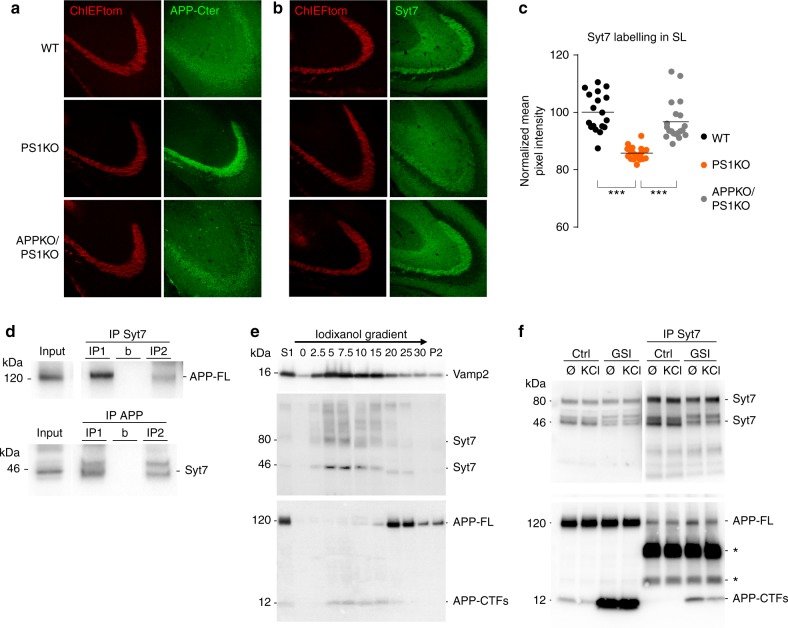
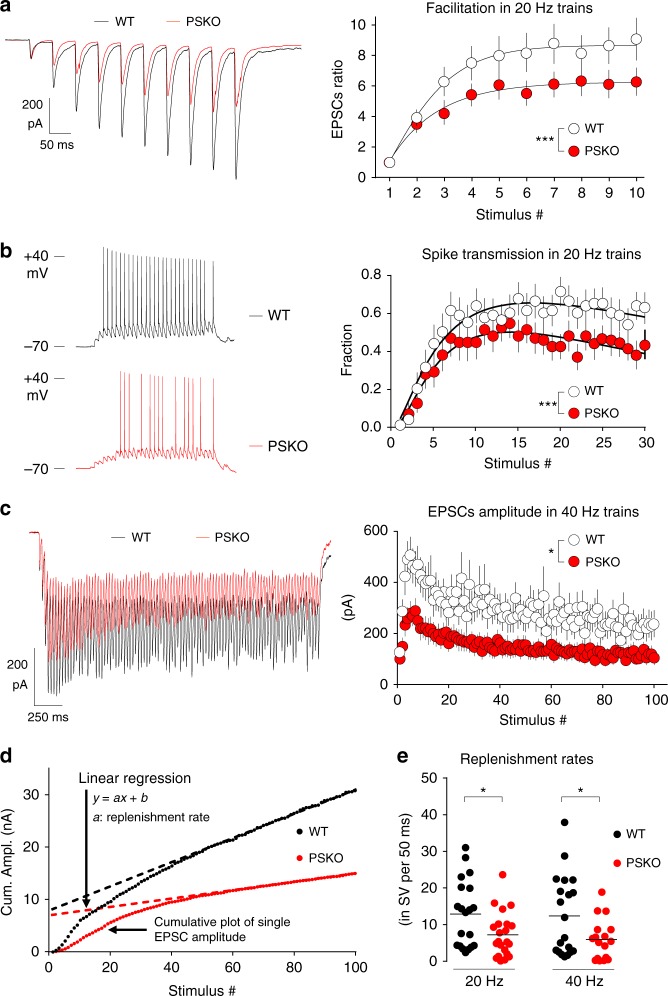
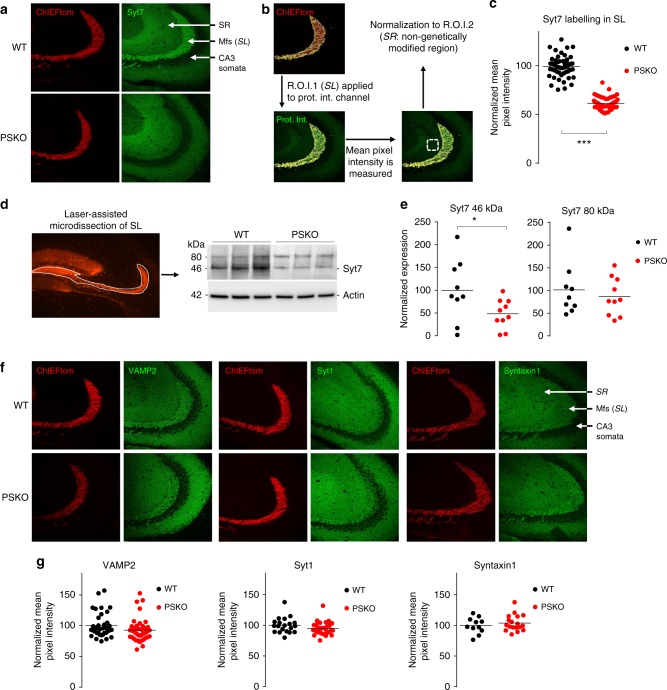
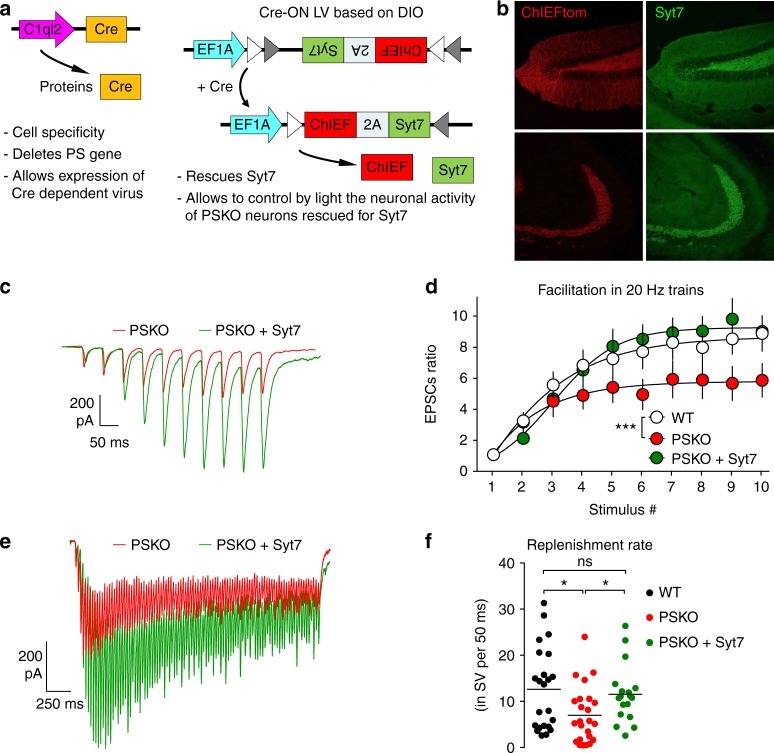
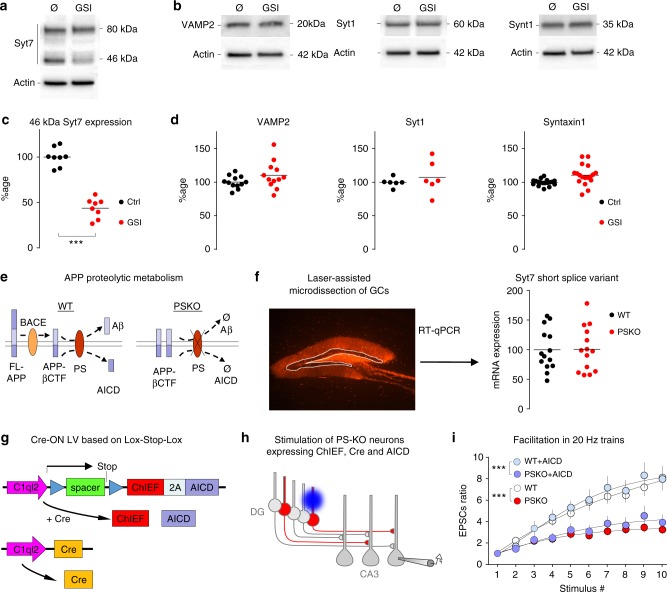
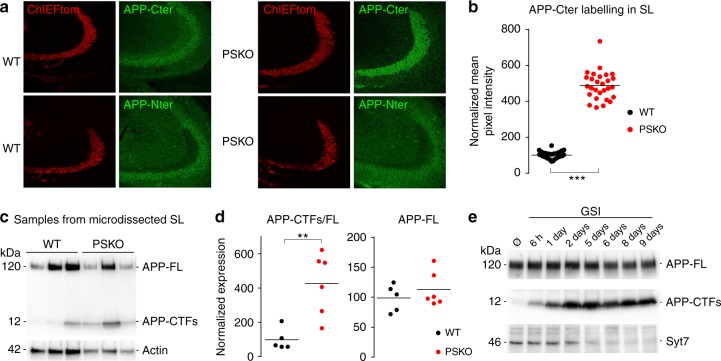
Mutations of the intramembrane protease presenilin (PS) or of its main substrate, the amyloid precursor protein (APP), cause early-onset form of Alzheimer disease. PS and APP interact with proteins of the neurotransmitter release machinery without identified functional consequences. Here we report that genetic deletion of PS markedly decreases the presynaptic levels of the Ca sensor synaptotagmin-7 (Syt7) leading to impaired synaptic facilitation and replenishment of synaptic vesicles. The regulation of Syt7 expression by PS occurs post-transcriptionally and depends on γ-secretase proteolytic activity. It requires the substrate APP as revealed by the combined genetic invalidation of APP and PS1, and in particular the APP-Cterminal fragments which interact with Syt7 and accumulate in synaptic terminals under pharmacological or genetic inhibition of γ-secretase. Thus, we uncover a role of PS in presynaptic mechanisms, through APP cleavage and regulation of Syt7, that highlights aberrant synaptic vesicle processing as a possible new pathway in AD.
跨膜蛋白酶早老素(PS)或其主要底物淀粉样前体蛋白(APP)的突变可引起早发性阿尔茨海默病。PS 和 APP 与神经递质释放机制的蛋白相互作用,但没有确定其功能后果。在这里,我们报告 PS 的基因缺失显著降低了 Ca 传感器突触融合蛋白-7(Syt7)的突触前水平,导致突触易化和突触小泡补充受损。PS 对 Syt7 表达的调节发生在转录后,依赖于 γ-分泌酶的蛋白水解活性。如 APP 和 PS1 的联合基因缺失所揭示的那样,它需要 APP 作为底物,特别是 APP-C 末端片段与 Syt7 相互作用,并在 γ-分泌酶的药理学或遗传抑制下在突触末端积累。因此,我们揭示了 PS 通过 APP 切割和 Syt7 调节在突触前机制中的作用,强调了异常的突触小泡处理可能是 AD 的新途径。