Department of Molecular Biosciences, Northwestern University, Evanston, IL, 60208, USA.
Sci Rep. 2018 Nov 14;8(1):16815. doi: 10.1038/s41598-018-35231-8.
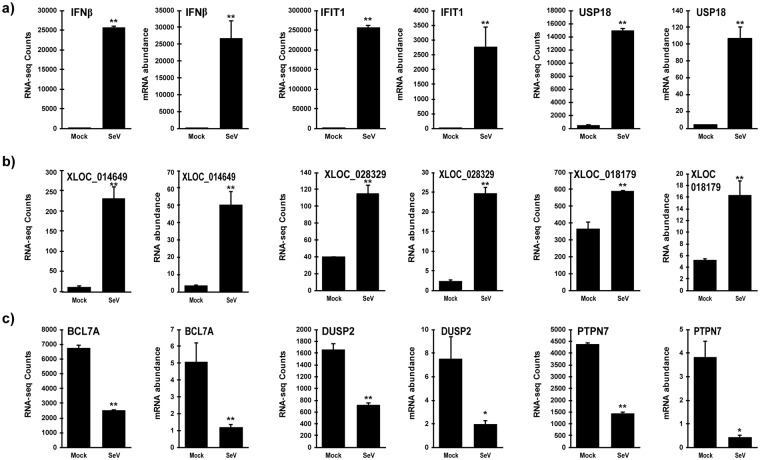
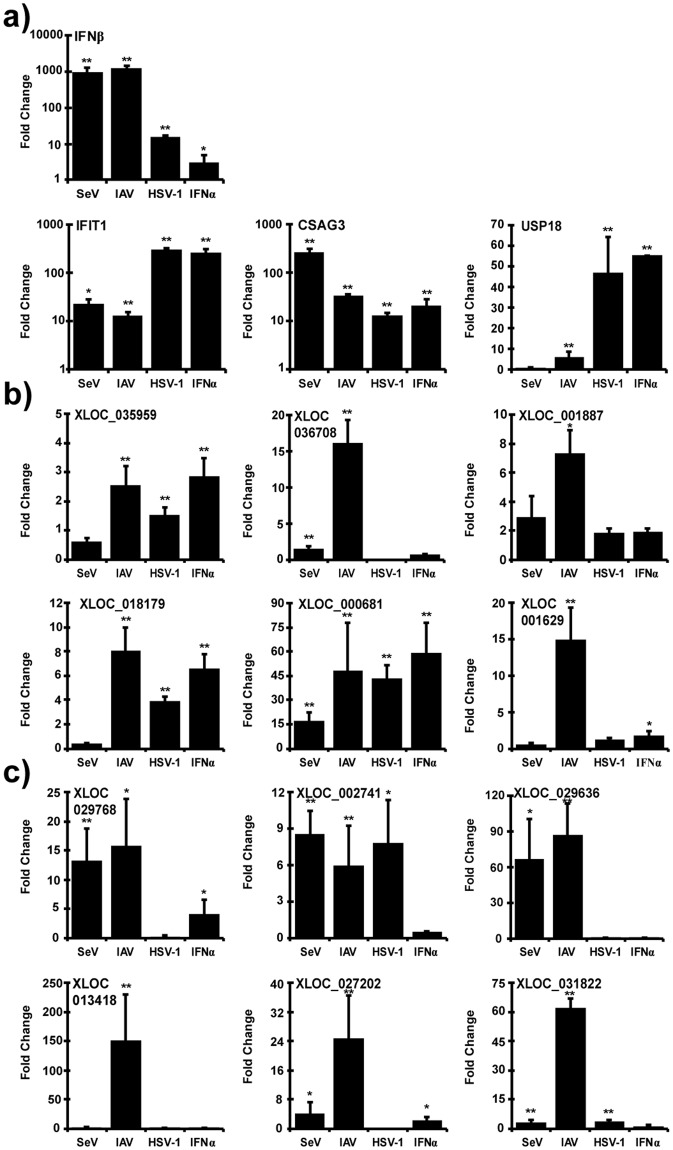
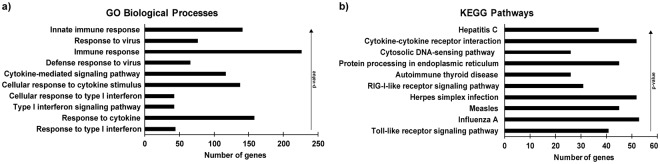
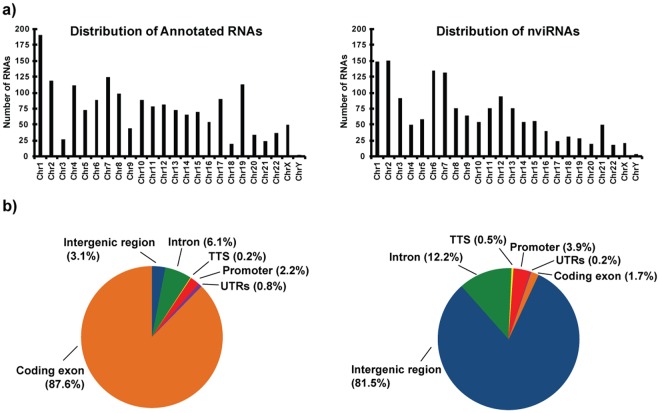
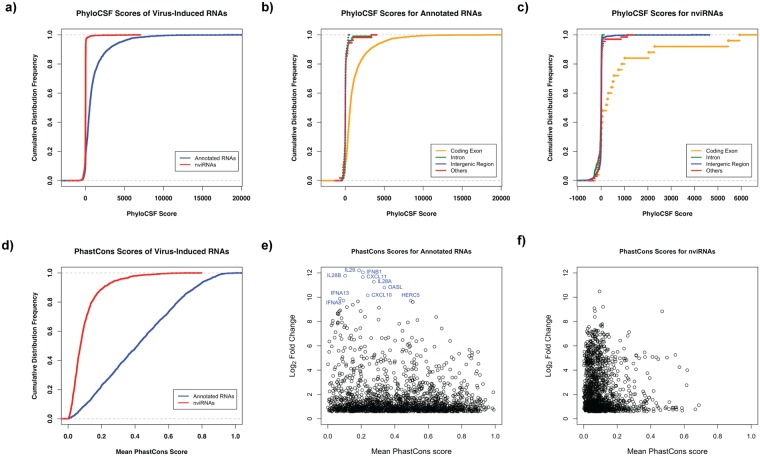
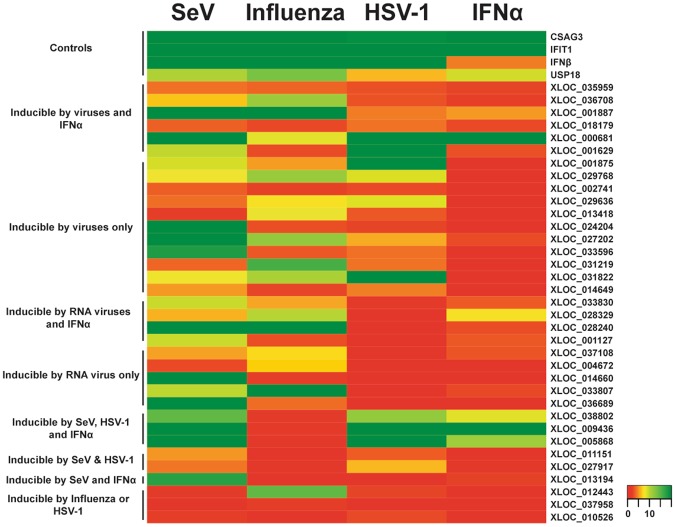
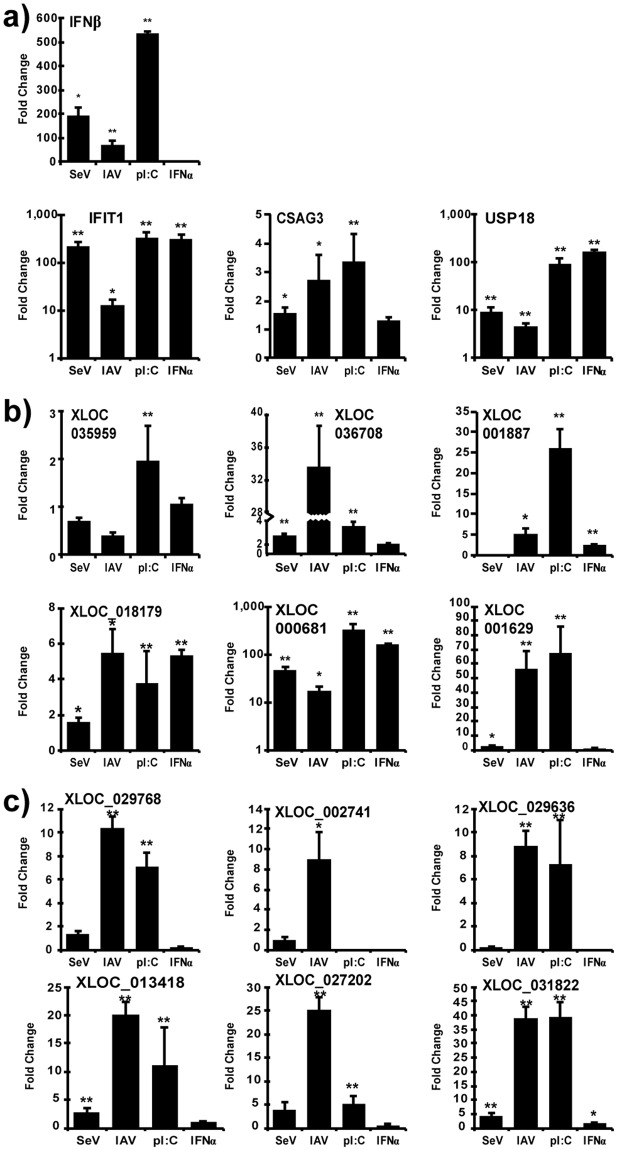
Innate antiviral immune responses are driven by virus-induced changes in host gene expression. While much research on antiviral effectors has focused on virus-inducible mRNAs, recent genome-wide analyses have identified hundreds of novel target sites for virus-inducible transcription factors and RNA polymerase. These sites are beyond the known antiviral gene repertoire and their contribution to innate immune responses is largely unknown. In this study, RNA-sequencing of mock-infected and Sendai virus-infected cells was performed to characterize the virus-inducible transcriptome and identify novel virus-inducible RNAs (nviRNAs). Virus-inducible transcription was observed throughout the genome resulting in expression of 1755 previously RefSeq-annotated RNAs and 1545 nviRNAs. The previously-annotated RNAs primarily consist of protein-coding mRNAs, including several well-known antiviral mRNAs that had low sequence conservation but were highly virus-inducible. The previously-unannotated nviRNAs were mostly noncoding RNAs with poor sequence conservation. Independent analyses of nviRNAs based on infection with Sendai virus, influenza virus, and herpes simplex virus 1, or direct stimulation with IFNα revealed a range of expression patterns in various human cell lines. These phylogenetic and expression analyses suggest that many of the nviRNAs share the high inducibility and low sequence conservation characteristic of well-known primary antiviral effectors and may represent dynamically evolving antiviral factors.
先天抗病毒免疫反应是由病毒诱导的宿主基因表达变化驱动的。虽然针对抗病毒效应物的研究主要集中在病毒诱导的 mRNAs 上,但最近的全基因组分析已经确定了数百个新型病毒诱导转录因子和 RNA 聚合酶的靶标位点。这些位点超出了已知的抗病毒基因库,它们对先天免疫反应的贡献在很大程度上是未知的。在这项研究中,通过对 mock 感染和 Sendai 病毒感染的细胞进行 RNA-seq 分析,来描述病毒诱导的转录组并鉴定新型病毒诱导的 RNA(nviRNAs)。在整个基因组中观察到病毒诱导的转录,导致 1755 个先前 RefSeq 注释的 RNA 和 1545 个 nviRNAs 的表达。先前注释的 RNA 主要由编码蛋白的 mRNAs 组成,包括几种众所周知的抗病毒 mRNAs,它们的序列保守性低,但病毒诱导性高。先前未注释的 nviRNAs 大多是序列保守性差的非编码 RNA。基于 Sendai 病毒、流感病毒和单纯疱疹病毒 1 的感染,或 IFNα 的直接刺激,对 nviRNAs 进行独立分析,在各种人细胞系中揭示了一系列表达模式。这些系统发育和表达分析表明,许多 nviRNAs 具有与已知主要抗病毒效应物相似的高诱导性和低序列保守性特征,可能代表着动态进化的抗病毒因子。