Center for Global Health and Social Responsibility, University of Minnesota, Minneapolis, Minnesota.
College of Education and Human Development, University of Minnesota, Minneapolis, Minnesota.
Am J Trop Med Hyg. 2019 Jan;100(1_Suppl):9-14. doi: 10.4269/ajtmh.18-0557.
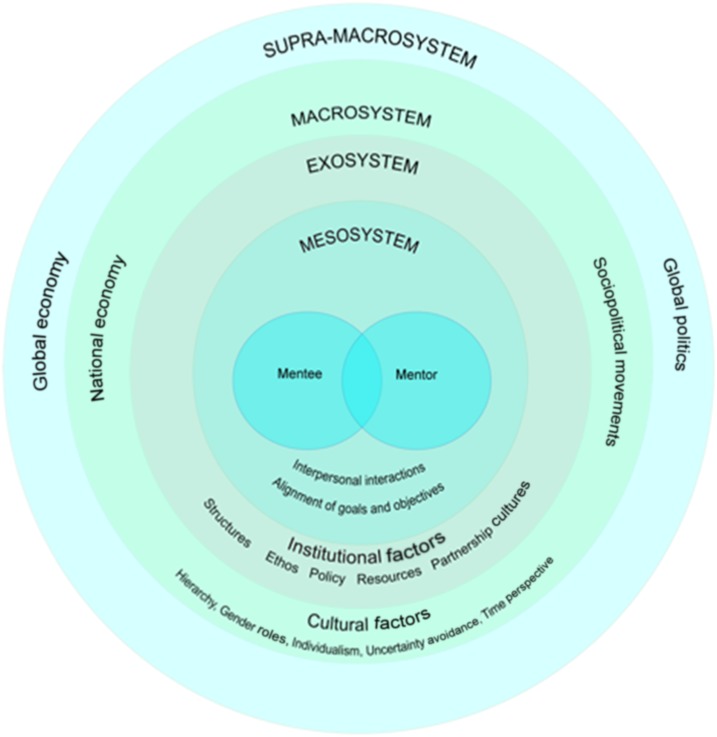
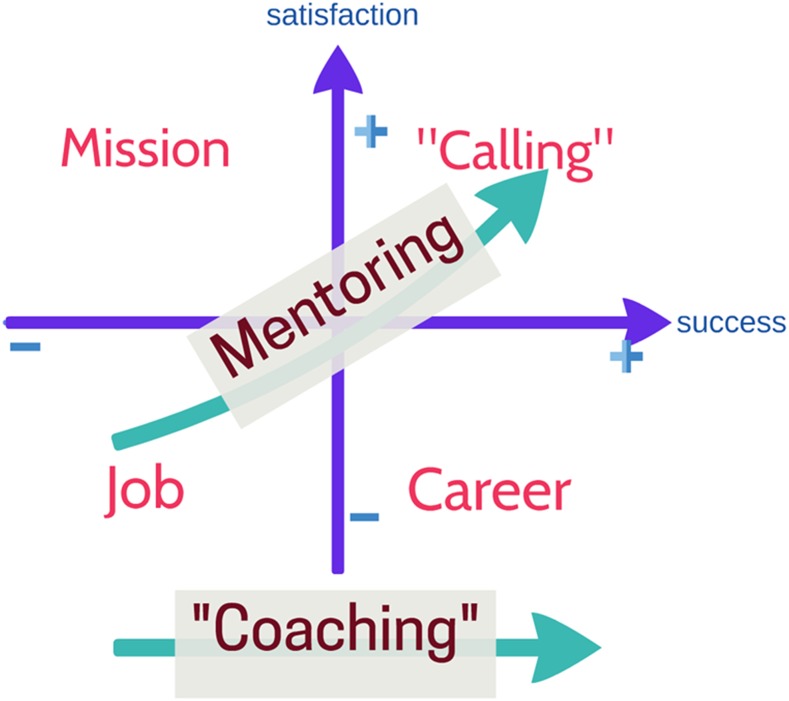
Although mentoring is not a common practice in low- and middle-income countries (LMICs), there is a strong need for it. Conceptual frameworks provide the structure to design, study, and problem-solve complex phenomena. Following four workshops in South America, Asia, and Africa, and borrowing on theoretical models from higher education, this article proposes two conceptual frameworks of mentoring in LMICs. In the first model, we propose to focus the mentor-mentee relationship and interactions, and in the second, we look at mentoring activities from a mentees' perspective. Our models emphasize the importance of an ongoing dynamic between the mentor and mentee that is mutually beneficial. It also emphasizes the need for institutions to create enabling environments that encourage mentorship. We expect that these frameworks will help LMIC institutions to design new mentoring programs, clarify expectations, and analyze problems with existing mentoring programs. Our models, while being framed in the context of global health, have the potential for wider application geographically and across disciplines.
尽管指导在中低收入国家(LMICs)并不常见,但却非常有必要。概念框架为设计、研究和解决复杂现象提供了结构。本文借鉴了来自高等教育的理论模型,在南美洲、亚洲和非洲的四个工作坊之后,提出了两种在 LMICs 中进行指导的概念框架。在第一个模型中,我们建议关注导师-学员关系和互动,在第二个模型中,我们从学员的角度来看待指导活动。我们的模型强调了导师和学员之间互惠互利的持续动态关系的重要性。它还强调了机构需要创造有利的环境,鼓励指导。我们希望这些框架将帮助 LMIC 机构设计新的指导计划,明确期望,并分析现有指导计划中存在的问题。我们的模型虽然是在全球卫生背景下提出的,但在地理和学科上都具有广泛应用的潜力。