Section of Environmental Health, Department of Public Health, University of Copenhagen, Copenhagen, Denmark.
The Research Unit for General Practice and Section of General Practice, Department of Public Health, University of Copenhagen, Copenhagen, Denmark.
PLoS One. 2018 Nov 15;13(11):e0207184. doi: 10.1371/journal.pone.0207184. eCollection 2018.
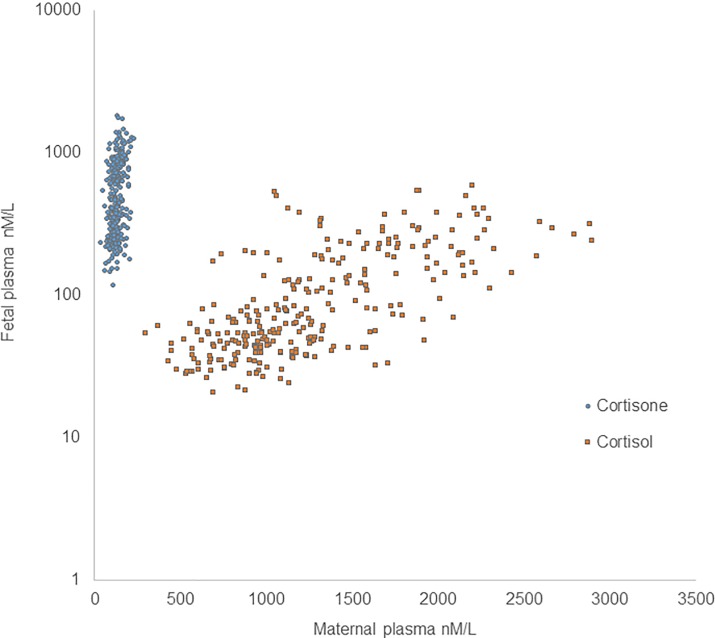
Prenatal stress affects the health of the pregnant woman and the fetus. Cortisol blood levels are elevated in pregnancy, and fetal exposure to cortisol is regulated by the placenta enzyme 11β-HSD2. A decrease in enzyme activity allows more maternal cortisol to pass through the placental barrier. Combining the fetal and maternal cortisol to cortisone ratio into the adjusted fetal cortisol exposure (AFCE) represents the activity of the enzyme 11β-HSD2 in the placenta.
To investigate the effect of prenatal maternal stress on the ratio of cortisol and cortisone in maternal and fetal blood at birth in a normal population.
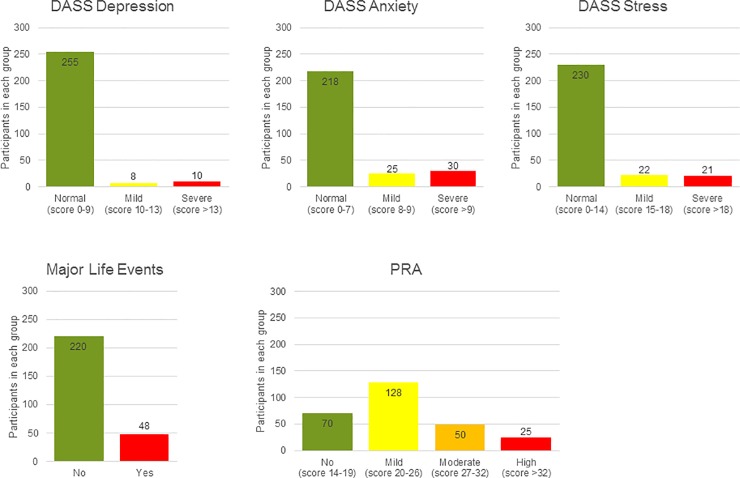
Maternal self-reported stress was assessed at one time-point, as late in the pregnancy as convenient for the participant, using the Depression Anxiety Stress Scales (DASS-42), Pregnancy Related Anxiety (PRA), and Major Life Events during pregnancy. The study included 273 participants from Copenhagen University Hospital. Maternal and umbilical cord blood was sampled directly after birth and cortisol and cortisone concentrations were quantified using UPLC chromatography. Data were analyzed in a five-step regression model with addition of possible confounders. The primary outcome was AFCE, and plasma concentrations of maternal and fetal cortisol and cortisone were secondary outcomes.
Significant associations were seen for the primary outcome AFCE and the plasma concentrations of maternal cortisol and fetal cortisone with exposure to Pregnancy Related Anxiety (PRA), though the associations were reduced when adjusting for birth related variables, especially delivery mode. The weight of the placenta affected the associations of exposures on AFCE, but not plasma concentrations of cortisol and cortisone in mother and fetus. Moreover, the study demonstrated the importance of delivery mode and birth strain on cortisol levels right after delivery.
Our main finding was associations between PRA and AFCE, which shows the effect of maternal stress on placental cortisol metabolism.
产前应激会影响孕妇和胎儿的健康。怀孕期间皮质醇的血液水平升高,而胎儿暴露于皮质醇受到胎盘酶 11β-HSD2 的调节。酶活性的降低会使更多的母体皮质醇通过胎盘屏障。将胎儿和母体皮质醇与皮质酮的比值结合到调整后的胎儿皮质醇暴露(AFCE)中,代表了胎盘中 11β-HSD2 酶的活性。
研究正常人群中产前母体应激对分娩时母血和胎血中皮质醇与皮质酮比值的影响。
使用抑郁焦虑压力量表(DASS-42)、妊娠相关焦虑(PRA)和怀孕期间重大生活事件,在妊娠晚期的某个时间点评估母亲的自我报告压力。该研究纳入了来自哥本哈根大学医院的 273 名参与者。分娩后直接采集母血和脐血样本,并使用 UPLC 色谱法定量皮质醇和皮质酮浓度。数据采用逐步回归模型进行分析,并加入了可能的混杂因素。主要结局为 AFCE,母血和胎血中皮质醇和皮质酮的浓度为次要结局。
主要结局 AFCE 以及母血皮质醇和胎血皮质酮的浓度与妊娠相关焦虑(PRA)的暴露显著相关,但当调整分娩相关变量,特别是分娩方式时,这些关联会减弱。胎盘的重量会影响暴露与 AFCE 的关联,但不会影响母血和胎血中皮质醇和皮质酮的浓度。此外,该研究还表明了分娩方式和出生时的应激对分娩后皮质醇水平的重要性。
我们的主要发现是 PRA 与 AFCE 之间存在关联,这表明母体应激对胎盘皮质醇代谢有影响。