Center for Reproductive Sciences, University of California San Francisco, San Francisco, CA 94143, USA.
Department of Obstetrics and Gynecology, University of California San Francisco, San Francisco, CA 94143, USA.
Cells. 2021 Feb 12;10(2):379. doi: 10.3390/cells10020379.
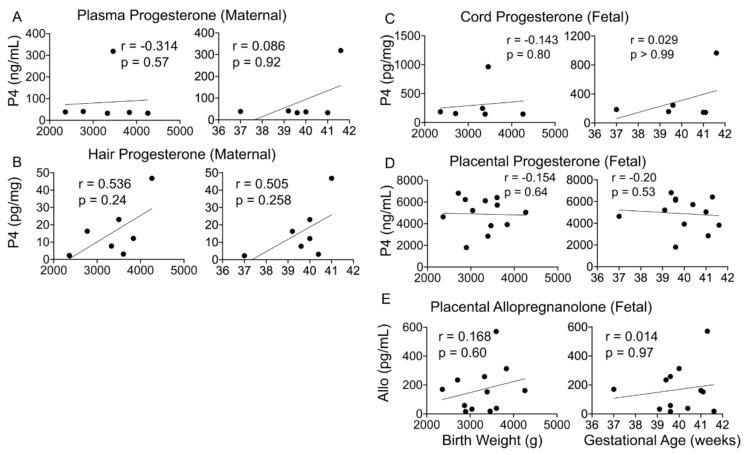
Maternal stress during pregnancy is linked to several negative birth outcomes. The placenta, a unique pregnancy-specific organ, not only nourishes and protects the fetus but is also the major source of progesterone and estrogens. As the placenta becomes the primary source of maternal progesterone (P4) and estradiol between 6-9 weeks of gestation, and these hormones are critical for maintaining pregnancy, maternal stress may modulate levels of these steroids to impact birth outcomes. The objective was to test whether maternal perceived stress crosses the placental barrier to modulate fetal steroids, including cortisol, which is a downstream indicator of maternal hypothalamic-pituitary-adrenal (HPA) axis regulation and is associated with negative fetal outcomes. Nulliparous women, 18 years or older, with no known history of adrenal or endocrine illness were recruited during their third trimester of pregnancy at the University of California San Francisco (UCSF) Mission Bay hospital obstetrics clinics. Simultaneous measurement of 10 steroid metabolites in maternal (plasma and hair) and fetal (cord blood and placenta) samples was performed using tandem mass spectrometry along with assessment of the perceived stress score and sociodemographic status. While the maternal perceived stress score (PSS) and sociodemographic status were positively associated with each other and each with the body mass index (BMI) ( = 0.73, = 0.0008; = 0.48, = 0.05; = 0.59, = 0.014, respectively), PSS did not correlate with maternal or fetal cortisol, cortisone levels, or fetal birth weight. Regardless of maternal PSS or BMI, fetal steroid levels remained stable and unaffected. Progesterone was the only steroid analyte quantifiable in maternal hair and correlated positively with PSS ( = 0.964, = 0.003), whereas cord estradiol was negatively associated with PSS ( = -0.94, = 0.017). In conclusion, hair progesterone might serve as a better marker of maternal stress than cortisol or cortisone and maternal PSS negatively impacts fetal estradiol levels. Findings have implications for improved biomarkers of stress and targets for future research to identify factors that buffer the fetus from adverse effects of maternal stress.
孕期母体压力与多种不良生育结局相关。胎盘是一种独特的妊娠特异性器官,不仅为胎儿提供营养和保护,还是孕激素和雌激素的主要来源。随着胎盘在妊娠 6-9 周成为母体孕激素(P4)和雌二醇的主要来源,而这些激素对维持妊娠至关重要,母体压力可能会调节这些类固醇的水平,从而影响生育结局。本研究旨在测试母体感知压力是否穿过胎盘屏障来调节胎儿类固醇,包括皮质醇,后者是母体下丘脑-垂体-肾上腺(HPA)轴调节的下游指标,与不良胎儿结局相关。研究人员招募了年龄在 18 岁及以上、无已知肾上腺或内分泌疾病史的初产妇,在加利福尼亚大学旧金山分校(UCSF)使命湾医院产科诊所妊娠晚期入组。使用串联质谱法同时测量母体(血浆和头发)和胎儿(脐血和胎盘)样本中的 10 种类固醇代谢物,并评估感知压力评分和社会人口统计学状况。母体感知压力评分(PSS)和社会人口统计学状况彼此呈正相关,且与体重指数(BMI)相关(=0.73,=0.0008;=0.48,=0.05;=0.59,=0.014),而 PSS 与母体或胎儿皮质醇、皮质酮水平或胎儿出生体重均不相关。无论母体 PSS 或 BMI 如何,胎儿类固醇水平均保持稳定且不受影响。孕激素是唯一可在母体头发中定量的类固醇分析物,与 PSS 呈正相关(=0.964,=0.003),而脐带雌二醇与 PSS 呈负相关(= -0.94,=0.017)。总之,头发孕激素可能比皮质醇或皮质酮更能反映母体压力,而母体 PSS 会对胎儿雌二醇水平产生负面影响。这些发现为改善压力生物标志物和确定减轻母体压力对胎儿不利影响的因素提供了研究方向。