Applied Immunobiology and Transplantation Group, Institute of Cellular Medicine, Medical School, University of Newcastle Upon Tyne, Newcastle upon Tyne NE2 4HH, UK.
Institute of Genetic Medicine, International Centre for Life, University of Newcastle Upon Tyne, Newcastle upon Tyne NE1 3BZ, UK.
Int J Mol Sci. 2018 Nov 14;19(11):3592. doi: 10.3390/ijms19113592.
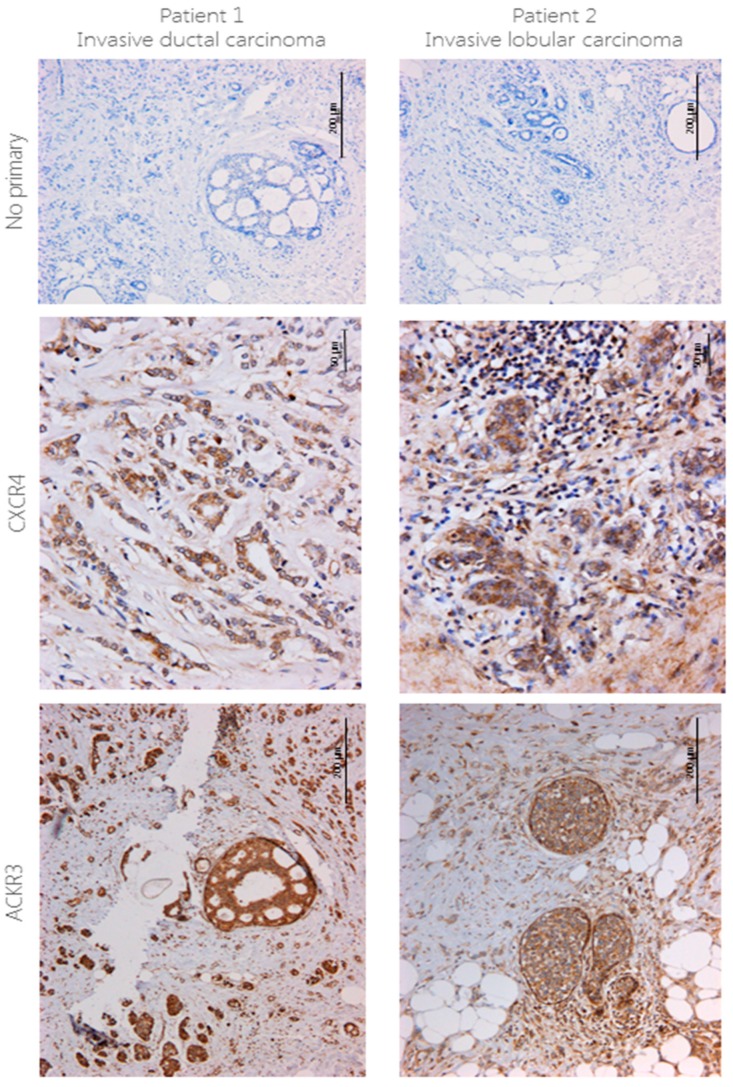
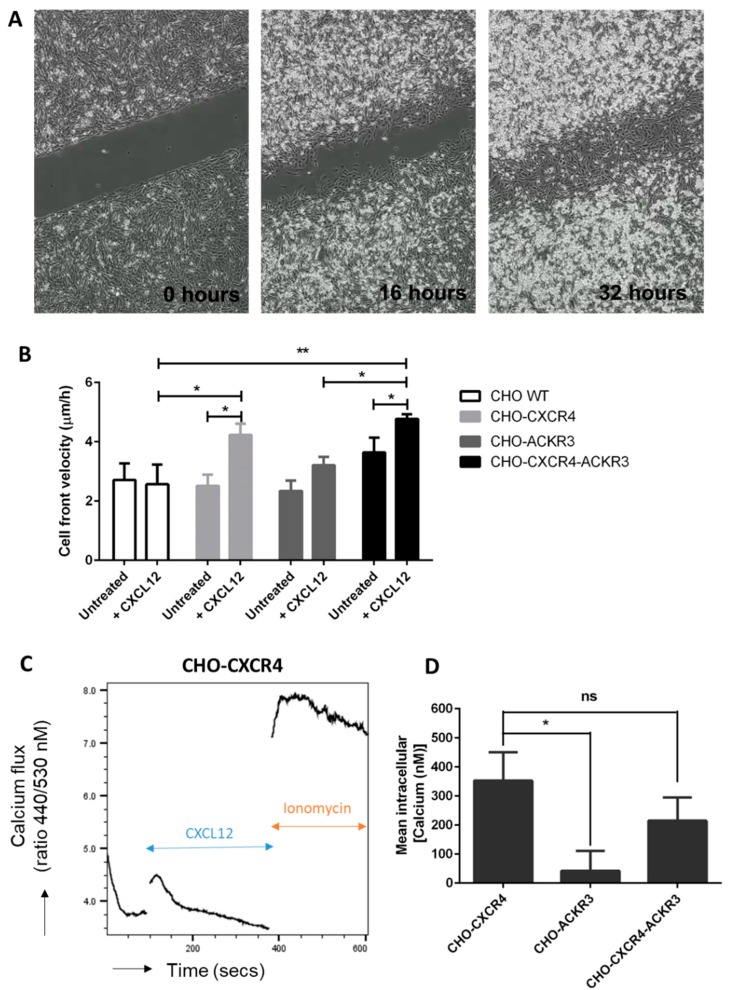
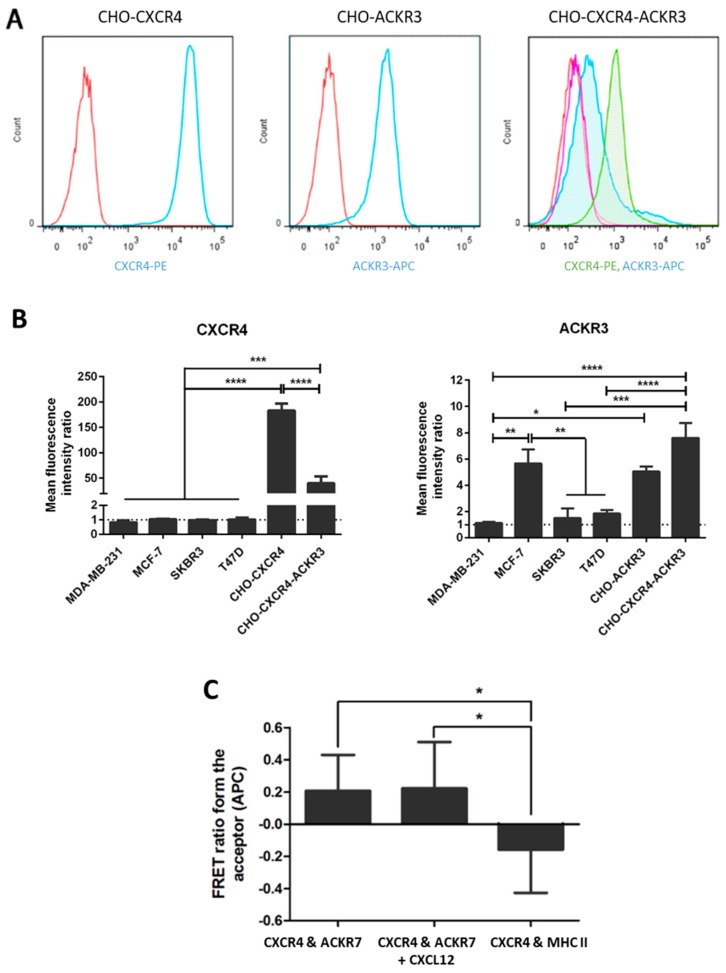
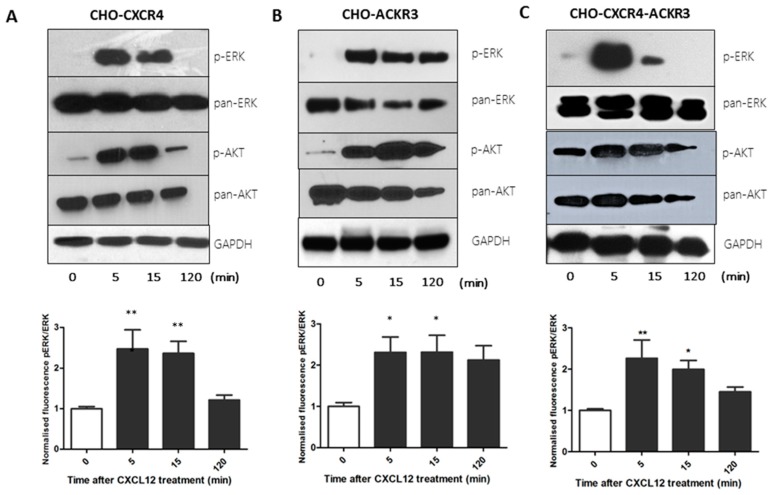
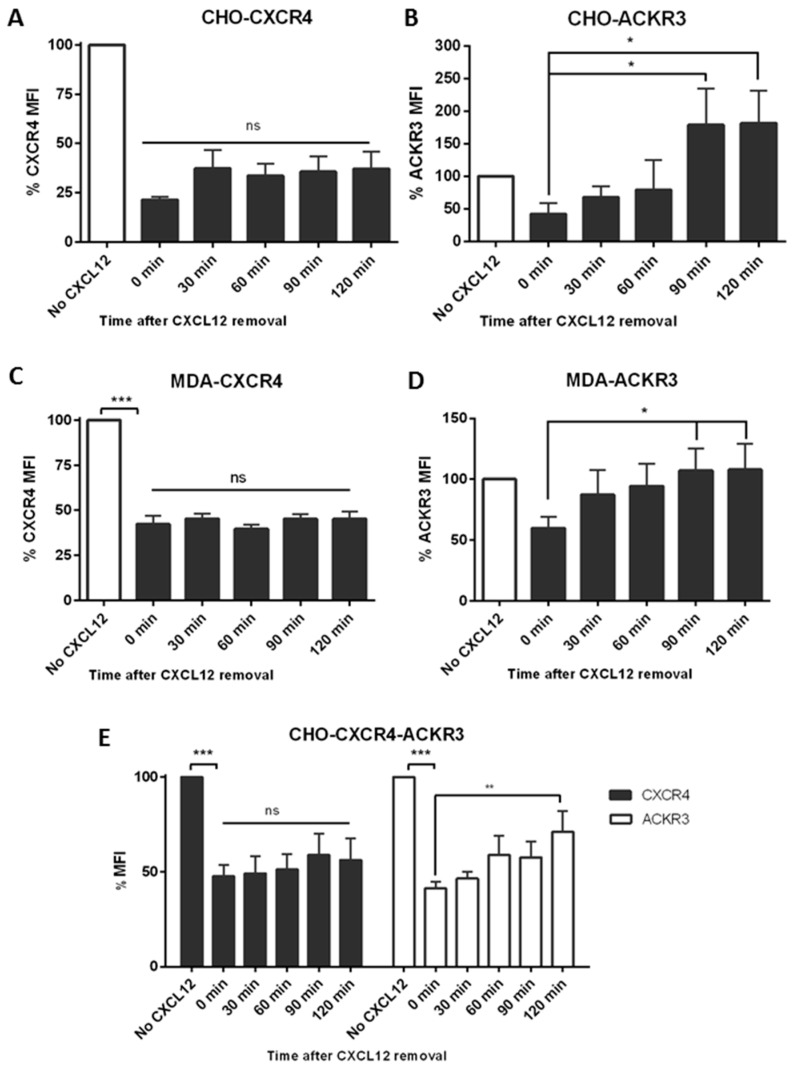
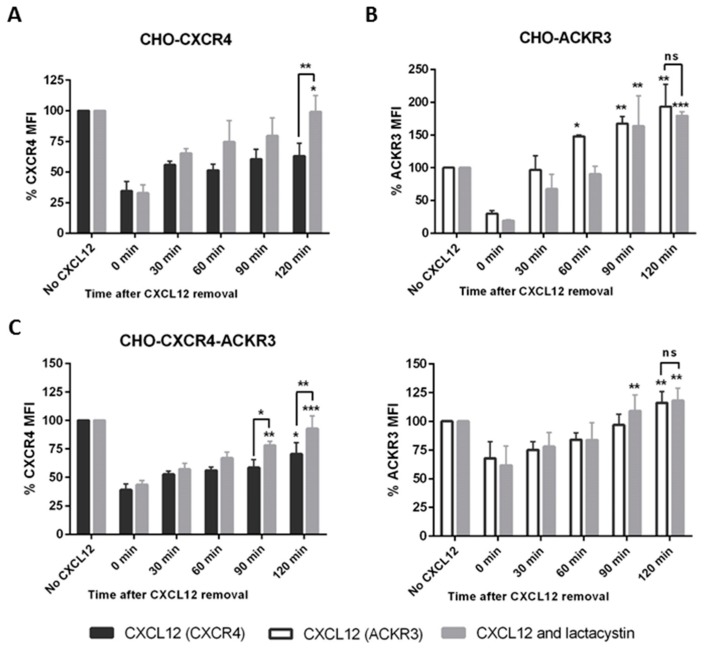
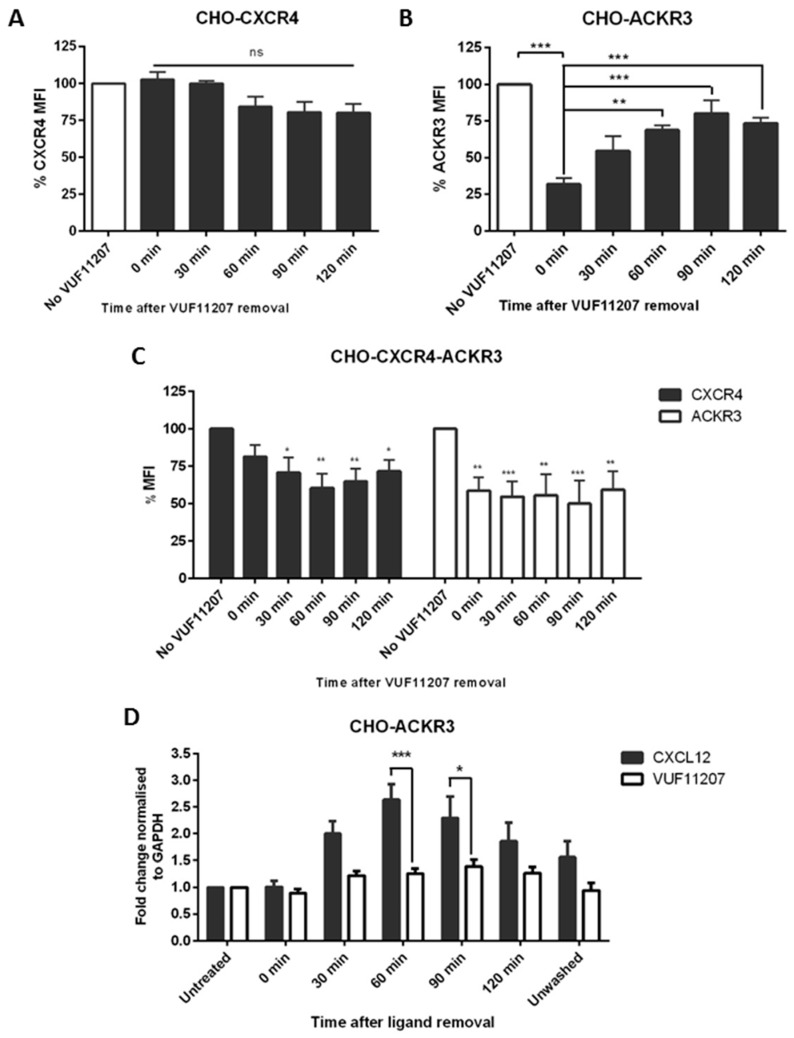
Upon binding with the chemokine CXCL12, the chemokine receptor CXCR4 has been shown to promote breast cancer progression. This process, however, can be affected by the expression of the atypical chemokine receptor ACKR3. Given ACKR3's ability to form heterodimers with CXCR4, we investigated how dual expression of both receptors differed from their lone expression in terms of their signalling pathways. We created single and double CXCR4 and/or ACKR3 Chinese hamster ovary (CHO) cell transfectants. ERK and Akt phosphorylation after CXCL12 stimulation was assessed and correlated with receptor internalization. Functional consequences in cell migration and proliferation were determined through wound healing assays and calcium flux. Initial experiments showed that CXCR4 and ACKR3 were upregulated in primary breast cancer and that CXCR4 and ACKR3 could form heterodimers in transfected CHO cells. This co-expression modified CXCR4's Akt activation after CXCL12's stimulation but not ERK phosphorylation ( < 0.05). To assess this signalling disparity, receptor internalization was assessed and it was observed that ACKR3 was recycled to the surface whilst CXCR4 was degraded ( < 0.01), a process that could be partially inhibited with a proteasome inhibitor ( < 0.01). Internalization was also assessed with the ACKR3 agonist VUF11207, which caused both CXCR4 and ACKR3 to be degraded after internalization ( < 0.05 and < 0.001), highlighting its potential as a dual targeting drug. Interestingly, we observed that CXCR4 but not ACKR3, activated calcium flux after CXCL12 stimulation ( < 0.05) and its co-expression could increase cellular migration ( < 0.01). These findings suggest that both receptors can signal through ERK and Akt pathways but co-expression can alter their kinetics and internalization pathways.
趋化因子受体 CXCR4 与趋化因子 CXCL12 结合后,已被证明可促进乳腺癌的进展。然而,这一过程可能会受到非典型趋化因子受体 ACKR3 的表达的影响。鉴于 ACKR3 能够与 CXCR4 形成异二聚体,我们研究了这两种受体的双重表达与单独表达在信号通路方面有何不同。我们创建了单和双 CXCR4 和/或 ACKR3 中国仓鼠卵巢(CHO)细胞转染子。评估了 CXCL12 刺激后 ERK 和 Akt 的磷酸化,并将其与受体内化相关联。通过划痕愈合测定和钙流来确定细胞迁移和增殖的功能后果。初步实验表明,CXCR4 和 ACKR3 在原发性乳腺癌中上调,并且 CXCR4 和 ACKR3 可以在转染的 CHO 细胞中形成异二聚体。这种共表达改变了 CXCR4 在 CXCL12 刺激后的 Akt 激活,但不改变 ERK 磷酸化(<0.05)。为了评估这种信号差异,我们评估了受体内化,观察到 ACKR3 被回收至表面,而 CXCR4 被降解(<0.01),该过程可以用蛋白酶体抑制剂部分抑制(<0.01)。我们还用 ACKR3 激动剂 VUF11207 评估了内化,结果发现,ACKR3 与 CXCR4 一样,在内化后被降解(<0.05 和<0.001),这突出了它作为双重靶向药物的潜力。有趣的是,我们观察到 CXCR4 但不是 ACKR3 在 CXCL12 刺激后激活钙流(<0.05),并且其共表达可以增加细胞迁移(<0.01)。这些发现表明,两种受体都可以通过 ERK 和 Akt 途径发出信号,但共表达可以改变它们的动力学和内化途径。