Cerverò-Varona Adrian, Canciello Angelo, Peserico Alessia, Haidar Montes Arlette Alina, Citeroni Maria Rita, Mauro Annunziata, Russo Valentina, Moffa Samanta, Pilato Serena, Di Giacomo Stefano, Dufrusine Beatrice, Dainese Enrico, Fontana Antonella, Barboni Barbara
Department of Biosciences and Agro-Food and Environmental Technologies, University of Teramo,64100, Teramo, Italy.
Department of Pharmacy, University "G. D'Annunzio", Via Dei Vestini, 66100, Chieti, Italy.
Mater Today Bio. 2023 Aug 2;22:100758. doi: 10.1016/j.mtbio.2023.100758. eCollection 2023 Oct.
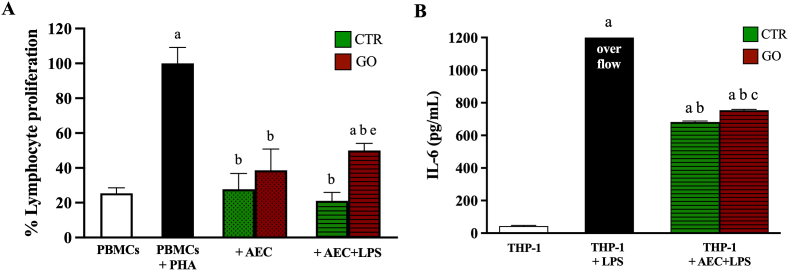
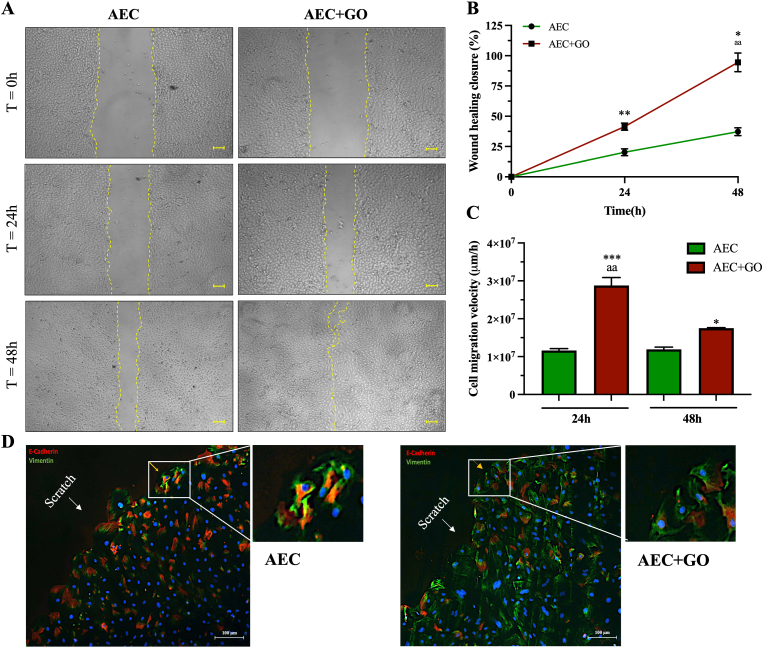
The application of biomaterials on immune regenerative strategies to deal with unsolved pathologies is getting attention in the field of tissue engineering. In this context, graphene oxide (GO) has been proposed as an immune-mimetic material largely used for developing stem cell-based regenerative therapies, since it has shown to influence stem cell behavior and modulate their immune response. Similarly, amniotic epithelial stem cells (AECs) are getting an increasing clinical interest as source of stem cells due to their great plasticity and immunomodulatory paracrine activities, even though GO bio-mimetic effects still remain unknown. To this aim, GO-functionalized glass coverslips have been used for AECs culture. The results demonstrated how GO-coating is able to induce and accelerate the Epithelial-Mesenchymal Transition (EMT), in a process mediated by the intracellular activation of TGFβ1-SMAD2/3 signaling pathway. The -differentiation towards mesenchymal phenotype provides AECs of migratory ability and substantially changes the pattern of cytokines secretion upon inflammatory stimulus. Indeed, GO-exposed AECs enhance their pro-inflammatory interleukins production thus inducing a more efficient activation of macrophages and, at the same time, by slightly reducing their inhibitory action on peripheral blood mononuclear cells proliferation. Therefore, the adhesion of AECs on GO-functionalized surfaces might contribute to the generation of a tailored microenvironment useful to face both the phases of the inflammation, thereby fostering the regenerative process.
生物材料在免疫再生策略中用于解决未解决的病理学问题,这在组织工程领域正受到关注。在这种背景下,氧化石墨烯(GO)已被提议作为一种免疫模拟材料,广泛用于开发基于干细胞的再生疗法,因为它已显示出会影响干细胞行为并调节其免疫反应。同样,羊膜上皮干细胞(AECs)作为干细胞来源正受到越来越多的临床关注,这是由于它们具有很大的可塑性和免疫调节旁分泌活性,尽管GO的仿生效应仍然未知。为了这个目的,GO功能化的玻璃盖玻片已用于AECs培养。结果表明,GO涂层能够在由TGFβ1-SMAD2/3信号通路的细胞内激活介导的过程中诱导并加速上皮-间质转化(EMT)。向间充质表型的分化赋予AECs迁移能力,并在炎症刺激下显著改变细胞因子分泌模式。实际上,暴露于GO的AECs会增强其促炎白细胞介素的产生,从而诱导巨噬细胞更有效的激活,同时,通过略微降低它们对外周血单核细胞增殖的抑制作用。因此,AECs在GO功能化表面上的黏附可能有助于产生一个定制的微环境,以应对炎症的两个阶段,从而促进再生过程。