Cunningham Tony J, Leal Stephanie L, Yassa Michael A, Payne Jessica D
Department of Psychology, University of Notre Dame, Notre Dame, Indiana 46556, USA.
Helen Wills Neuroscience Institute, University of California, Berkeley, Berkeley, California 94720, USA.
Learn Mem. 2018 Nov 15;25(12):611-619. doi: 10.1101/lm.047498.118. Print 2018 Dec.
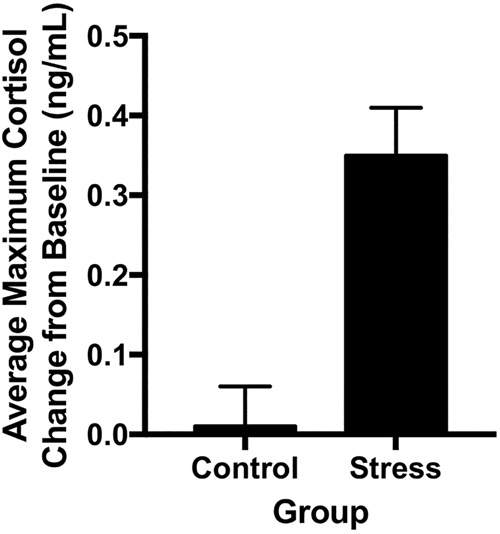
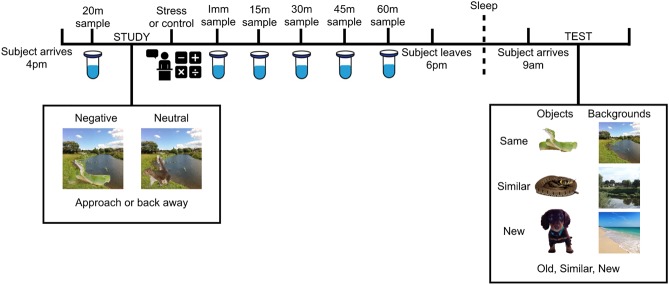
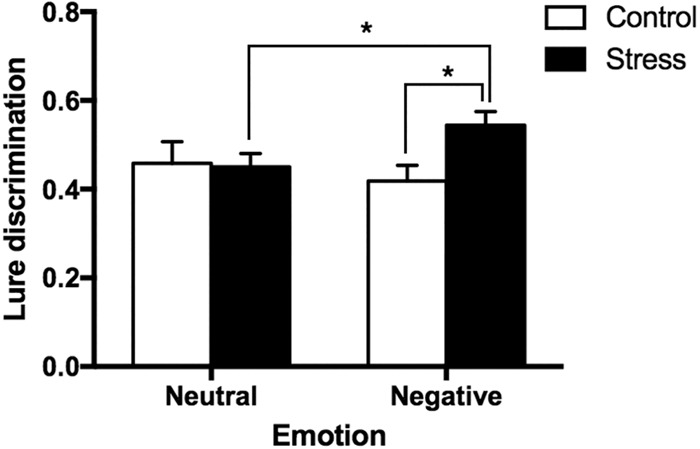
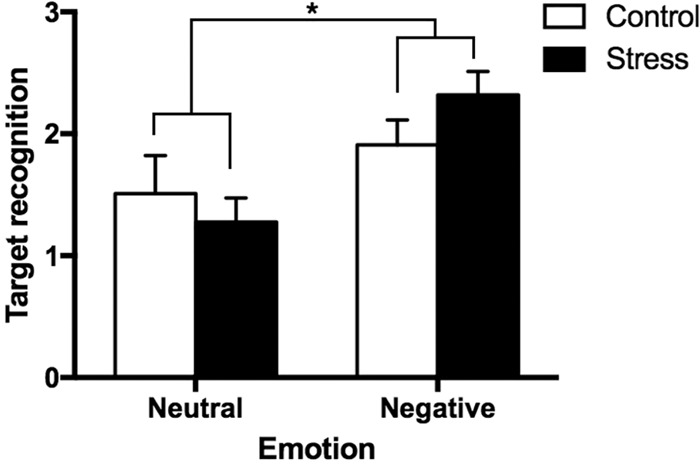
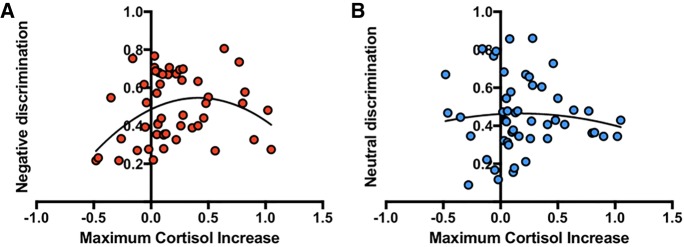
Stress influences how we remember emotional events and how these events shape future behaviors. However, the impact of stress on memory specificity for emotional events has yet to be examined. To this end, the present study utilized a mnemonic discrimination task that taxes hippocampal pattern separation, the process of distinguishing between overlapping experiences, thereby allowing us to better understand the mechanisms by which stress affects gist versus detail memory of emotional events. Participants encoded scenes composed of negative or neutral objects placed on neutral backgrounds and then underwent a psychosocial stressor or matched control task. Twenty-four hours later during testing, objects were presented separately, with some identical old objects (targets), some new objects (foils), and some similar but not identical objects (lures). Target recognition was enhanced for negative compared to neutral objects in both the stress and control groups. Interestingly, post-encoding stress selectively enhanced mnemonic discrimination of negative versus neutral objects, which was not the case in the control group. Measures of salivary cortisol revealed a quadratic inverted U relationship between negative mnemonic discrimination and cortisol increase. These findings suggest that moderate cortisol release following stress is associated with enhanced memory precision for negative information.
压力会影响我们对情绪事件的记忆方式,以及这些事件如何塑造未来的行为。然而,压力对情绪事件记忆特异性的影响尚未得到研究。为此,本研究采用了一种记忆辨别任务,该任务对海马体模式分离能力提出了要求,即区分重叠经历的过程,从而使我们能够更好地理解压力影响情绪事件梗概记忆与细节记忆的机制。参与者对置于中性背景上的由负面或中性物体组成的场景进行编码,然后接受心理社会应激源或匹配的对照任务。24小时后进行测试时,物体被分别呈现,其中有一些相同的旧物体(目标物)、一些新物体(干扰物)以及一些相似但不完全相同的物体(诱饵)。在应激组和对照组中,与中性物体相比,负面物体的目标识别能力均得到增强。有趣的是,编码后应激选择性地增强了负面与中性物体之间的记忆辨别能力,而对照组则并非如此。唾液皮质醇测量结果显示,负面记忆辨别与皮质醇升高之间呈二次倒U形关系。这些发现表明,应激后适度的皮质醇释放与负面信息记忆精度的提高有关。