Centre for Microvascular Research, William Harvey Research Institute, Barts and The London School of Medicine and Dentistry, Queen Mary University of London, London EC1M 6BQ, UK.
Department of Microbiology and Immunobiology and HMS Center for Immune Imaging, Harvard Medical School, Boston, MA 02115, USA.
Immunity. 2018 Dec 18;49(6):1062-1076.e6. doi: 10.1016/j.immuni.2018.09.018. Epub 2018 Nov 13.
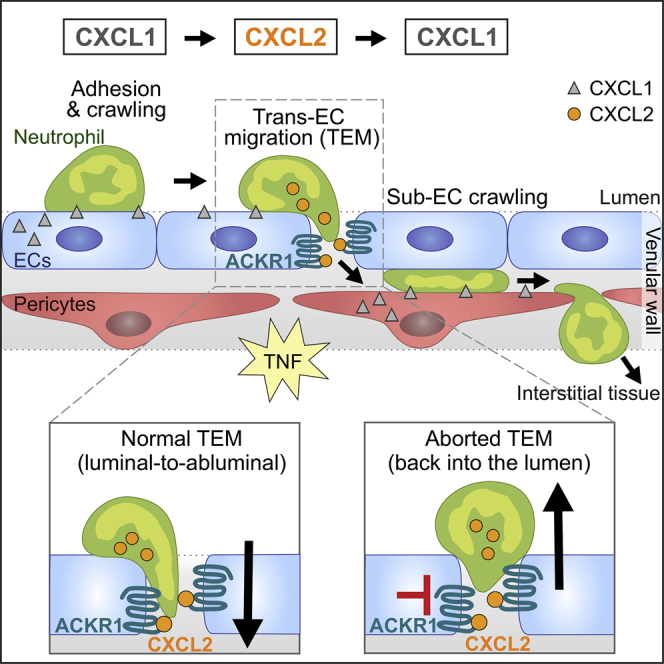
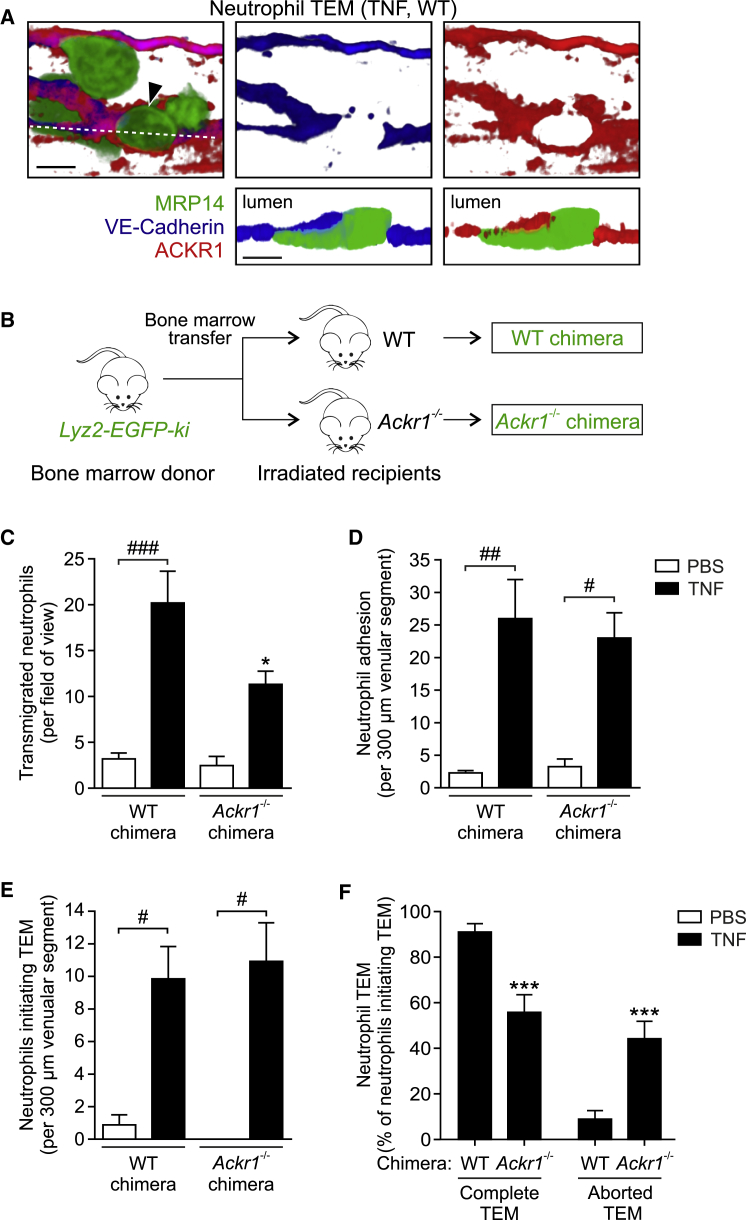
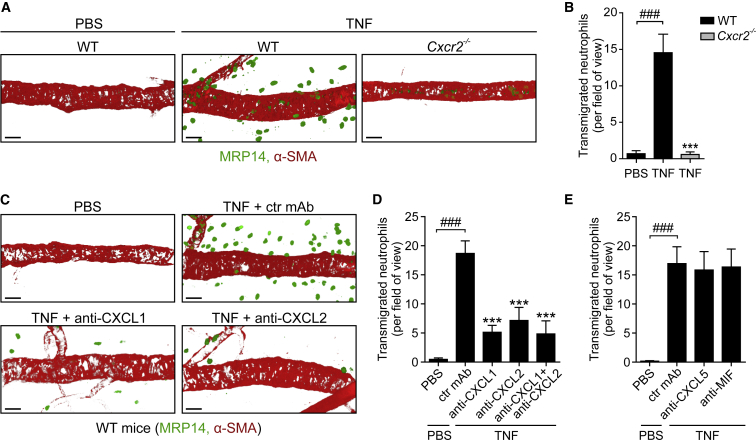
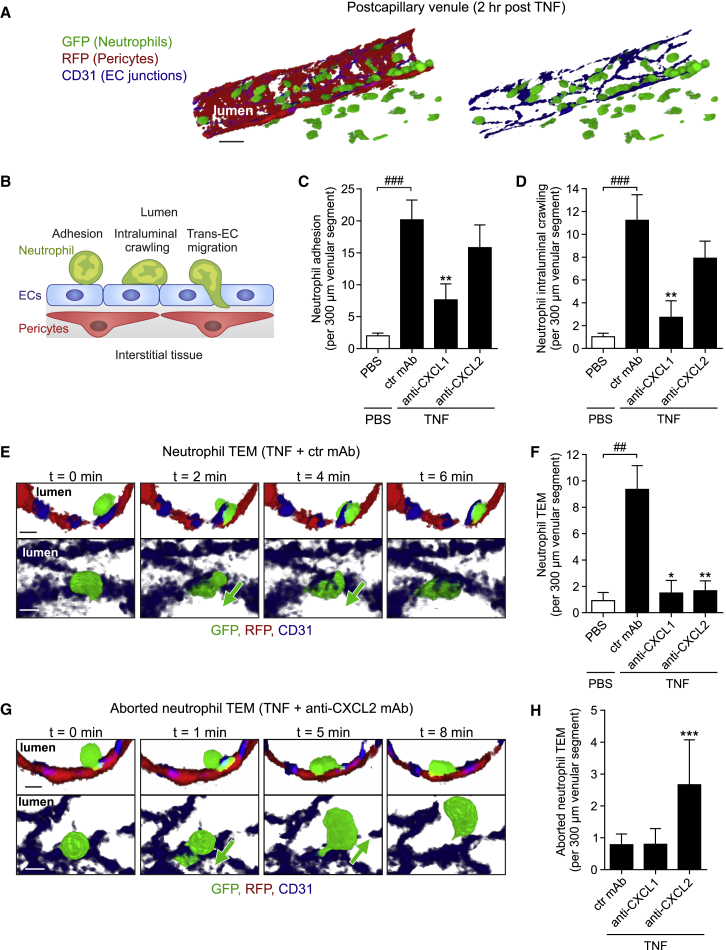
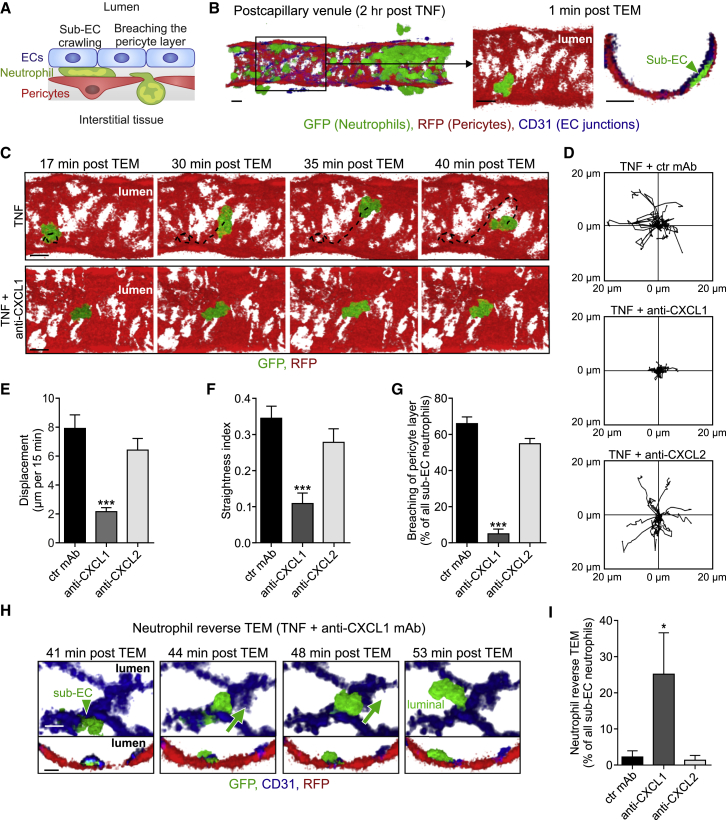
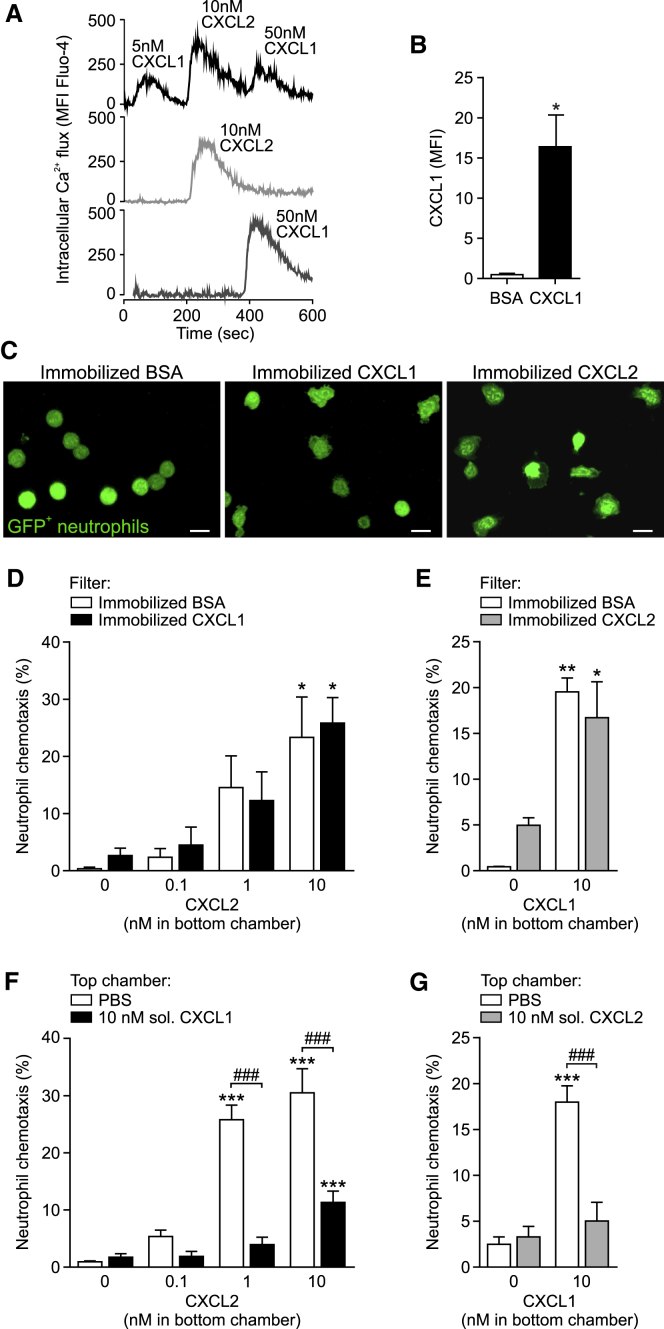
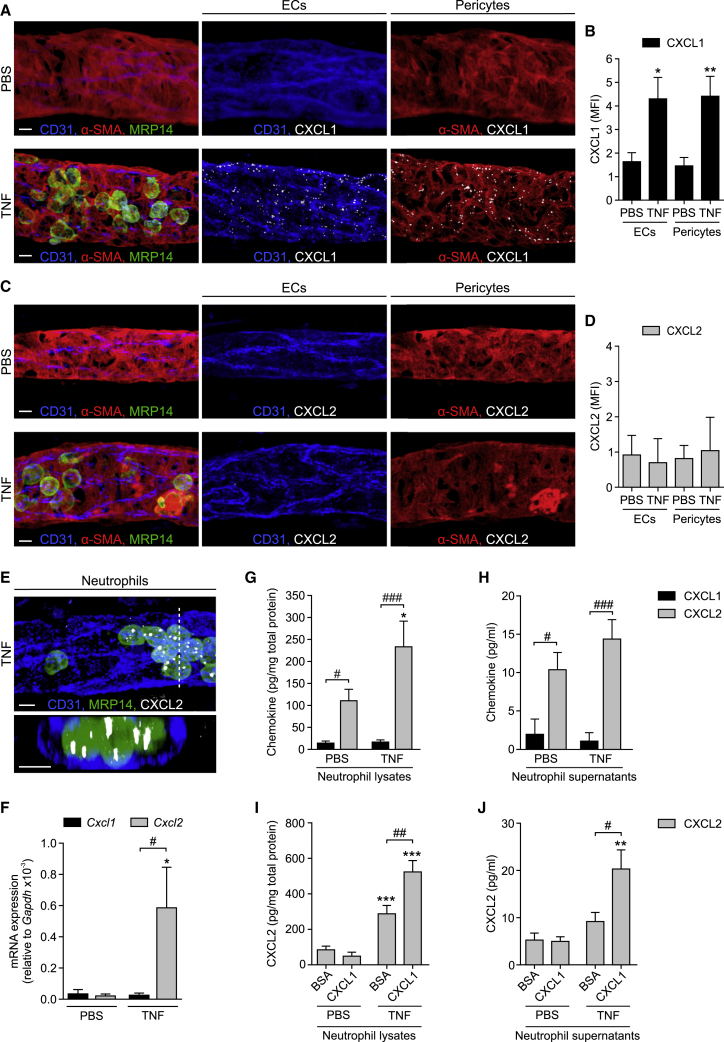
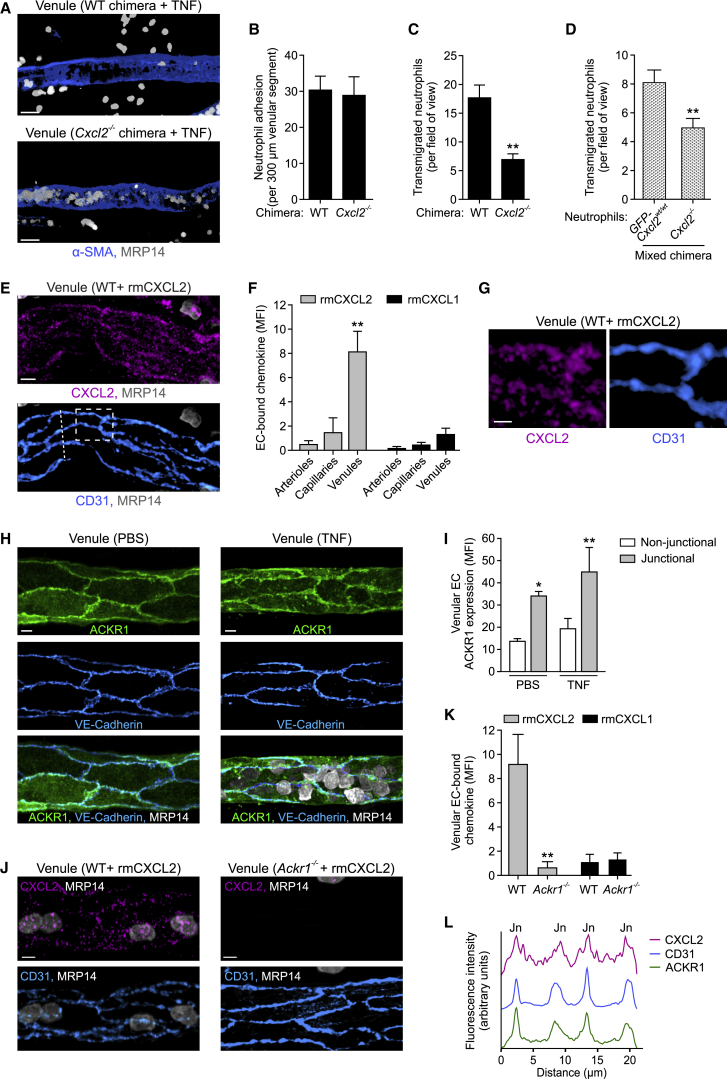
Neutrophils require directional cues to navigate through the complex structure of venular walls and into inflamed tissues. Here we applied confocal intravital microscopy to analyze neutrophil emigration in cytokine-stimulated mouse cremaster muscles. We identified differential and non-redundant roles for the chemokines CXCL1 and CXCL2, governed by their distinct cellular sources. CXCL1 was produced mainly by TNF-stimulated endothelial cells (ECs) and pericytes and supported luminal and sub-EC neutrophil crawling. Conversely, neutrophils were the main producers of CXCL2, and this chemokine was critical for correct breaching of endothelial junctions. This pro-migratory activity of CXCL2 depended on the atypical chemokine receptor 1 (ACKR1), which is enriched within endothelial junctions. Transmigrating neutrophils promoted a self-guided migration response through EC junctions, creating a junctional chemokine "depot" in the form of ACKR1-presented CXCL2 that enabled efficient unidirectional luminal-to-abluminal migration. Thus, CXCL1 and CXCL2 act in a sequential manner to guide neutrophils through venular walls as governed by their distinct cellular sources.
中性粒细胞需要定向信号来穿过静脉壁的复杂结构并进入炎症组织。在这里,我们应用共聚焦活体显微镜分析细胞因子刺激的小鼠提睾肌中中性粒细胞的迁移。我们确定了趋化因子 CXCL1 和 CXCL2 的不同且非冗余作用,这由它们不同的细胞来源决定。CXCL1 主要由 TNF 刺激的内皮细胞 (EC) 和周细胞产生,并支持腔和 EC 下的中性粒细胞爬行。相反,中性粒细胞是 CXCL2 的主要产生者,这种趋化因子对于正确破坏内皮连接至关重要。CXCL2 的这种促迁移活性依赖于富含在内皮连接中的非典型趋化因子受体 1 (ACKR1)。穿越的中性粒细胞通过 EC 连接促进了自我引导的迁移反应,形成了以 ACKR1 呈现的 CXCL2 形式的连接趋化因子“储存库”,从而实现了有效的单向从腔内向腔外迁移。因此,CXCL1 和 CXCL2 以顺序方式作用,根据其不同的细胞来源指导中性粒细胞穿过静脉壁。