Department of Microbiology/Key Laboratory for Experimental Teratology of the Chinese Ministry of Education, School of Basic Medical Science, Shandong University, Jinan, Shandong 250012, PR China; Key Laboratory of Infection and Immunity of Shandong Province, School of Basic Medical Science, Shandong University, Jinan, Shandong 250012, PR China.
Department of Microbiology/Key Laboratory for Experimental Teratology of the Chinese Ministry of Education, School of Basic Medical Science, Shandong University, Jinan, Shandong 250012, PR China; Shandong University-Karolinska Institutet Collaborative Laboratory for Cancer Research, Jinan, Shandong 250012, PR China.
EBioMedicine. 2018 Dec;38:69-78. doi: 10.1016/j.ebiom.2018.11.009. Epub 2018 Nov 16.
Histones chaperones have been found to play critical roles in tumor development and progression. However, the role of histone chaperone CHAF1A in gastric carcinogenesis and its underlying mechanisms remain elusive.
CHAF1A expression in gastric cancer (GC) was analyzed in GEO datasets and clinical specimens. CHAF1A knockdown and overexpression were used to explore its functions in gastric cancer cells. The regulation and potential molecular mechanism of CHAF1A expression in gastric cancer cells were studied by using cell and molecular biological methods.
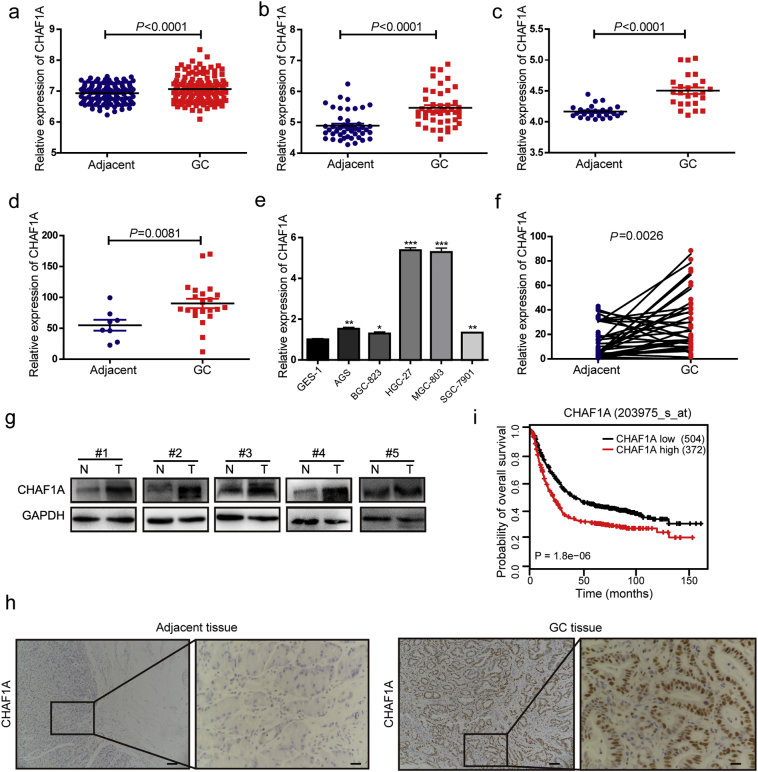
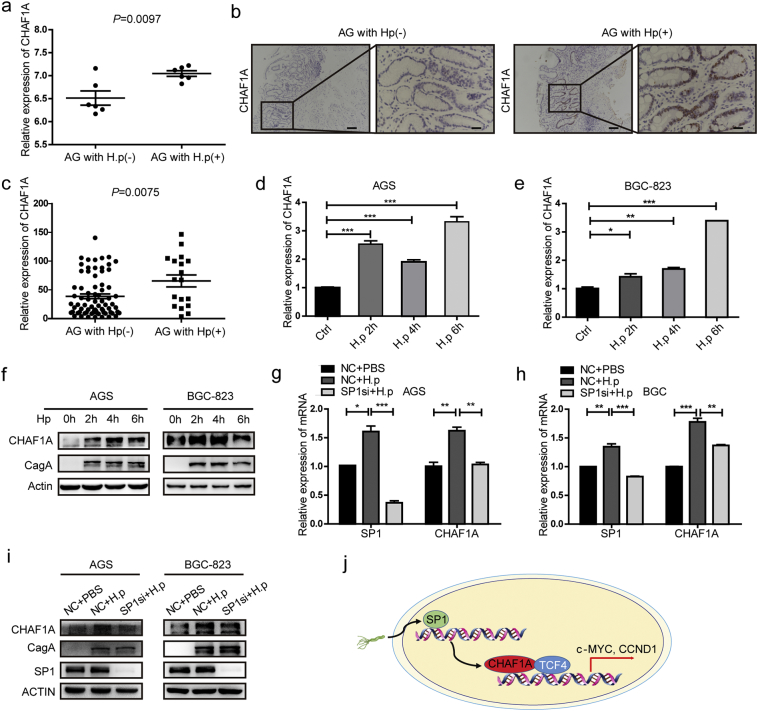
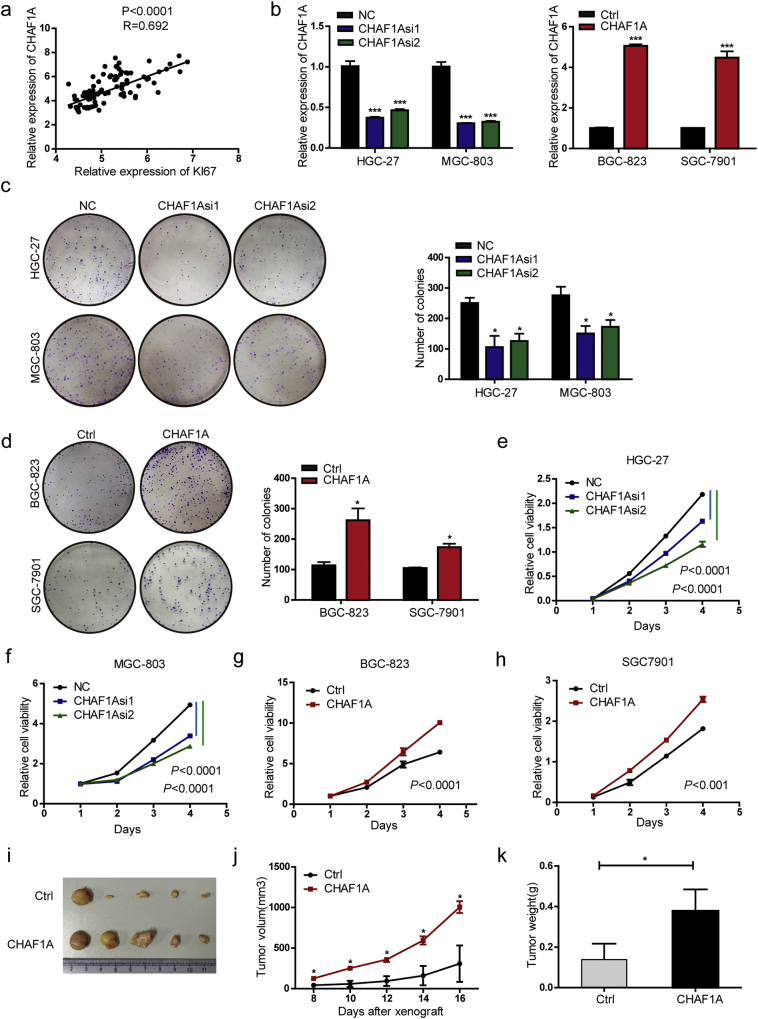
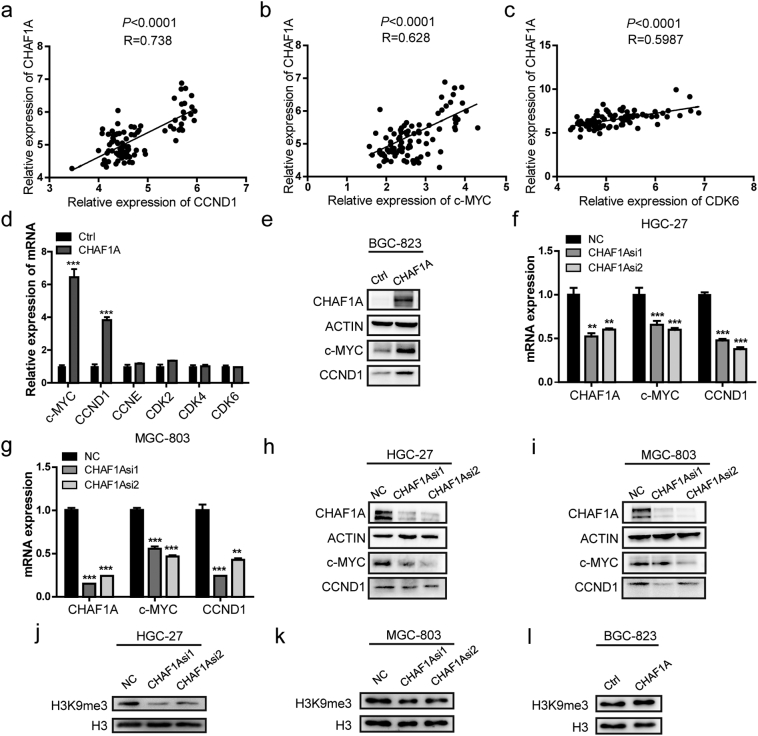
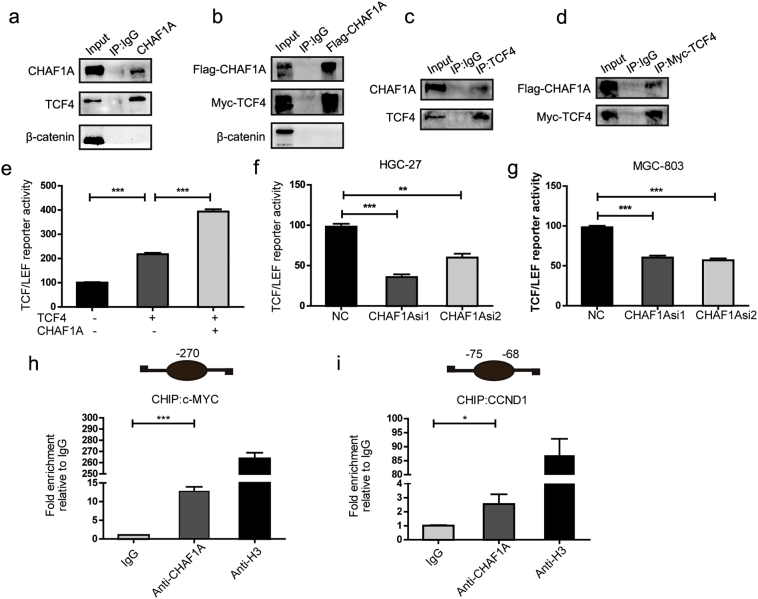
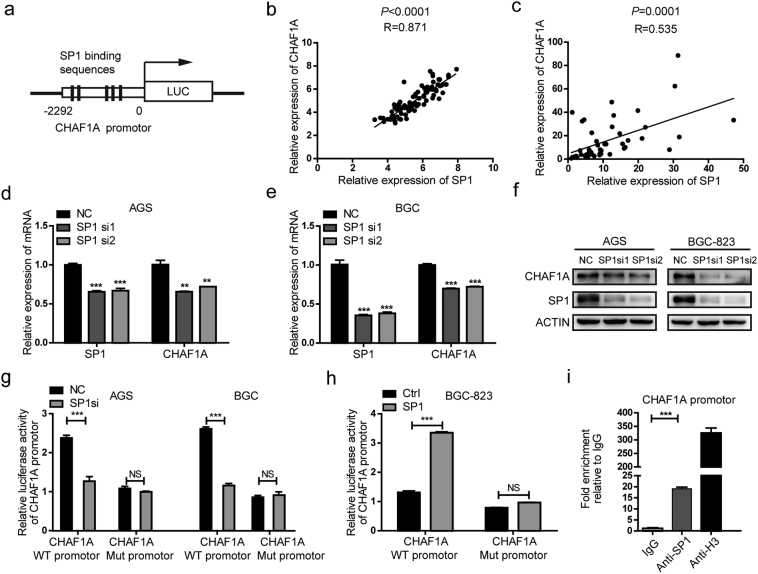
CHAF1A was upregulated in GC tissues and its high expression predicted poor prognosis in GC patients. Overexpression of CHAF1A promoted gastric cancer cell proliferation both in vitro and in vivo, whereas CHAF1A suppression exhibited the opposite effects. Mechanistically, CHAF1A acted as a co-activator in the Wnt pathway. CHAF1A directly interacted with TCF4 to enhance the expression of c-MYC and CCND1 through binding to their promoter regions. In addition, the overexpression of CHAF1A was modulated by specificity protein 1 (Sp1) in GC. Sp1 transcriptionally enhanced the expression of CHAF1A in GC. Furthermore, CHAF1A expression induced by Helicobacter pylori was Sp1 dependent.
CHAF1A is a potential oncogene in GC, and may serve as a novel therapeutic target for GC treatment.
组蛋白伴侣在肿瘤的发生和发展中起着关键作用。然而,组蛋白伴侣 CHAF1A 在胃癌发生中的作用及其潜在机制仍不清楚。
在 GEO 数据集和临床标本中分析胃癌组织中 CHAF1A 的表达。利用 CHAF1A 敲低和过表达实验,探讨 CHAF1A 对胃癌细胞功能的影响。采用细胞和分子生物学方法研究 CHAF1A 在胃癌细胞中的表达调控及其潜在的分子机制。
CHAF1A 在 GC 组织中上调,其高表达预示着 GC 患者预后不良。CHAF1A 的过表达促进了体外和体内胃癌细胞的增殖,而 CHAF1A 的抑制则表现出相反的效果。机制上,CHAF1A 作为 Wnt 通路的共激活因子发挥作用。CHAF1A 直接与 TCF4 相互作用,通过结合其启动子区域,增强 c-MYC 和 CCND1 的表达。此外,GC 中的特异性蛋白 1(Sp1)调节 CHAF1A 的过表达。Sp1 在 GC 中转录增强了 CHAF1A 的表达。此外,幽门螺杆菌诱导的 CHAF1A 表达依赖于 Sp1。
CHAF1A 是 GC 中的一个潜在致癌基因,可能成为 GC 治疗的新靶点。