ASAN Institute for Life Sciences, ASAN Medical Center, University of Ulsan College of Medicine, Seoul, 05505, Republic of Korea.
Department of Convergence Medicine, University of Ulsan College of Medicine, Seoul, 05505, Republic of Korea.
Nat Commun. 2018 May 15;9(1):1920. doi: 10.1038/s41467-018-04244-2.
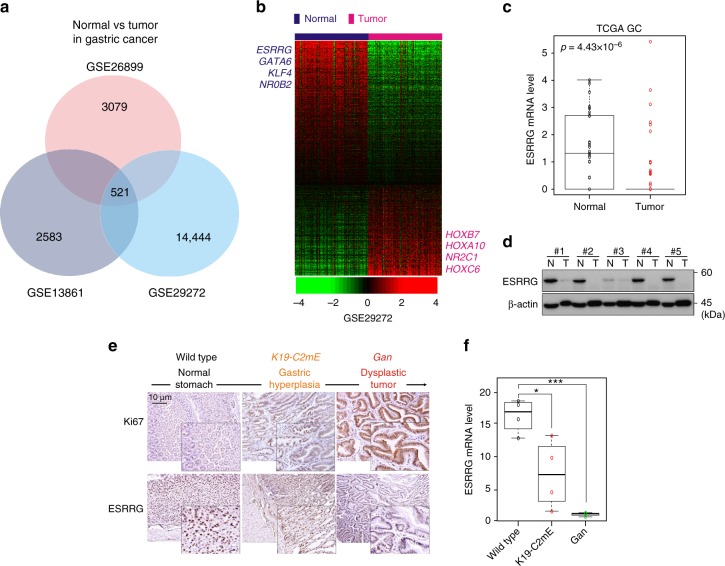
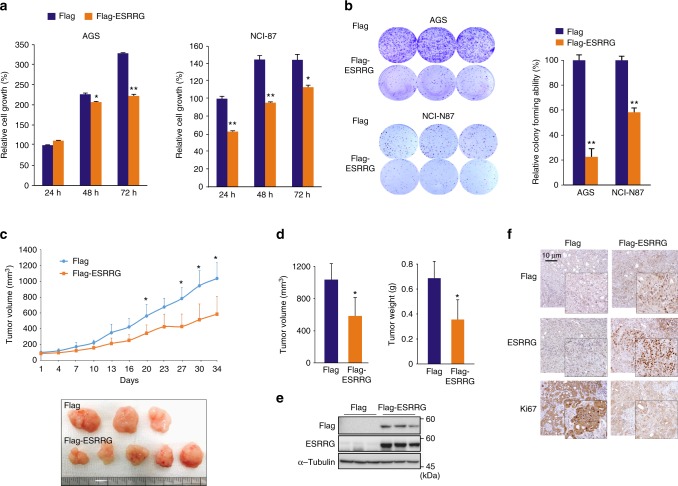
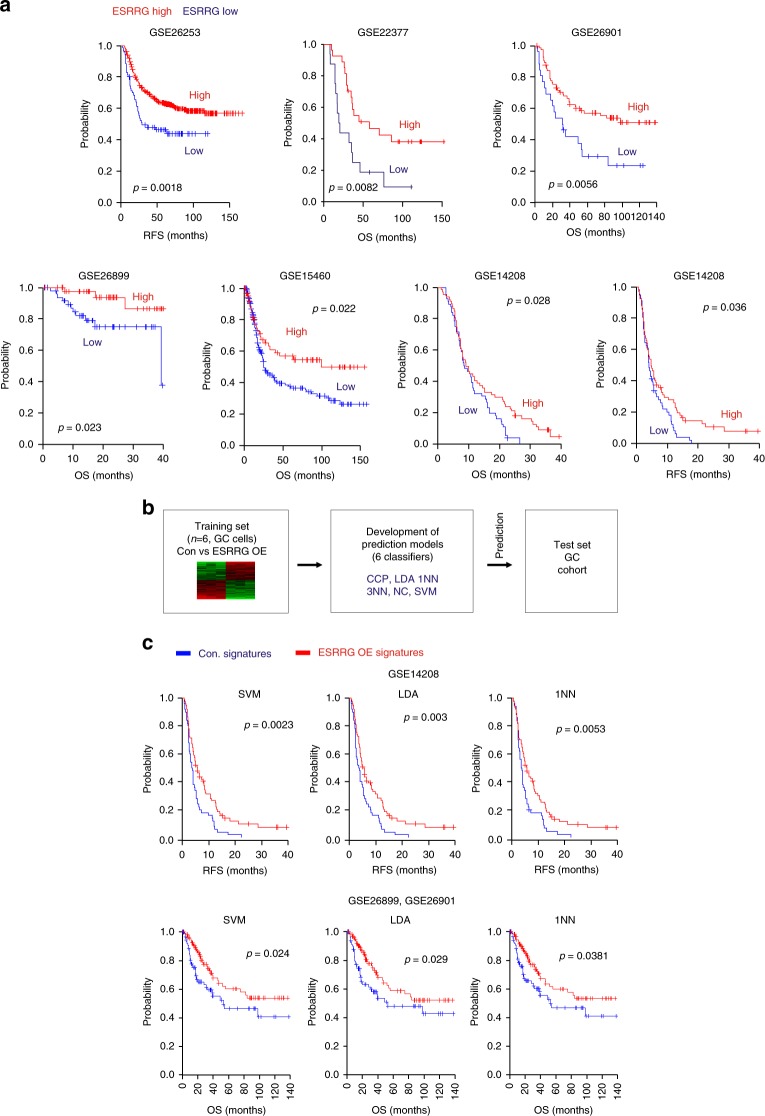
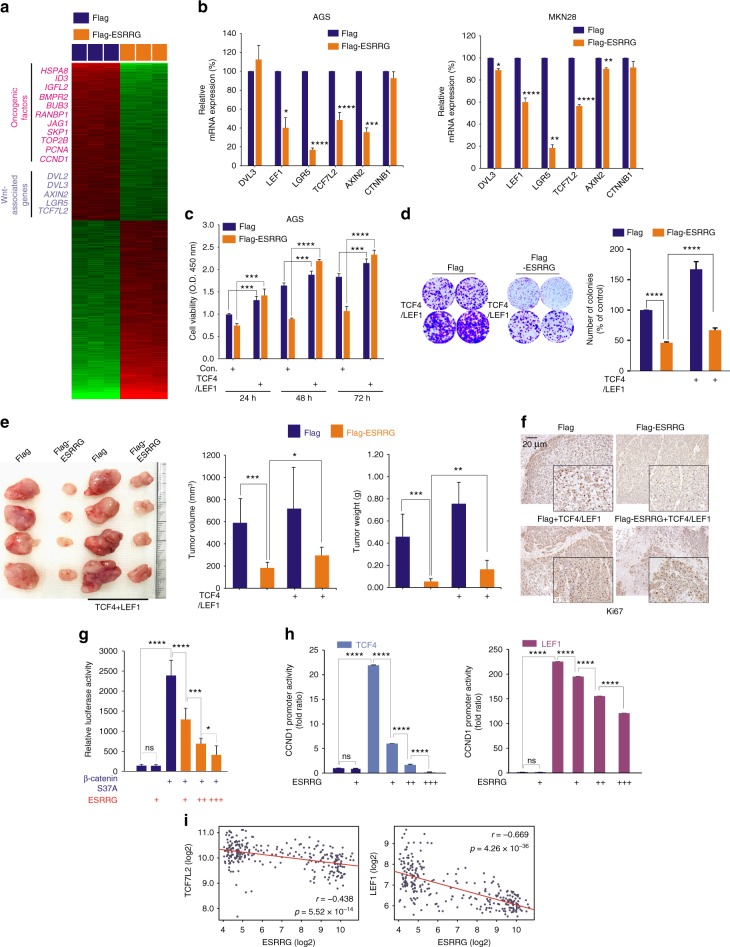
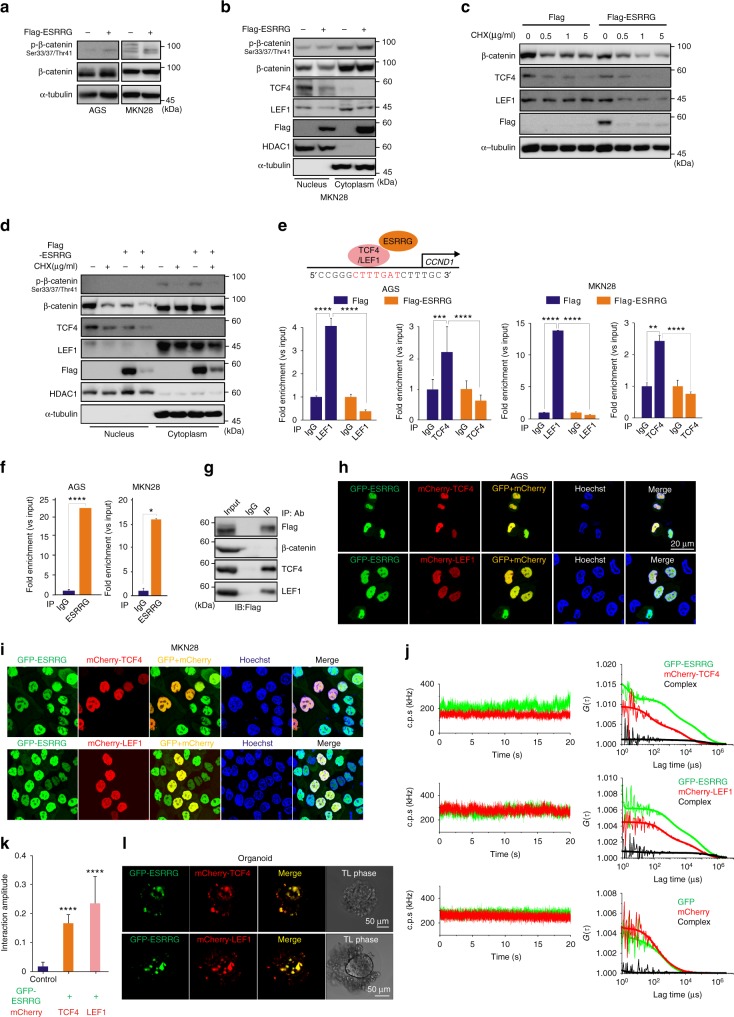
The principle factors underlying gastric cancer (GC) development and outcomes are not well characterized resulting in a paucity of validated therapeutic targets. To identify potential molecular targets, we analyze gene expression data from GC patients and identify the nuclear receptor ESRRG as a candidate tumor suppressor. ESRRG expression is decreased in GC and is a predictor of a poor clinical outcome. Importantly, ESRRG suppresses GC cell growth and tumorigenesis. Gene expression profiling suggests that ESRRG antagonizes Wnt signaling via the suppression of TCF4/LEF1 binding to the CCND1 promoter. Indeed, ESRRG levels are found to be inversely correlated with Wnt signaling-associated genes in GC patients. Strikingly, the ESRRG agonist DY131 suppresses cancer growth and represses the expression of Wnt signaling genes. Our present findings thus demonstrate that ESRRG functions as a negative regulator of the Wnt signaling pathway in GC and is a potential therapeutic target for this cancer.
胃癌(GC)发生和转归的主要因素尚未得到很好的描述,导致验证有效的治疗靶点较少。为了鉴定潜在的分子靶点,我们分析了 GC 患者的基因表达数据,并确定核受体 ESRRG 为候选肿瘤抑制因子。ESRRG 在 GC 中表达降低,是临床预后不良的预测因子。重要的是,ESRRG 抑制 GC 细胞生长和肿瘤发生。基因表达谱分析表明,ESRRG 通过抑制 TCF4/LEF1 与 CCND1 启动子的结合来拮抗 Wnt 信号通路。事实上,在 GC 患者中发现 ESRRG 水平与 Wnt 信号相关基因呈负相关。引人注目的是,ESRRG 激动剂 DY131 抑制癌症生长并抑制 Wnt 信号基因的表达。因此,我们目前的研究结果表明,ESRRG 在 GC 中作为 Wnt 信号通路的负调控因子发挥作用,是该癌症的潜在治疗靶点。