Department of Medicine (Hematology/Oncology Division), Brody School of Medicine at East Carolina University, Greenville, NC 27834, USA.
Department of Clinical Laboratory Sciences, College of Applied Medical Sciences, King Saud University, Riyadh 11433, Saudi Arabia.
Mol Cells. 2018 Dec 31;41(12):1052-1060. doi: 10.14348/molcells.2018.0378. Epub 2018 Nov 14.
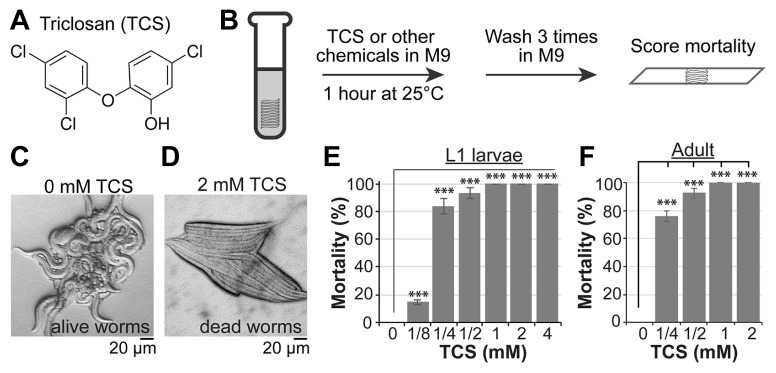
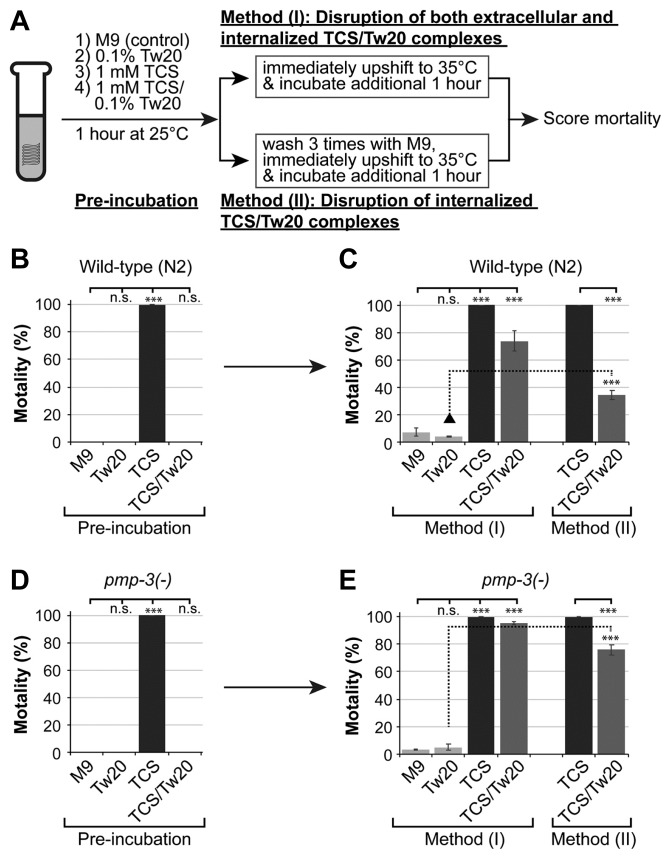
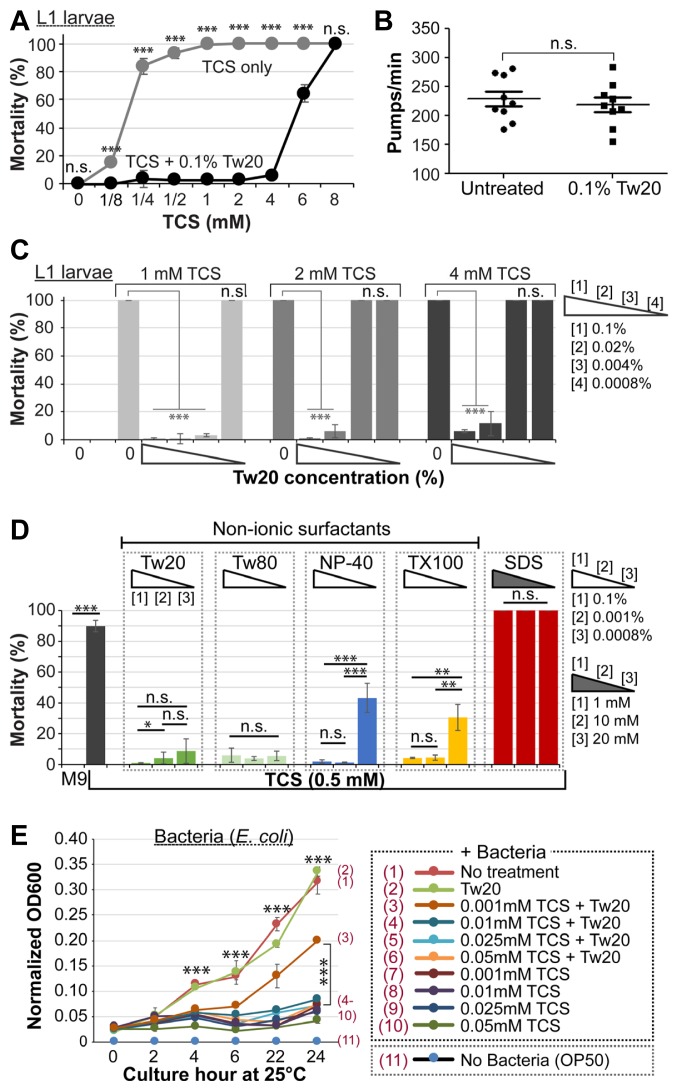
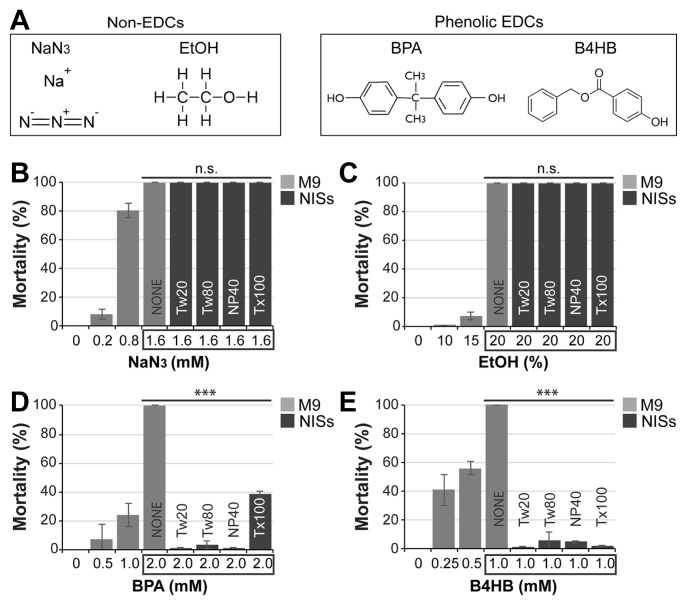
Triclosan (TCS) is a phenolic antimicrobial chemical used in consumer products and medical devices. Evidence from and animal studies has linked TCS to numerous health problems, including allergic, cardiovascular, and neurodegenerative disease. Using as a model system, we here show that short-term TCS treatment (LC: ~0.2 mM) significantly induced mortality in a dose-dependent manner. Notably, TCS-induced mortality was dramatically suppressed by co-treatment with non-ionic surfactants (NISs: e.g., Tween 20, Tween 80, NP-40, and Triton X-100), but not with anionic surfactants (e.g., sodium dodecyl sulfate). To identify the range of compounds susceptible to NIS inhibition, other structurally related chemical compounds were also examined. Of the compounds tested, only the toxicity of phenolic compounds (bisphenol A and benzyl 4-hydroxybenzoic acid) was significantly abrogated by NISs. Mechanistic analyses using TCS revealed that NISs appear to interfere with TCS-mediated mortality by micellar solubilization. Once internalized, the TCS-micelle complex is inefficiently exported in worms lacking PMP-3 (encoding an ATP-binding cassette (ABC) transporter) transmembrane protein, resulting in overt toxicity. Since many EDCs and surfactants are extensively used in commercial products, findings from this study provide valuable insights to devise safer pharmaceutical and nutritional preparations.
三氯生(TCS)是一种用于消费品和医疗器械的酚类抗菌化学物质。 和 动物研究的证据将 TCS 与许多健康问题联系起来,包括过敏、心血管和神经退行性疾病。在这里,我们使用 作为模型系统,表明短期 TCS 处理(LC:~0.2 mM)以剂量依赖的方式显着诱导死亡率。值得注意的是,TCS 诱导的死亡率通过与非离子表面活性剂(NIS:例如吐温 20、吐温 80、NP-40 和 Triton X-100)共同处理显着抑制,但与阴离子表面活性剂(例如十二烷基硫酸钠)无关。为了确定易受 NIS 抑制的化合物范围,还检查了其他结构相关的化学化合物。在所测试的化合物中,只有酚类化合物(双酚 A 和苄基 4-羟基苯甲酸)的毒性被 NIS 显着削弱。使用 TCS 的机制分析表明,NIS 似乎通过胶束增溶来干扰 TCS 介导的死亡率。一旦被内化,缺乏 PMP-3(编码 ATP 结合盒(ABC)转运蛋白)跨膜蛋白的蠕虫中 TCS-胶束复合物的输出效率降低,导致明显的毒性。由于许多 EDC 和表面活性剂广泛用于商业产品,因此这项研究的结果为设计更安全的药物和营养制剂提供了有价值的见解。