Biostatistics and Computational Biology Branch, Research Triangle Park, NC, USA.
Microarray and Genome Informatics Group, National Institute of Environmental Health Sciences, P.O. Box 12233, Research Triangle Park, NC, 27709, USA.
BMC Genomics. 2018 Nov 19;19(1):825. doi: 10.1186/s12864-018-5220-x.
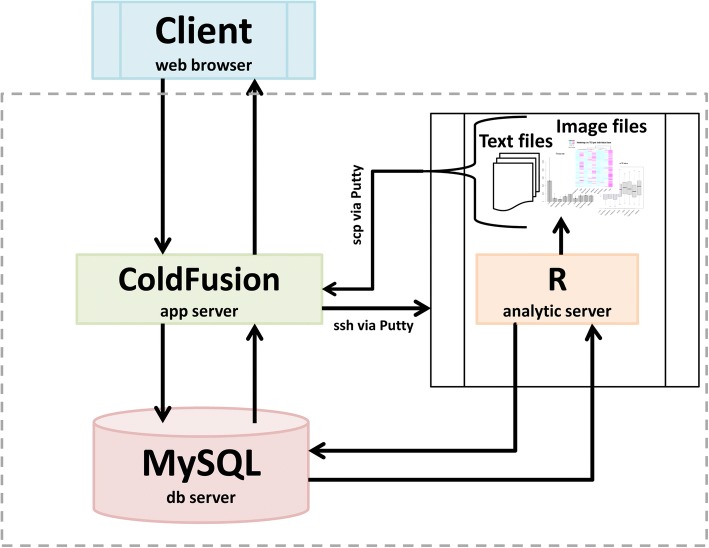
MicroRNAs (miRNAs) regulate gene expression and have been targeted as indicators of environmental/toxicologic stressors. Using the data from our deep sequencing of miRNAs in an extensive sampling of rat tissues, we developed a database called RATEmiRs for the Rat Atlas of Tissue-specific and Enriched miRNAs to allow users to dynamically determine mature-, iso- and pre-miR expression abundance, enrichment and specificity in rat tissues and organs.
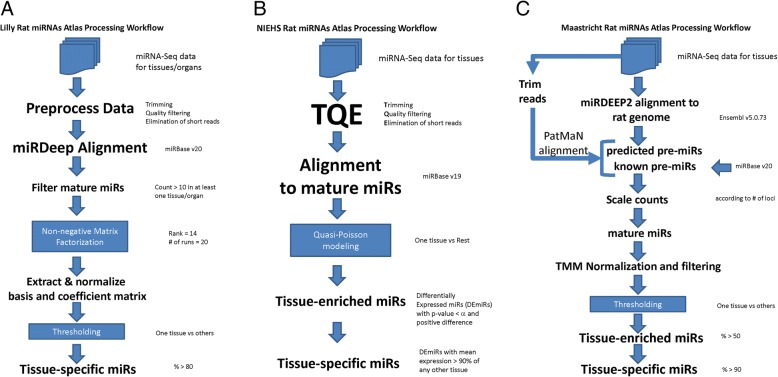
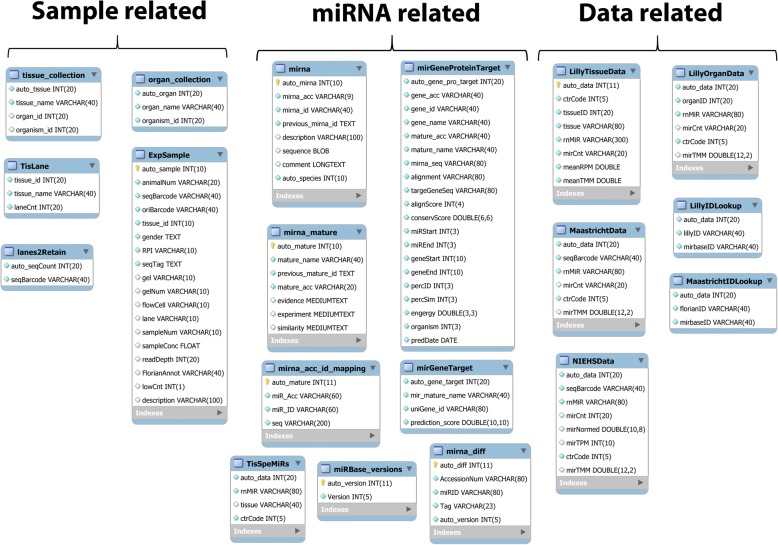
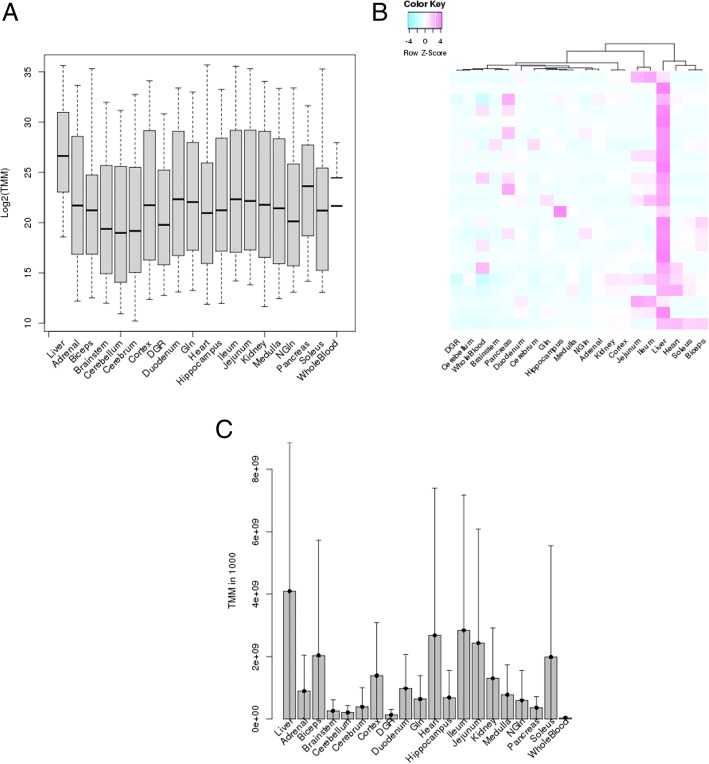
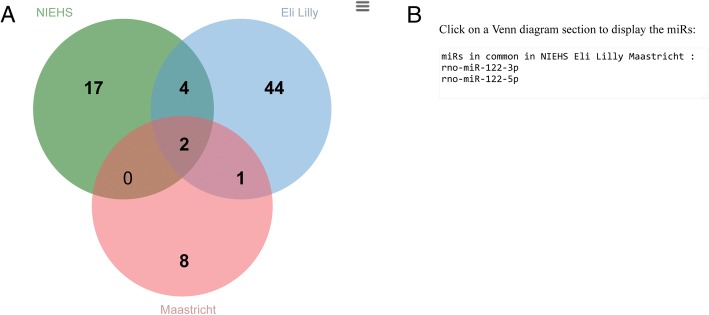
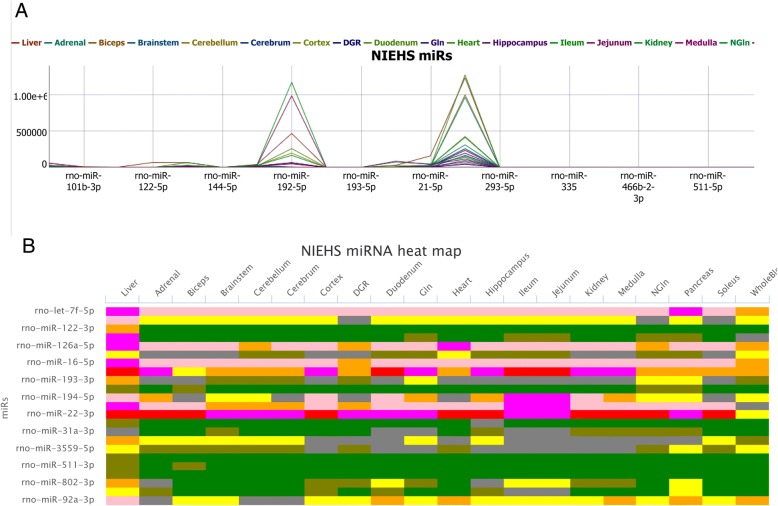
Illumina sequencing count data from mapped reads and meta data from the miRNA body atlas consisting of 21 and 23 tissues (14 organs) of toxicologic interest from 12 to 13 week old male and female Sprague Dawley rats respectively, were managed in a relational database with a user-friendly query interface. Data-driven pipelines are available to tailor the identification of tissue-enriched (TE) and tissue-specific (TS) miRNAs. Data-driven organ-specific (OS) pipelines reveal miRNAs that are expressed predominately in a given organ. A user-driven approach is also available to assess the tissue expression of user-specified miRNAs. Using one tissue vs other tissues and tissue(s) of an organ vs other organs, we illustrate the utility of RATEmiRs to facilitate the identification of candidate miRNAs. As a use case example, RATEmiRs revealed two TS miRNAs in the liver: rno-miR-122-3p and rno-miR-122-5p. When liver is compared to just the brain tissues for example, rno-miR-192-5p, rno-miR-193-3p, rno-miR-203b-3p, rno-miR-3559-5p, rno-miR-802-3p and rno-miR-802-5p are also detected as abundantly expressed in liver. As another example, 55 miRNAs from the RATEmiRs query of ileum vs brain tissues overlapped with miRNAs identified from the same comparison of tissues in an independent, publicly available dataset of 10 week old male rat microarray data suggesting that these miRNAs are likely not age-specific, platform-specific nor pipeline-dependent. Lastly, we identified 10 miRNAs that have conserved tissue/organ-specific expression between the rat and human species.
RATEmiRs provides a new platform for identification of TE, TS and OS miRNAs in a broad array of rat tissues. RATEmiRs is available at: https://www.niehs.nih.gov/ratemirs.
MicroRNAs (miRNAs) 调控基因表达,并已被作为环境/毒物应激标志物的靶点。我们利用从大鼠组织广泛采样的 miRNA 深度测序数据,开发了一个名为 RATEmiRs 的数据库,即大鼠组织特异性和富集 miRNA 图谱,以允许用户动态确定大鼠组织和器官中成熟、同工型和前体 miRNA 的表达丰度、富集和特异性。
Illumina 测序计数数据来自映射读数,元数据来自 miRNA 体图谱,该图谱由分别来自 12 至 13 周龄雄性和雌性 Sprague Dawley 大鼠的 21 种和 23 种(14 种器官)毒理学相关组织组成,使用关系数据库进行管理,具有用户友好的查询界面。提供了数据驱动的管道来定制组织富集(TE)和组织特异性(TS)miRNA 的识别。器官特异性(OS)数据驱动的管道揭示了在特定器官中表达为主的 miRNA。还提供了一种用户驱动的方法来评估用户指定 miRNA 的组织表达。使用一种组织与其他组织以及一个器官的组织与其他组织进行比较,我们说明了 RATEmiRs 有助于确定候选 miRNA 的实用性。作为一个用例示例,RATEmiRs 在肝脏中发现了两个 TS miRNA:rno-miR-122-3p 和 rno-miR-122-5p。例如,当将肝脏与仅脑组织进行比较时,rno-miR-192-5p、rno-miR-193-3p、rno-miR-203b-3p、rno-miR-3559-5p、rno-miR-802-3p 和 rno-miR-802-5p 也被检测为在肝脏中大量表达。另一个例子是,从回肠与脑组织的 RATEmiRs 查询中获得的 55 个 miRNA 与从同一组织比较的独立、公开可用的 10 周龄雄性大鼠微阵列数据集的 miRNA 重叠,这表明这些 miRNA 可能不是年龄特异性、平台特异性或管道依赖性的。最后,我们确定了 10 个在大鼠和人类物种中具有保守组织/器官特异性表达的 miRNA。
RATEmiRs 为鉴定大鼠广泛组织中的 TE、TS 和 OS miRNA 提供了一个新平台。RATEmiRs 可在以下网址获得:https://www.niehs.nih.gov/ratemirs。