Division of Food Processing Science and Technology, Office of Food Safety, U. S. Food and Drug Administration, Bedford Park, IL, USA.
Division of Microbiology, Office of Regulatory Science, U. S. Food and Drug Administration, College Park, MD, USA.
BMC Microbiol. 2018 Nov 19;18(1):189. doi: 10.1186/s12866-018-1323-4.
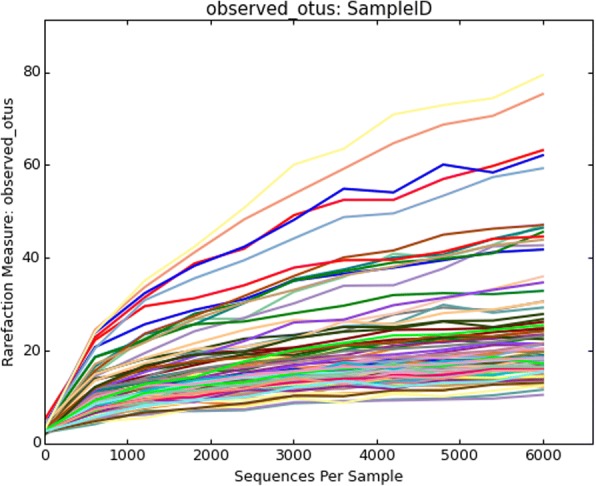
The microbiome of cheese is diverse, even within a variety. The metagenomics of cheese is dependent on a vast array of biotic and abiotic factors. Biotic factors include the population of microbiota and their resulting cellular metabolism. Abiotic factors, including the pH, water activity, fat, salt, and moisture content of the cheese matrix, as well as environmental conditions (temperature, humidity, and location of aging), influence the biotic factors. This study assessed the metagenomics of commercial Gouda cheese prepared using pasteurized or unpasteurized cow milk or pasteurized goat milk via 16S rDNA sequencing.
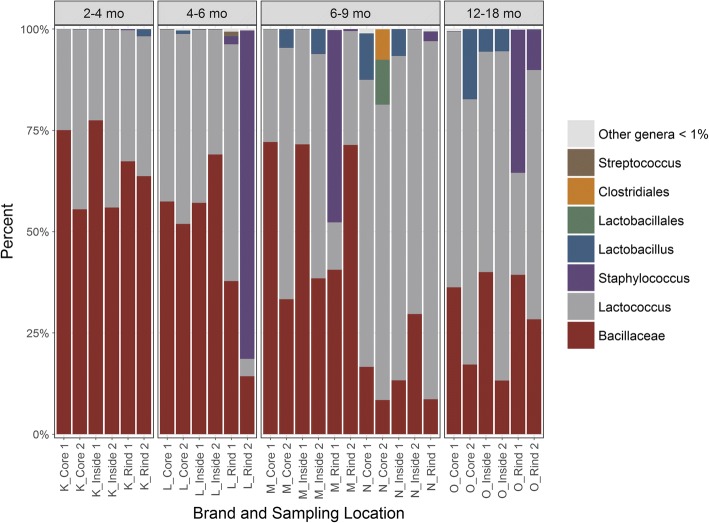
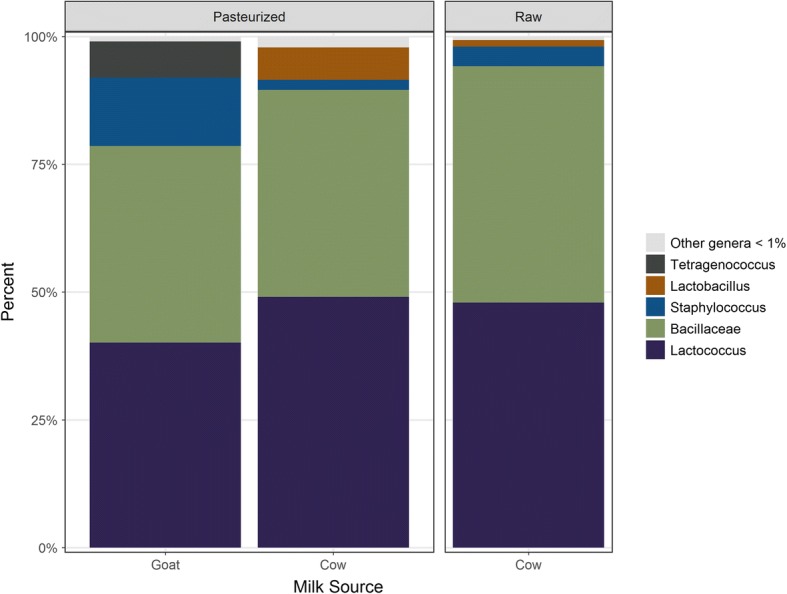
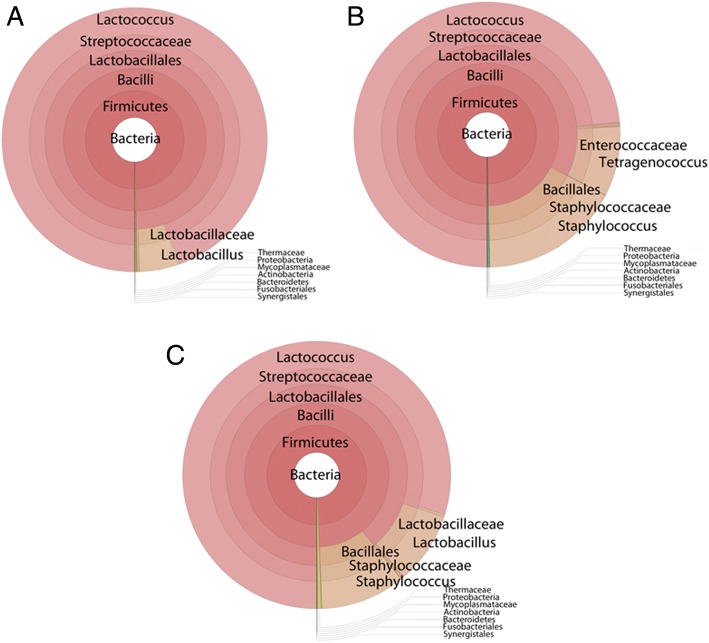
Results were analyzed and compared based on milk pasteurization and source, spatial variability (core, outer, and under the rind), and length of aging (2-4 up to 12-18 months). The dominant organisms in the Gouda cheeses, based on percentage of sequence reads identified at the family or genus levels, were Bacillaceae, Lactococcus, Lactobacillus, Streptococcus, and Staphylococcus. More genus- or family-level (e.g. Bacillaceae) identifications were observed in the Gouda cheeses prepared with unpasteurized cow milk (120) compared with those prepared with pasteurized cow milk (92). When assessing influence of spatial variability on the metagenomics of the cheese, more pronounced differences in bacterial genera were observed in the samples taken under the rind; Brachybacterium, Pseudoalteromonas, Yersinia, Klebsiella, and Weissella were only detected in these samples. Lastly, the aging length of the cheese greatly influenced the number of organisms observed. Twenty-seven additional genus-level identifications were observed in Gouda cheese aged for 12-18 months compared with cheese only aged 2-4 months.
Collectively, the results of this study are important in determining the typical microbiota associated with Gouda cheese and how the microbiome plays a role in safety and quality.
奶酪的微生物组多样,即使在同一种奶酪中也是如此。奶酪的宏基因组学取决于大量的生物和非生物因素。生物因素包括微生物群的种群及其产生的细胞代谢。非生物因素包括奶酪基质的 pH 值、水活度、脂肪、盐和水分含量以及环境条件(温度、湿度和老化位置),都会影响生物因素。本研究通过 16S rDNA 测序评估了使用巴氏杀菌或未经巴氏杀菌的牛奶或巴氏杀菌山羊奶制备的商业高达奶酪的宏基因组学。
根据牛奶巴氏杀菌和来源、空间变异性(核心、外部和外皮下)以及老化时间(2-4 个月至 12-18 个月)对结果进行了分析和比较。根据在科或属水平上识别的序列读取百分比,高达奶酪中的主要生物是芽孢杆菌科、乳球菌属、乳杆菌属、链球菌属和葡萄球菌属。与使用巴氏杀菌牛奶制备的高达奶酪(92 个)相比,使用未经巴氏杀菌牛奶制备的高达奶酪(120 个)观察到更多的属或科水平(例如芽孢杆菌科)鉴定。在评估空间变异性对奶酪宏基因组学的影响时,在皮下表层下采集的样本中观察到细菌属的差异更为明显;仅在这些样本中检测到短杆菌属、假交替单胞菌属、耶尔森氏菌属、克雷伯氏菌属和魏斯氏菌属。最后,奶酪的老化时间极大地影响了观察到的生物数量。与仅老化 2-4 个月的高达奶酪相比,在老化 12-18 个月的高达奶酪中观察到 27 个额外的属水平鉴定。
总的来说,本研究的结果对于确定与高达奶酪相关的典型微生物群以及微生物组在安全性和质量中的作用非常重要。