Department of Otorhinolaryngology-Head and Neck Surgery, Asan Medical Center, University of Ulsan College of Medicine, Seoul, South Korea.
Department of Convergence Medicine, Asan Medical Center, University of Ulsan College of Medicine, Seoul, South Korea.
Front Immunol. 2018 Oct 16;9:2330. doi: 10.3389/fimmu.2018.02330. eCollection 2018.
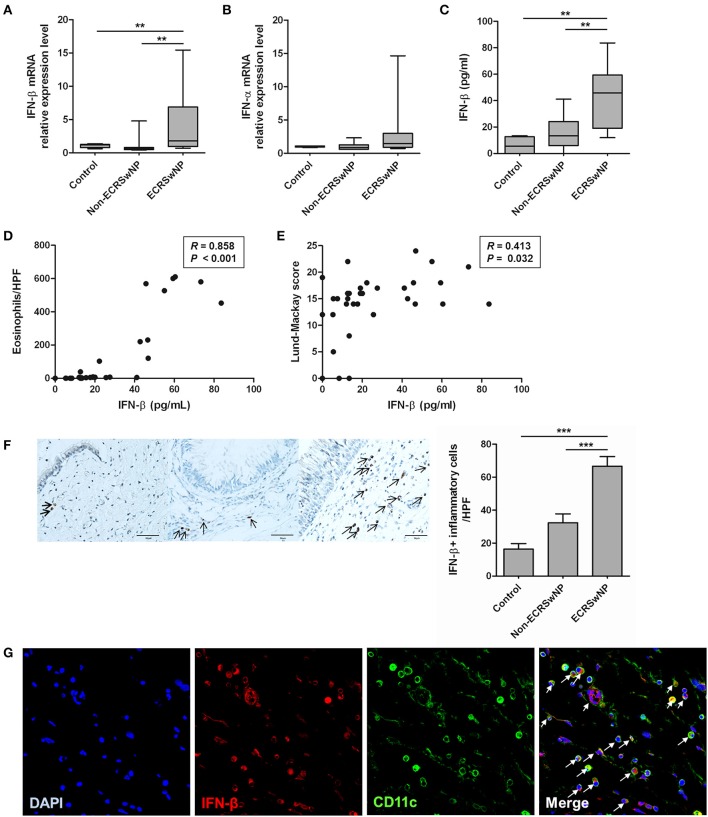
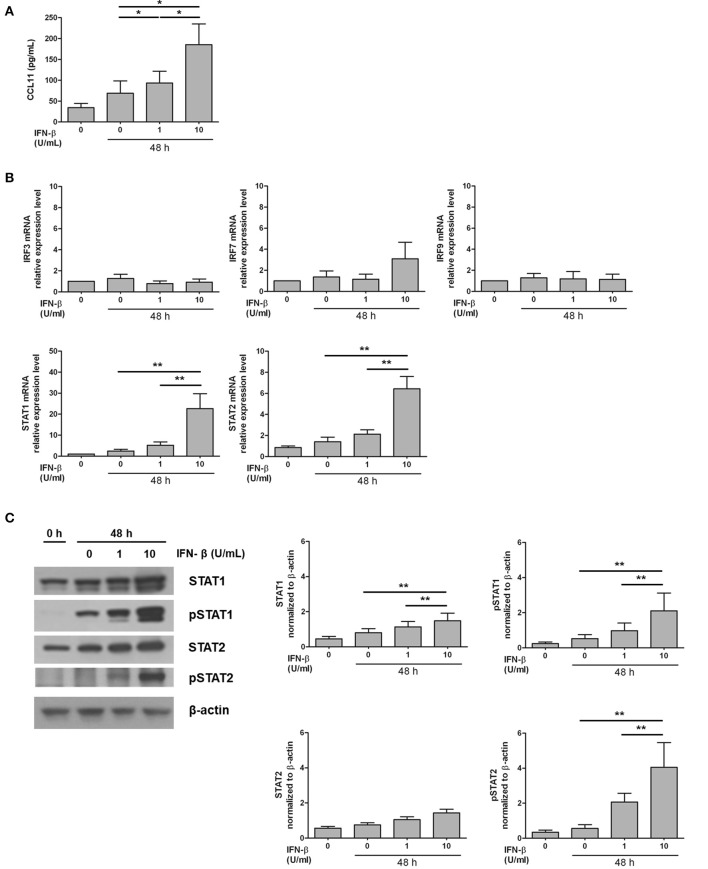
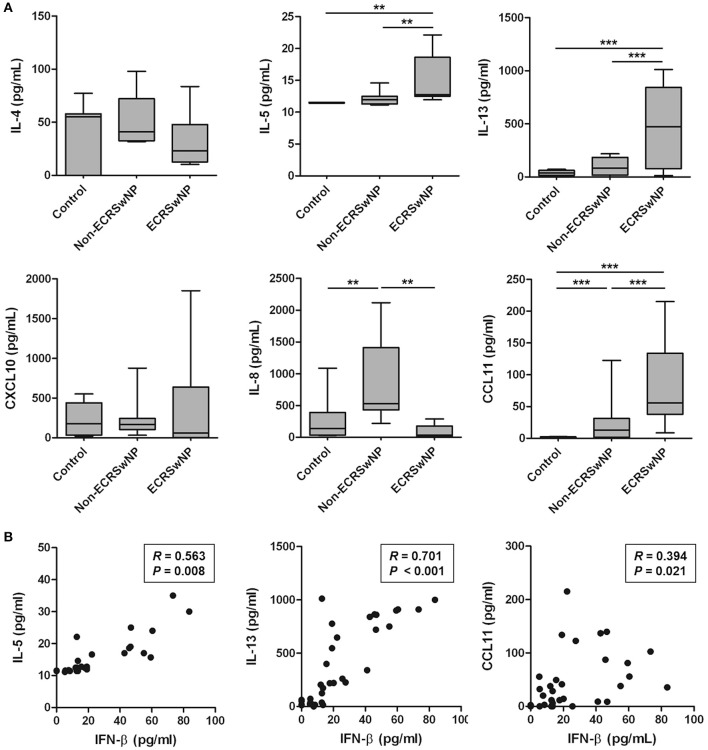
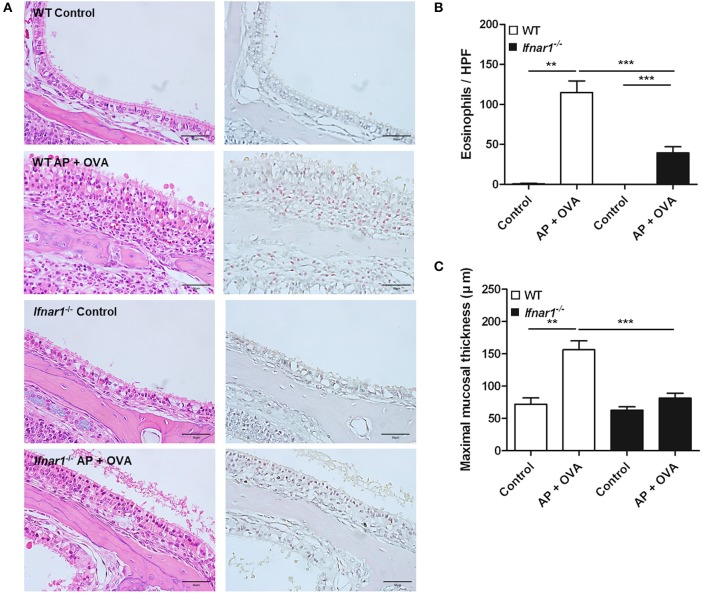
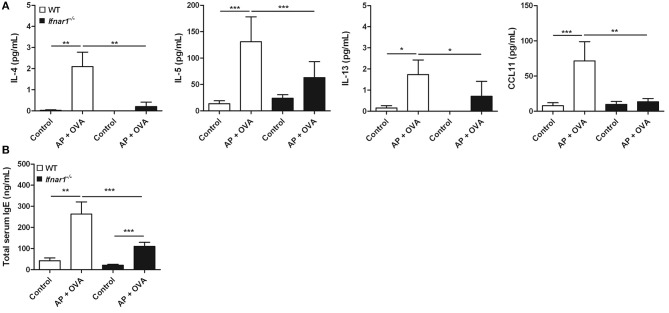
Type I interferon (IFN-I, including IFN-α and IFN-β) response has been implicated in eosinophilic inflammation, in addition to antiviral function. This study aimed to investigate the role of IFN-I in the pathogenesis of eosinophilic chronic rhinosinusitis (ECRS). IFN-α, IFN-β, cytokine expression, and IFN-β cellular localization in the sinonasal tissue from control subjects and ECRS patients with nasal polyps (NP) were determined using real time-PCR, ELISA, and immunohistochemistry. ECRS was induced in wild-type (WT) and IFNAR1 knockout () mice by intranasal challenge with protease and ovalbumin. Stromal cells cultured from NP tissue were stimulated by exogenous IFN-β, and their CCL11 production and IRF3, IRF7, STAT1, STAT2, and IRF9 gene and/or protein expression were measured. IFN-β, IL-5, IL-13, and CCL11 expression was higher in the NP tissue from ECRS patients, compared to the control group. IFN-β was highly colocalized with the CD11c+ cells in NP. IFN-β levels positively correlated with IL-5, IL-13, and CCL11 levels as well as the number of eosinophils in the NP tissue and CT score. The histological severity of ECRS, levels of IL-4, IL-5, IL-13, and CCL11 in the nasal lavage fluid, and total serum IgE levels were less in mice than in WT mice. CCL11 production, and STAT1 and STAT2 mRNA and STAT1, phospho-STAT1, and phospho-STAT2 protein expression were significantly increased by exogenous IFN-β in NP stromal cells. Our data suggest that IFN-β response was upregulated in ECRS and may play role in ECRS development. IFN-β may contribute to ECRS by enhancing CCL11 production. Thus, increased IFN-β response in the sinonasal mucosa may underlie ECRS pathogenesis.
I 型干扰素(IFN-I,包括 IFN-α 和 IFN-β)除了具有抗病毒功能外,还与嗜酸性粒细胞炎症有关。本研究旨在探讨 IFN-I 在嗜酸性慢性鼻-鼻窦炎(ECRS)发病机制中的作用。通过实时 PCR、ELISA 和免疫组织化学方法,测定了来自对照组和 ECRS 伴鼻息肉(NP)患者的 IFN-α、IFN-β、细胞因子表达和 IFN-β 细胞定位。通过鼻内挑战蛋白酶和卵清蛋白,在野生型(WT)和 IFNAR1 敲除()小鼠中诱导 ECRS。用外源性 IFN-β刺激从 NP 组织培养的基质细胞,并测量其 CCL11 产生以及 IRF3、IRF7、STAT1、STAT2 和 IRF9 基因和/或蛋白表达。与对照组相比,ECRS 患者 NP 组织中的 IFN-β、IL-5、IL-13 和 CCL11 表达更高。IFN-β 在 NP 中与 CD11c+细胞高度共定位。IFN-β 水平与 NP 组织中的 IL-5、IL-13 和 CCL11 水平以及嗜酸性粒细胞数量以及 CT 评分呈正相关。与 WT 小鼠相比,小鼠的 ECRS 组织学严重程度、鼻灌洗液中的 IL-4、IL-5、IL-13 和 CCL11 水平以及总血清 IgE 水平均降低。NP 基质细胞中外源性 IFN-β 可显著增加 CCL11 产生以及 STAT1 和 STAT2 mRNA 和 STAT1、磷酸化-STAT1 和磷酸化-STAT2 蛋白表达。我们的数据表明,IFN-β 反应在 ECRS 中上调,可能在 ECRS 发展中发挥作用。IFN-β 可能通过增强 CCL11 产生而导致 ECRS。因此,鼻黏膜中 IFN-β 反应的增加可能是 ECRS 发病机制的基础。