Marks Carine, van Hoving Niel, Edwards Nick, Kanema Christopher, Kapindula David, Menge Tom, Nyadedzor Caesar, Roberts Clare, Tagwireyi Dexter, Tempowski Joanna
Tygerberg Poison Information Centre, Faculty Medicine and Health Sciences, Stellenbosch University, South Africa.
Division of Emergency Medicine, Faculty Medicine and Health Sciences, Stellenbosch University, South Africa.
Afr J Emerg Med. 2016 Jun;6(2):64-69. doi: 10.1016/j.afjem.2015.09.005. Epub 2016 Jan 5.
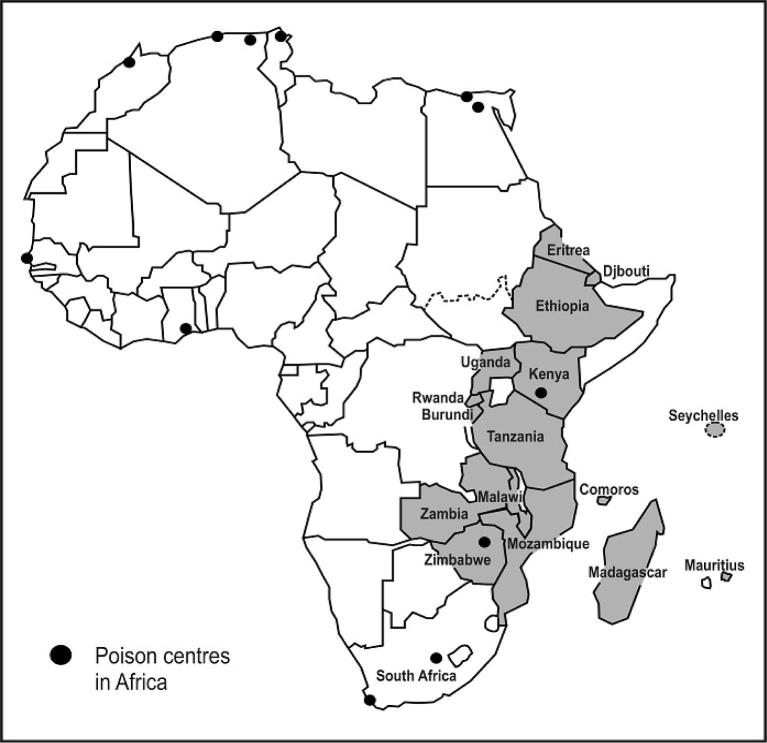
The burden of poisoning exposures in Africa is a significant public health concern, yet only ten African countries have poisons information centres. The establishment of poisons centres was subsequently identified as a priority. This article focuses on workshop discussions with international multi-sector stakeholders in Eastern Africa regarding the possibility of a sub-regional poisons centre serving multiple countries.
The project was led by an independent consultant under the guidance of an international steering group. Steering group members provided input at international multi-stakeholder meetings and during monthly teleconferences.
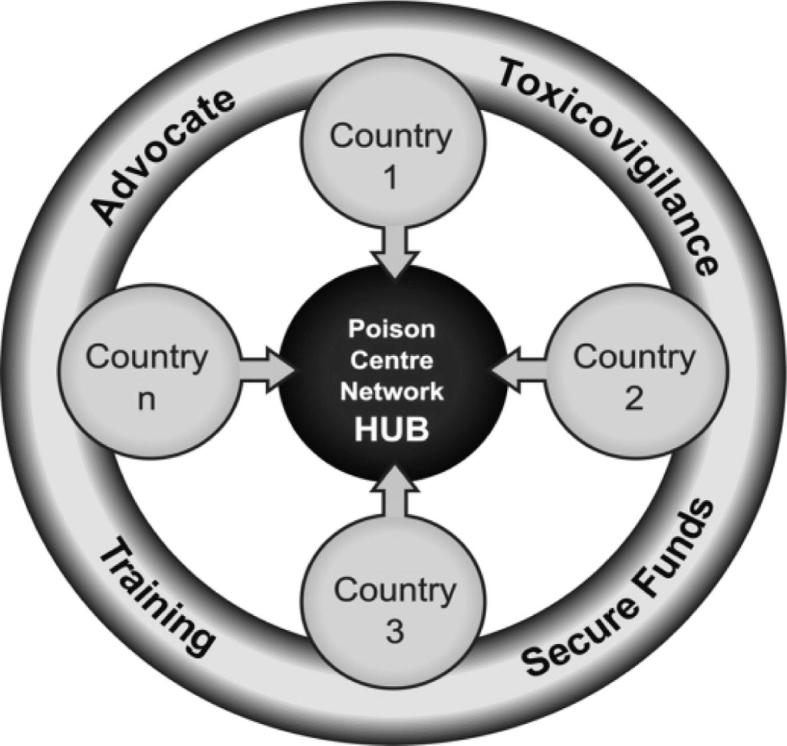
Participants of the stakeholder meetings agreed that the establishment of a sub-regional poisons centre in Eastern Africa was necessary and feasible. Virtual collaboration is possible due to recent technological developments, and the overall suggestion was for countries to establish their own poisons centres and to network and coordinate these centres through a network hub.
A number of benefits might result from such a poisons centre network hub, including: (1) Improved cooperation between countries on poisoning problems; (2) Harmonisation and strengthening of research and surveillance; (3) Common standards and best practices e.g. regulating chemicals, data management, and staff training; and (4) Greater bargaining power to secure resources. Further investigation is needed to identify the most suitable location for the network hub, the activities it should fulfil, and the availability of specialists in poisons information who could become members of the hub.
非洲中毒暴露的负担是一个重大的公共卫生问题,但只有十个非洲国家设有毒物信息中心。毒物中心的建立随后被确定为一项优先事项。本文重点介绍了与东非国际多部门利益相关者就设立一个服务多个国家的次区域毒物中心的可能性进行的研讨会讨论情况。
该项目由一名独立顾问在一个国际指导小组的指导下牵头开展。指导小组成员在国际多利益相关者会议和每月的电话会议上提供意见。
利益相关者会议的与会者一致认为,在东非建立一个次区域毒物中心是必要且可行的。由于最近的技术发展,虚拟协作是可能的,总体建议是各国建立自己的毒物中心,并通过一个网络枢纽将这些中心联网并进行协调。
这样一个毒物中心网络枢纽可能会带来一些好处,包括:(1)各国在中毒问题上加强合作;(2)协调和加强研究与监测;(3)统一标准和最佳做法,如化学品监管、数据管理和人员培训;(4)在获取资源方面拥有更大的议价能力。需要进一步调查,以确定网络枢纽的最合适地点、它应履行的活动以及能够成为枢纽成员的毒物信息专家的可用性。