Fang Yuan-Yuan, Wu Qi-Jun, Zhang Tie-Ning, Wang Tian-Ren, Shen Zi-Qi, Jiao Jiao, Shao Xiao-Guang, Xu Peng, Guo Shuai-Shuai, Zhou Yi-Ming, Wang Xiu-Xia, Li Da
Center of Reproductive Medicine, Department of Obstetrics and Gynecology, Shengjing Hospital of China Medical University, Shenyang, 110004, China.
Department of Clinical Epidemiology, Shengjing Hospital of China Medical University, Shenyang, 110004, China.
BMC Health Serv Res. 2018 Nov 20;18(1):873. doi: 10.1186/s12913-018-3585-9.
The development of assisted reproduction techniques (ART) has resulted in rapid advances in the treatment of infertility. However, a systematic assessment of ART and its processes and outcomes in China has never been carried out. The goal of this study was to assess the features of ART status from 2012 to 2016 in clinics and in vitro fertilization (IVF) laboratories in Liaoning, the largest IVF province in the northeast of China.
Data from Jan 1, 2012 to Dec 31, 2016 was retrieved from the assisted reproductive certificate registry of Liaoning province. We extracted data from: i) fresh and thawed cycles; ii) donor sperm and donor egg cycles; iii) intrauterine insemination with husband semen and donor semen (AIH and AID).
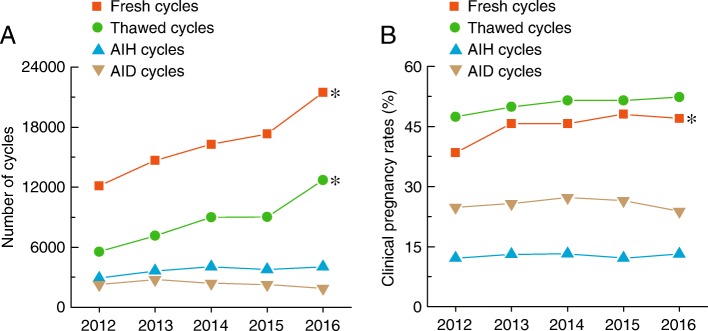
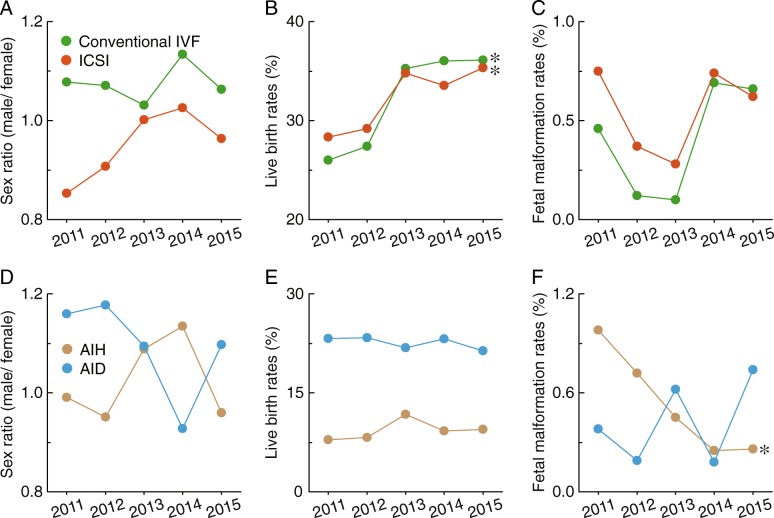
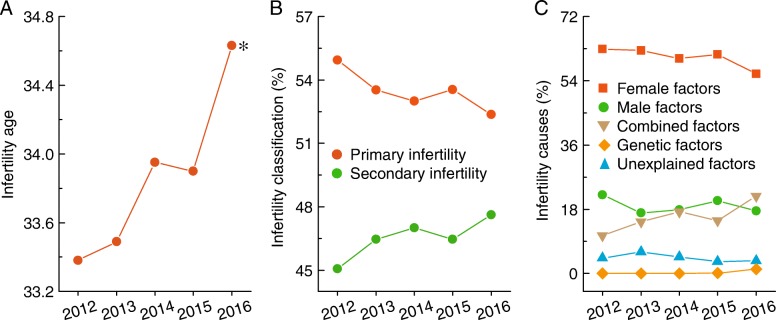
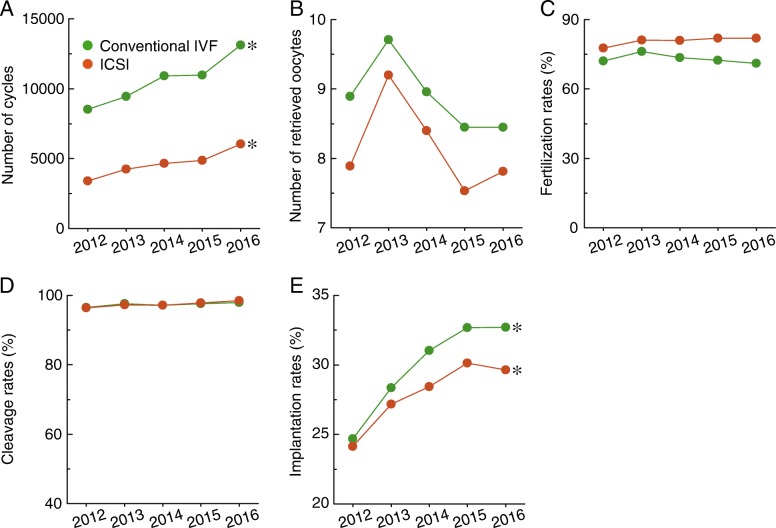
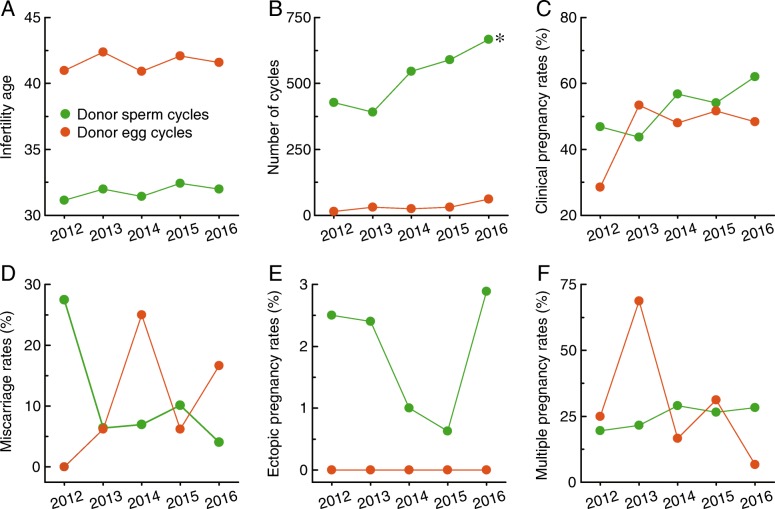
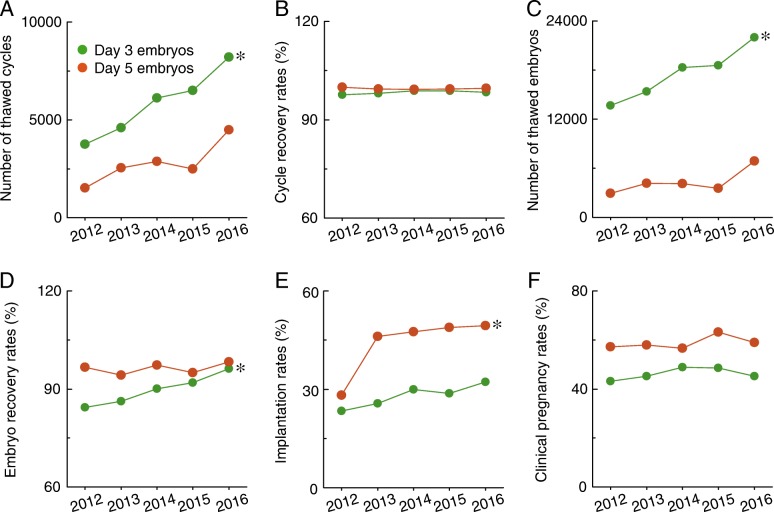
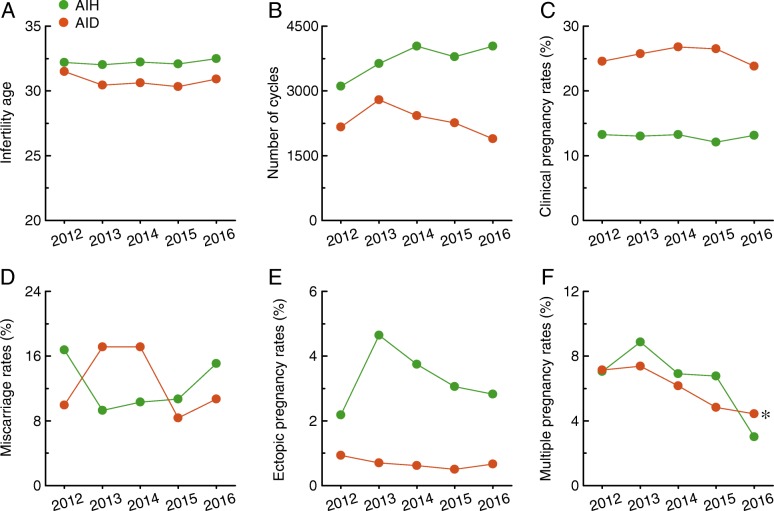
We showed that: (i) there has been a significant increase in the number of IVF fresh and thawed cycles, and the proportion of cases of primary infertility and secondary infertility has decreased and increased, respectively; (ii) standard long GnRH agonist was the major ovarian stimulation protocol. During the observation period, increasing trends in the use of GnRH antagonists, mild stimulation, and natural cycles were observed; (iii) significant differences in the number of cycles, number of retrieved oocytes, fertilization rates, implantation rates, and sex ratio were noticed between conventional IVF and intracytoplasmic sperm injection; (iv) significant differences in age at treatment for infertility, number of cycles, and ectopic pregnancy rates were noticed between donor sperm cycles and donor egg cycles; (v) significant differences in number of thawed cycles, number of thawed embryos, embryo recovery rates, implantation rates, and clinical pregnancy rates were noticed between day 3 and day 5 embryos; (vi) significant differences in age at treatment for infertility, number of cycles, clinical pregnancy rates, ectopic pregnancy rates, and live birth ratio were noticed between AIH and AID.
ART in Liaoning province has undergone substantial development from 2012 to 2016 in clinics and IVF laboratories. This presentation of detailed ART data will provide researchers, policy makers, and potential ART users a rich source of information about IVF characteristics in the northeast of China.
辅助生殖技术(ART)的发展使不孕症治疗取得了快速进展。然而,中国从未对ART及其过程和结果进行过系统评估。本研究的目的是评估2012年至2016年中国东北最大的试管婴儿省份辽宁省的诊所和体外受精(IVF)实验室中ART的现状特征。
从辽宁省辅助生殖证书登记处检索2012年1月1日至2016年12月31日的数据。我们从以下方面提取数据:i)新鲜周期和冻融周期;ii)供精和供卵周期;iii)丈夫精液和供精的宫内授精(AIH和AID)。
我们发现:(i)IVF新鲜周期和冻融周期的数量显著增加,原发性不孕和继发性不孕病例的比例分别下降和上升;(ii)标准长效GnRH激动剂是主要的卵巢刺激方案。在观察期内,GnRH拮抗剂、温和刺激和自然周期的使用呈上升趋势;(iii)常规IVF和卵胞浆内单精子注射在周期数、取卵数、受精率、着床率和性别比方面存在显著差异;(iv)供精周期和供卵周期在不孕治疗年龄、周期数和异位妊娠率方面存在显著差异;(v)第3天和第5天胚胎在冻融周期数、冻融胚胎数、胚胎复苏率、着床率和临床妊娠率方面存在显著差异;(vi)AIH和AID在不孕治疗年龄、周期数、临床妊娠率、异位妊娠率和活产率方面存在显著差异。
2012年至2016年,辽宁省的ART在诊所和IVF实验室有了实质性发展。这些详细的ART数据将为研究人员、政策制定者和潜在的ART使用者提供有关中国东北地区IVF特征的丰富信息来源。