State Key Laboratory of Virology, Wuhan Institute of Virology, Chinese Academy of Sciences, 430071, Wuhan, China.
University of Chinese Academy of Sciences, 100049, Beijing, China.
Emerg Microbes Infect. 2018 Nov 21;7(1):186. doi: 10.1038/s41426-018-0189-8.
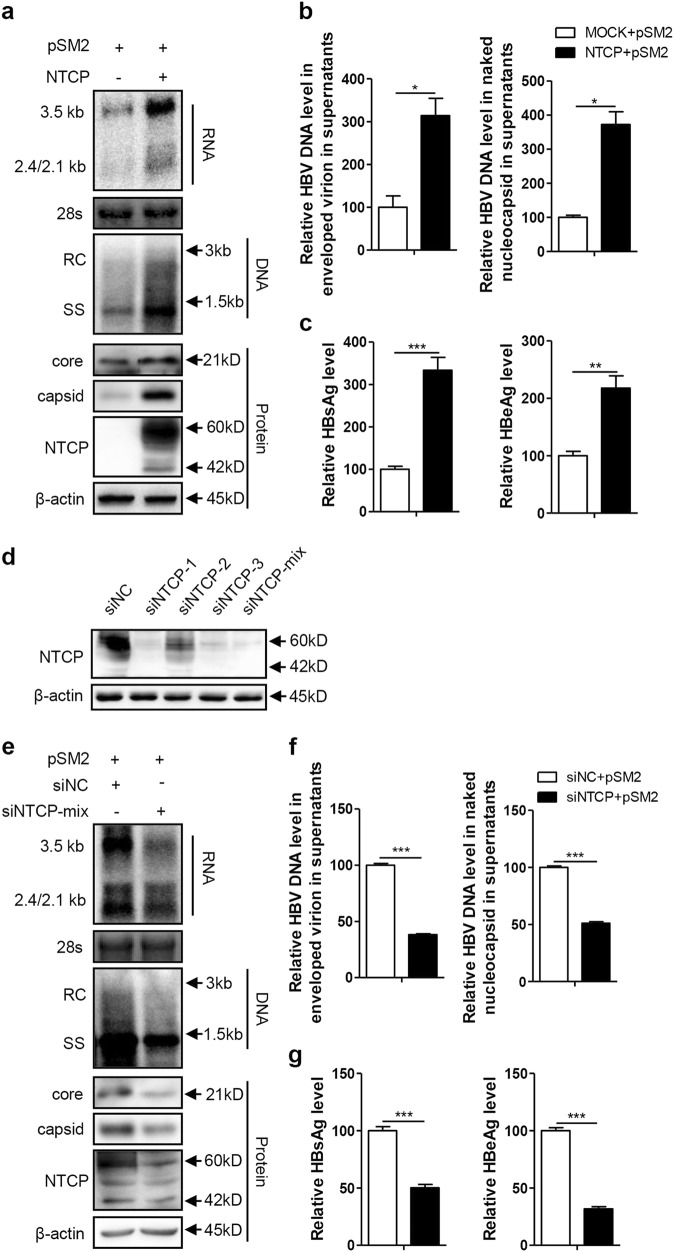
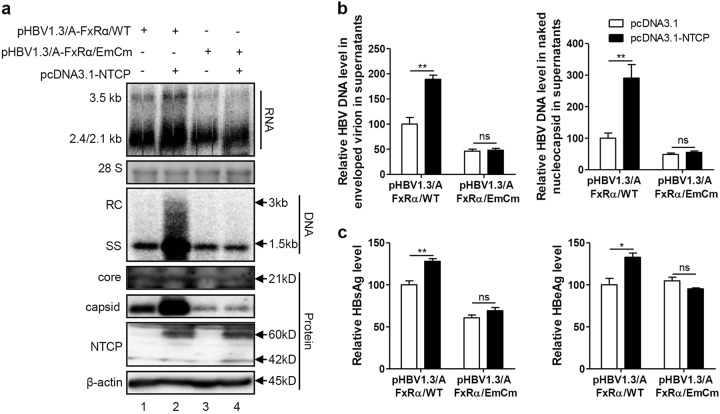
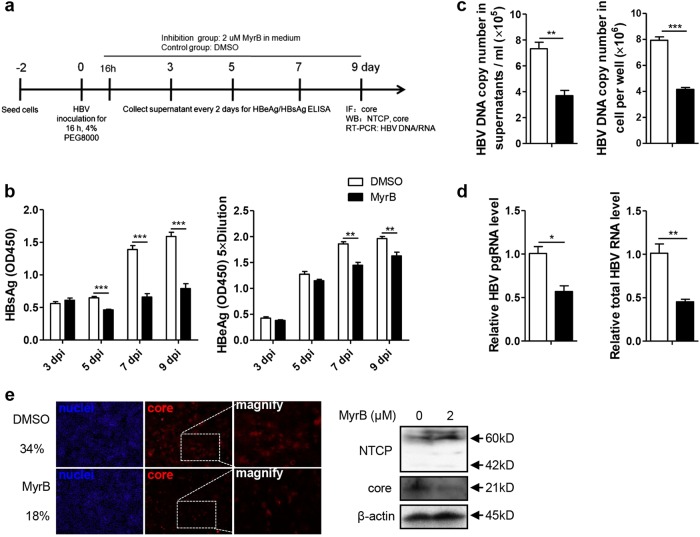
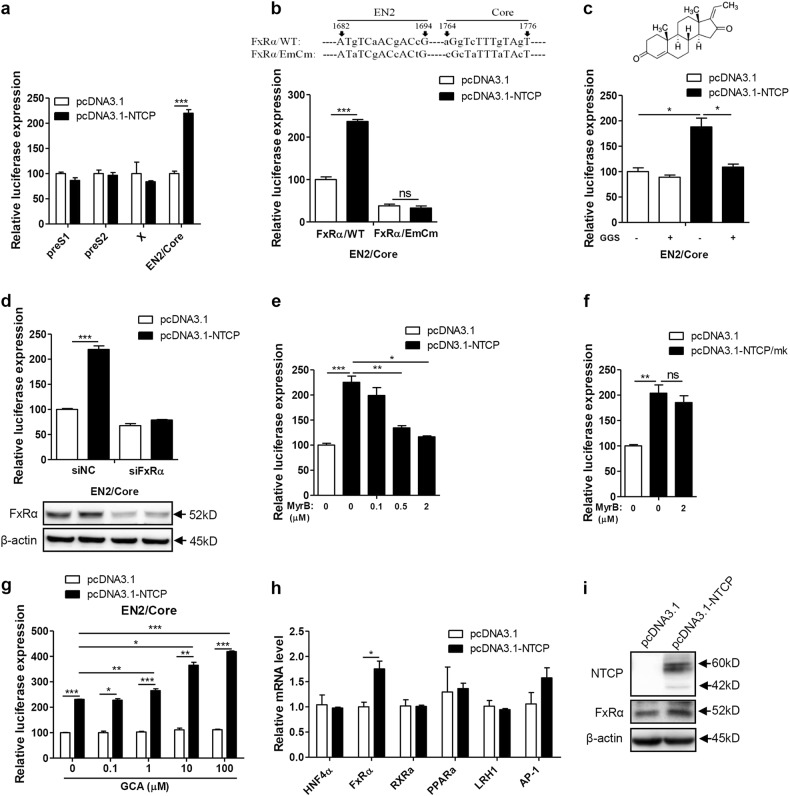
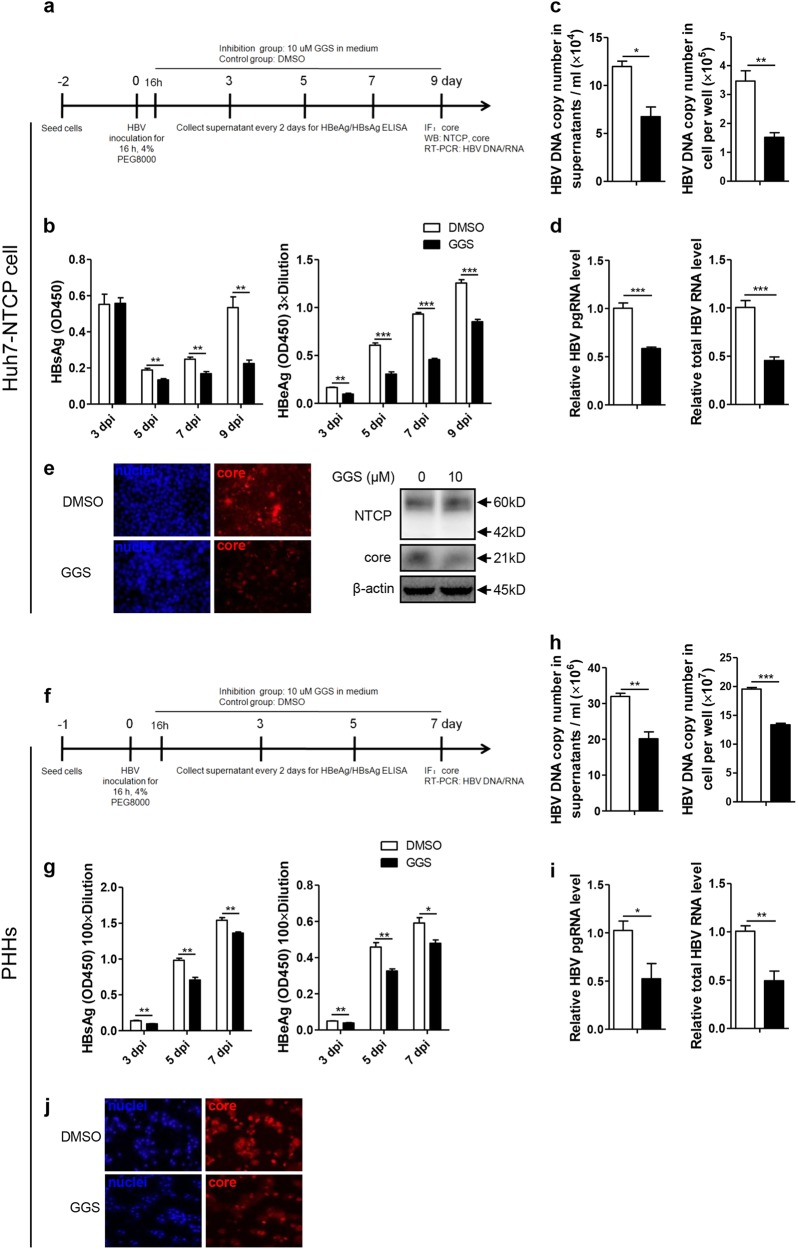
Sodium taurocholate cotransporting polypeptide (NTCP) is a functional receptor for hepatitis B virus (HBV) entry. However, little is known regarding whether NTCP is involved in regulating the postentry steps of the HBV life cycle. Here, we found that NTCP expression upregulated HBV transcription at the postentry step and that the NTCP-targeting entry inhibitor Myrcludex B (MyrB) effectively suppressed HBV transcription both in an HBV in vitro infection system and in mice hydrodynamically injected with an HBV expression plasmid. Mechanistically, NTCP upregulated HBV transcription via farnesoid X receptor α (FxRα)-mediated activation of the HBV EN2/core promoter at the postentry step in a manner that was dependent on the bile acid (BA)-transport function of NTCP, which was blocked by MyrB. Our findings uncover a novel role for NTCP in the HBV life cycle and provide a reference for the use of novel NTCP-targeting entry inhibitors to suppress HBV infection and replication.
牛磺胆酸钠共转运蛋白(NTCP)是乙型肝炎病毒(HBV)进入的功能性受体。然而,对于 NTCP 是否参与调节 HBV 生命周期的后续步骤知之甚少。在这里,我们发现 NTCP 表达在上游步骤上调 HBV 转录,并且 NTCP 靶向进入抑制剂 Myrcludex B(MyrB)在 HBV 体外感染系统和经 HBV 表达质粒水力注射的小鼠中均能有效抑制 HBV 转录。从机制上讲,NTCP 通过在上游步骤中通过法尼醇 X 受体 α(FxRα)介导的 HBV EN2/核心启动子激活来上调 HBV 转录,这种方式依赖于 NTCP 的胆汁酸(BA)转运功能,而 MyrB 则阻断了这种功能。我们的研究结果揭示了 NTCP 在 HBV 生命周期中的新作用,并为使用新型 NTCP 靶向进入抑制剂抑制 HBV 感染和复制提供了参考。