Instituto de Neurobiología, Universidad Nacional Autónoma de México (UNAM), Querétaro, Mexico.
Biofísica y Ciencia de Materiales, Instituto de Ciencias Físicas, UNAM, Cuernavaca, Mexico.
Sci Rep. 2018 Nov 20;8(1):17111. doi: 10.1038/s41598-018-35383-7.
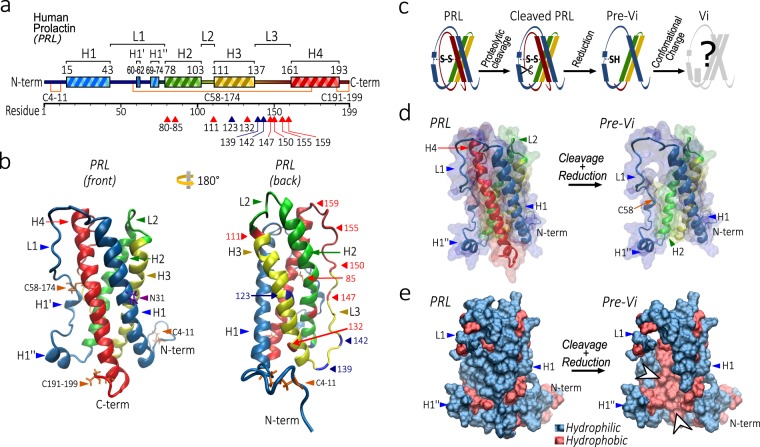
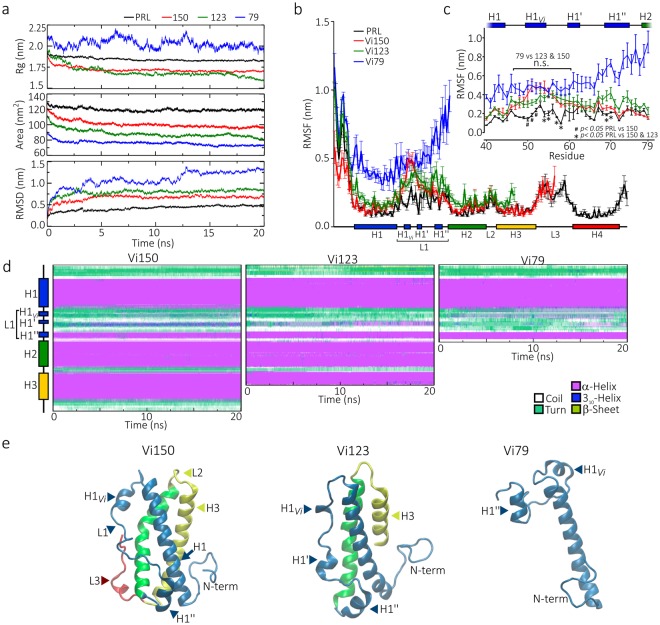
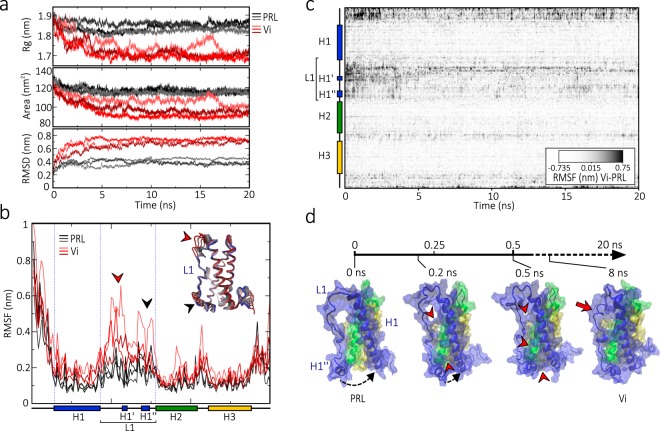
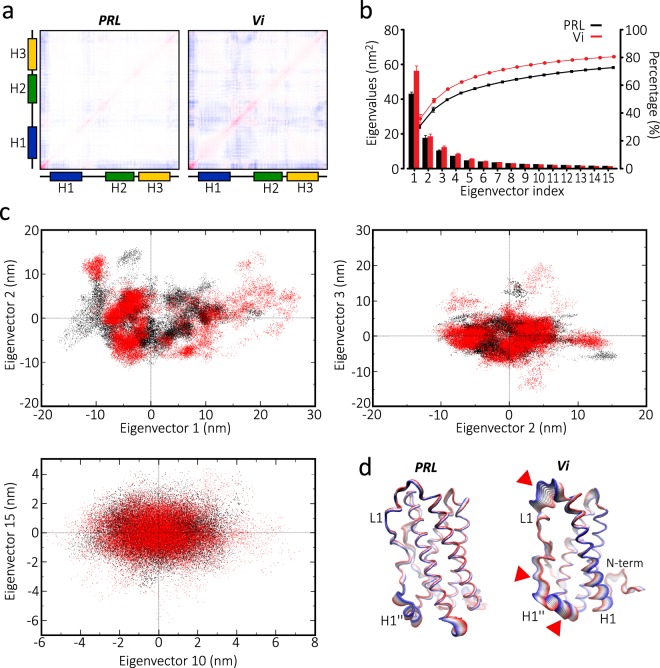
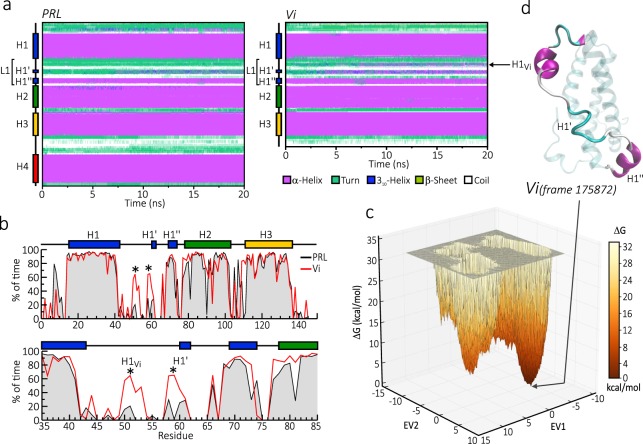
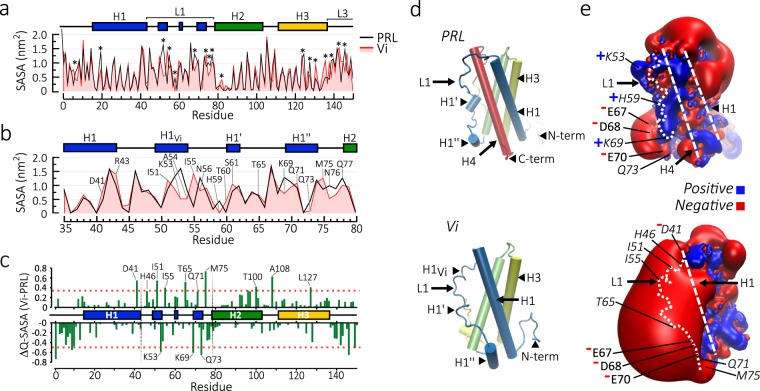
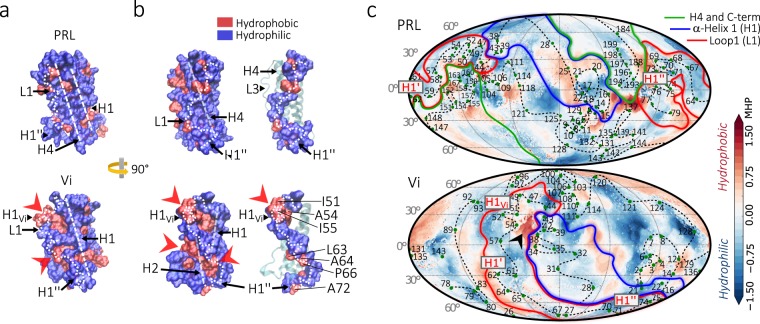
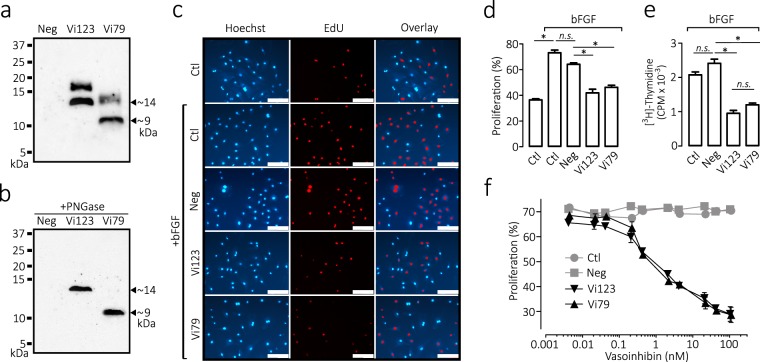
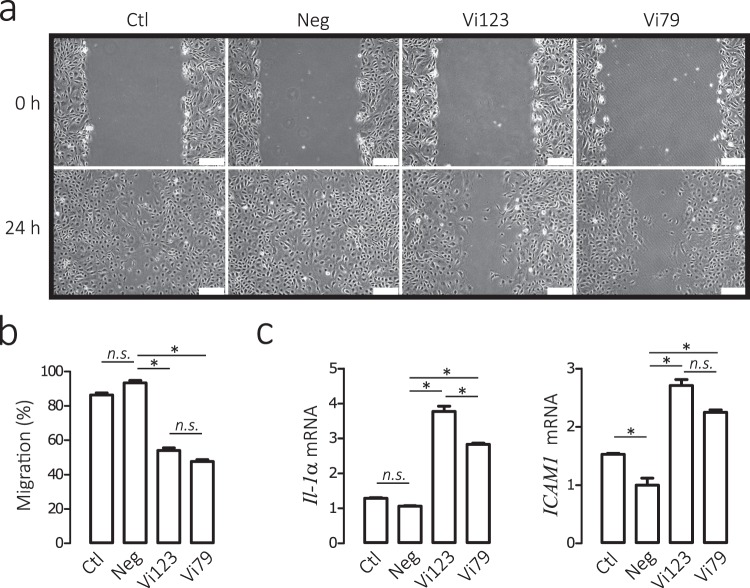
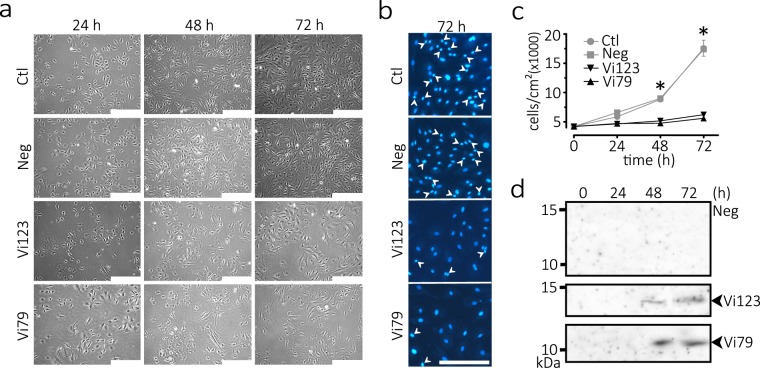
Vasoinhibin belongs to a family of angiogenesis inhibitors generated when the fourth α-helix (H4) of the hormone prolactin (PRL) is removed by specific proteolytic cleavage. The antiangiogenic properties are absent in uncleaved PRL, indicating that conformational changes create a new bioactive domain. However, the solution structure of vasoinhibin and the location of its bioactive domain are unknown. Molecular dynamic simulation (MD) showed that the loss of H4 exposes the hydrophobic nucleus of PRL and leads to the compression of the molecule into a three-helix bundle that buries the hydrophobic nucleus again. Compression occurs by the movement of loop 1 (L1) and its interaction with α-helix 1 (H1) generating a new L1 conformation with electrostatic and hydrophobic surfaces distinct from those of PRL, that may correspond to a bioactive domain. Consistent with this model, a recombinant protein containing the first 79 amino acids comprising H1 and L1 of human PRL inhibited the proliferation and migration of endothelial cells and upregulated the vasoinhibin target genes, IL1A and ICAM1. This bioactivity was comparable to that of a conventional vasoinhibin having the 123 residues encompassing H1, L1, Η2, L2, and Η3 of human PRL. These findings extend the vasoinhibin family to smaller proteins and provide important structural information, which will aid in antiangiogenic drug development.
血管抑素属于血管生成抑制剂家族,当激素催乳素(PRL)的第四α-螺旋(H4)被特定的蛋白水解切割去除时生成。未被切割的 PRL 缺乏抗血管生成特性,这表明构象变化产生了新的生物活性结构域。然而,血管抑素的溶液结构及其生物活性结构域的位置尚不清楚。分子动力学模拟(MD)表明,H4 的缺失暴露了 PRL 的疏核,并导致分子压缩成三螺旋束,再次将疏核埋藏起来。压缩是通过环 1(L1)的运动及其与α-螺旋 1(H1)的相互作用产生的,产生了一种具有不同于 PRL 的静电和疏水性表面的新 L1 构象,这可能对应于一个生物活性结构域。与该模型一致,包含人 PRL 的 H1 和 L1 的前 79 个氨基酸的重组蛋白抑制了内皮细胞的增殖和迁移,并上调了血管抑素靶基因 IL1A 和 ICAM1。这种生物活性与包含人 PRL 的 H1、L1、Η2、L2 和 Η3 的全长 123 个氨基酸的常规血管抑素相当。这些发现将血管抑素家族扩展到更小的蛋白质,并提供了重要的结构信息,这将有助于抗血管生成药物的开发。