Hu Rong, Wang Ming-Qing, Niu Wen-Bo, Wang Yan-Jing, Liu Yang-Yang, Liu Ling-Yu, Wang Ming, Zhong Juan, You Hai-Yan, Wu Xiao-Hui, Deng Ning, Lu Lu, Wei Lian-Bo
1Shenzhen Hospital, Southern Medical University, No. 1333, Xinhu Road, Bao'an District, Shenzhen, 518101 Guangdong China.
2School of Traditional Chinese Medicine, Southern Medical University, No. 1838, Guangzhou Avenue North, Baiyun District, Guangzhou, 510515 Guangdong China.
Cancer Cell Int. 2018 Nov 14;18:183. doi: 10.1186/s12935-018-0670-4. eCollection 2018.
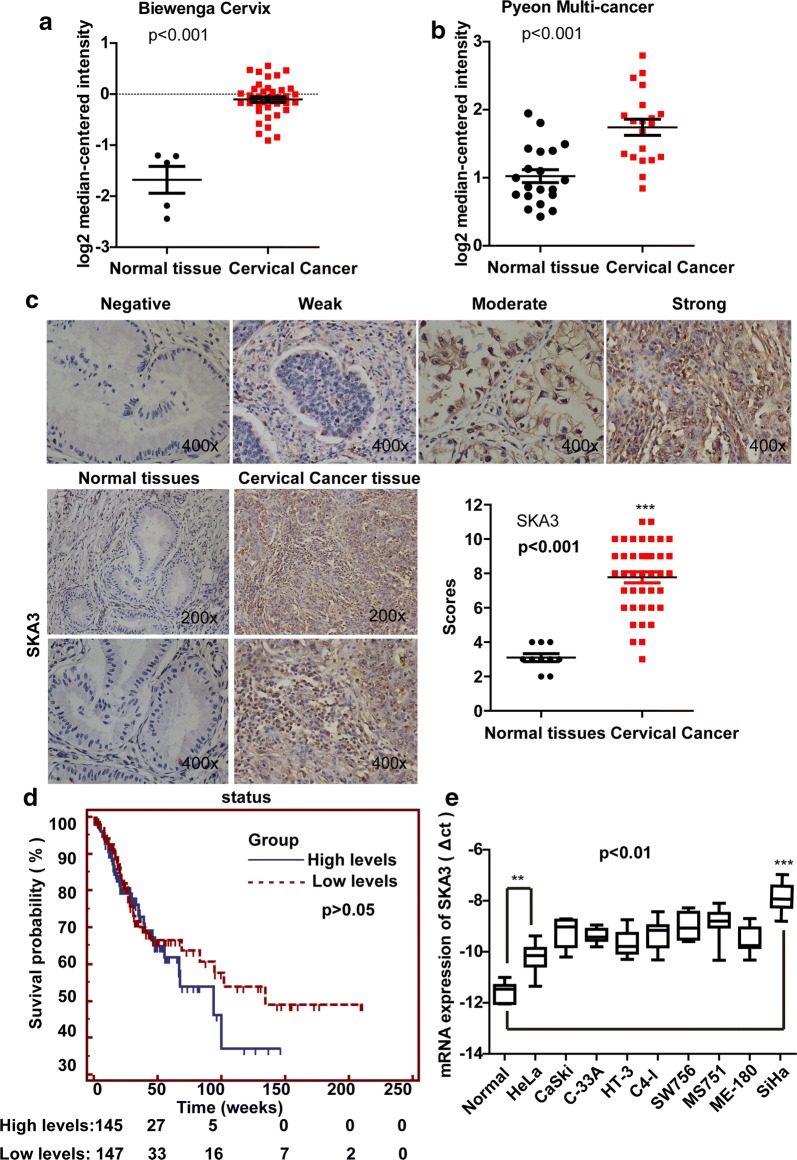
Cervical cancer (CC) is one of the most common cancers among females worldwide. Spindle and kinetochore-associated complex subunit 3 (SKA3), located on chromosome 13q, was identified as a novel gene involved in promoting malignant transformation in cancers. However, the function and underlying mechanisms of SKA3 in CC remain unknown. Using the Oncomine database, we found that expression of SKA3 mRNA is higher in CC tissues than in normal tissues and is linked with poor prognosis.
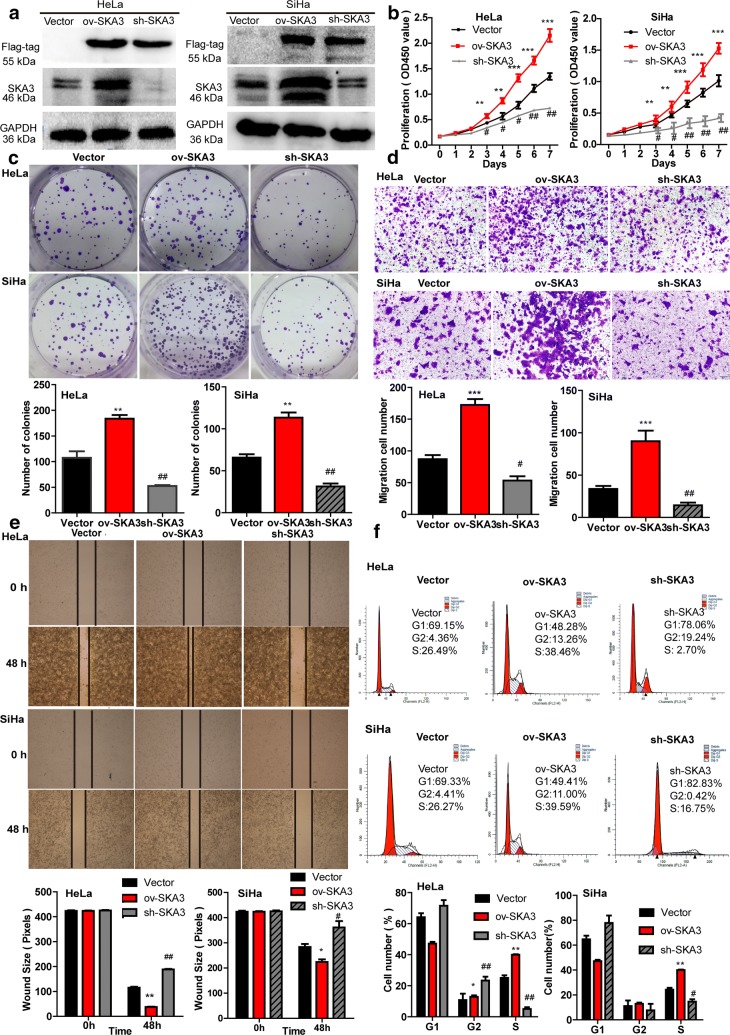
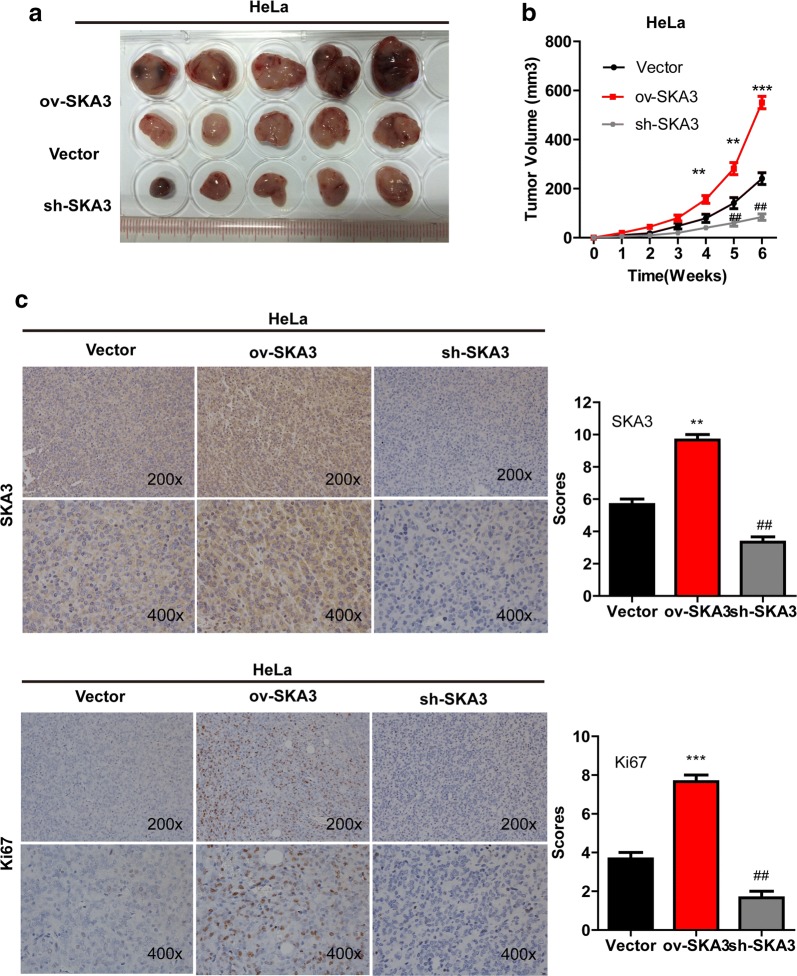
In our study, immunohistochemistry showed increased expression of SKA3 in CC tissues. The effect of SKA3 on cell proliferation and migration was evaluated by CCK8, clone formation, Transwell and wound-healing assays in HeLa and SiHa cells with stable SKA3 overexpression and knockdown. In addition, we established a xenograft tumor model in vivo.
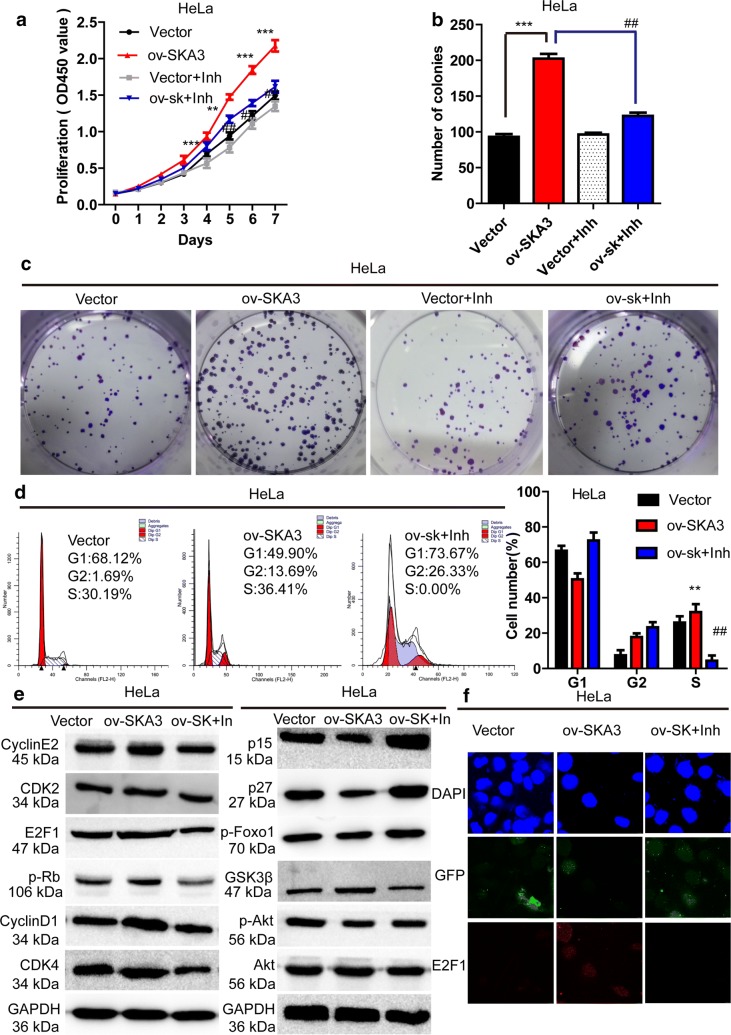
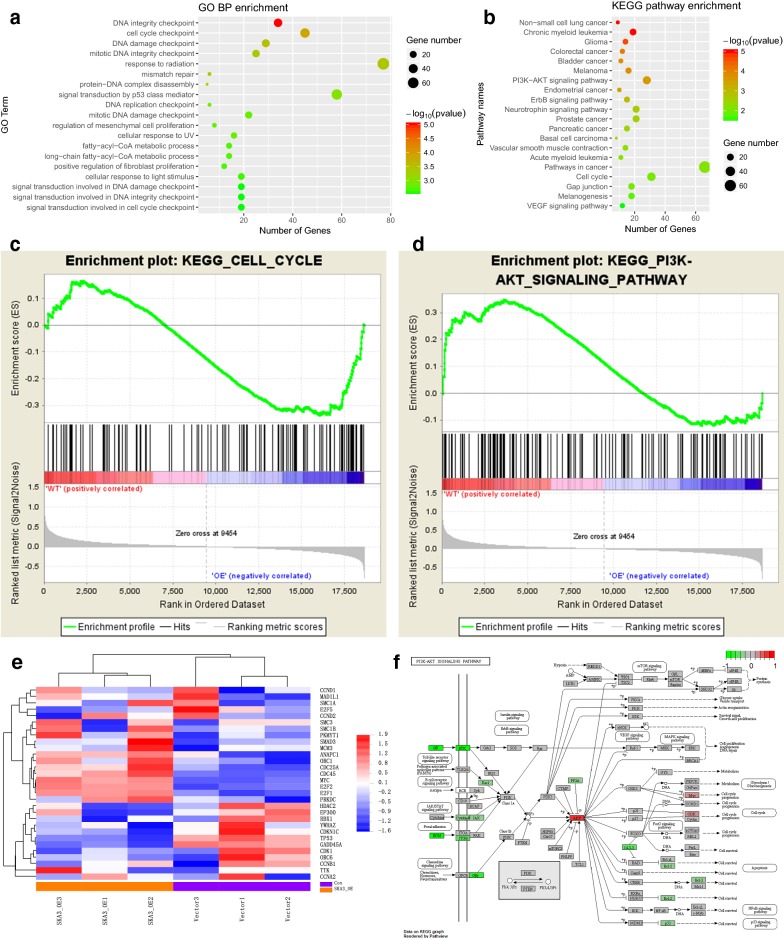
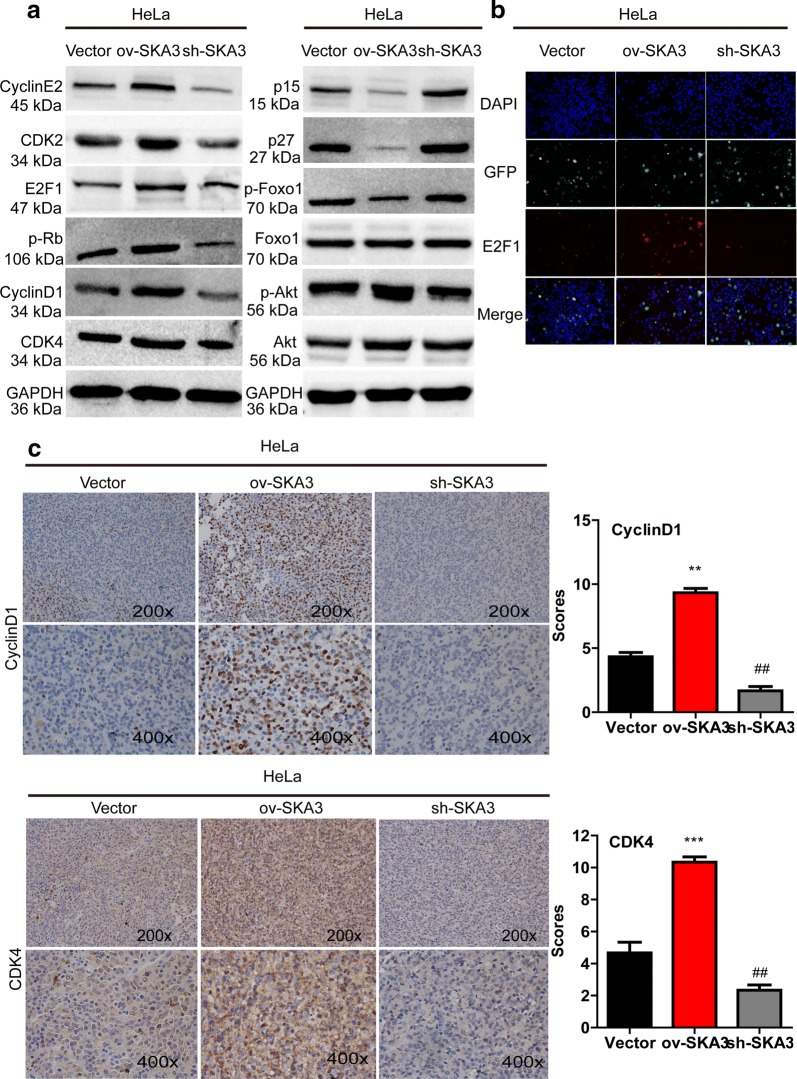
SKA3 overexpression promoted cell proliferation and migration and accelerated tumor growth. We further identified that SKA3 is involved in regulating cell cycle progression and the PI3K/Akt signaling pathway via RNA-sequencing (RNA-Seq) and gene set enrichment analyses. Western blotting results revealed that SKA3 overexpression increased levels of p-Akt, cyclin E2, CDK2, cyclin D1, CDK4, E2F1 and p-Rb in HeLa cells. Additionally, the use of an Akt inhibitor (GSK690693) significantly reversed the cell proliferation capacity induced by SKA3 overexpression in HeLa cells.
We suggest that SKA3 overexpression contributes to CC cell growth and migration by promoting cell cycle progression and activating the PI3K-Akt signaling pathway, which may provide potential novel therapeutic targets for CC treatment.
宫颈癌(CC)是全球女性中最常见的癌症之一。位于13号染色体q臂上的纺锤体和动粒相关复合体亚基3(SKA3)被鉴定为一种参与促进癌症恶性转化的新基因。然而,SKA3在宫颈癌中的功能及潜在机制仍不清楚。通过Oncomine数据库,我们发现SKA3 mRNA在宫颈癌组织中的表达高于正常组织,且与预后不良相关。
在我们的研究中,免疫组化显示SKA3在宫颈癌组织中表达增加。通过CCK8、克隆形成、Transwell和伤口愈合实验评估SKA3在稳定过表达和敲低SKA3的HeLa和SiHa细胞中对细胞增殖和迁移的影响。此外,我们建立了体内异种移植肿瘤模型。
SKA3过表达促进细胞增殖和迁移,并加速肿瘤生长。我们通过RNA测序(RNA-Seq)和基因集富集分析进一步确定SKA3参与调节细胞周期进程和PI3K/Akt信号通路。蛋白质印迹结果显示,SKA3过表达增加了HeLa细胞中p-Akt、细胞周期蛋白E2、细胞周期蛋白依赖性激酶2(CDK2)、细胞周期蛋白D1、CDK4、E2F1和磷酸化视网膜母细胞瘤蛋白(p-Rb)的水平。此外,使用Akt抑制剂(GSK690693)显著逆转了SKA3过表达诱导的HeLa细胞增殖能力。
我们认为SKA3过表达通过促进细胞周期进程和激活PI3K-Akt信号通路促进宫颈癌细胞生长和迁移,这可能为宫颈癌治疗提供潜在的新治疗靶点。