Wang Wei, Wang Rui, Xu Jingjing, Qin Xiaqing, Jiang Hong, Khalid Arslan, Liu Dexiang, Pan Fang, Ho Cyrus S H, Ho Roger C M
Department of Medical Psychology and Ethics, School of Basic Medical Sciences, Shandong University, Jinan, China.
Department of Psychological Medicine, Yong Loo Lin School of Medicine, National University of Singapore, Singapore, Singapore.
Front Psychiatry. 2018 Nov 6;9:558. doi: 10.3389/fpsyt.2018.00558. eCollection 2018.
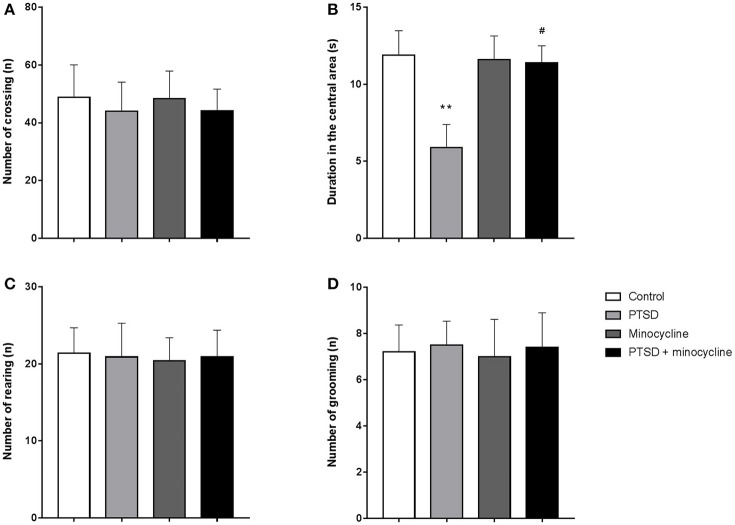
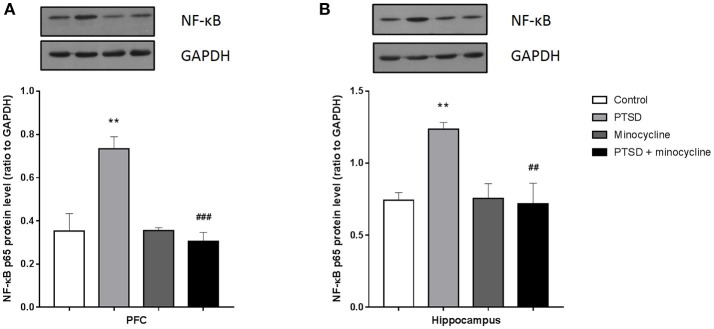
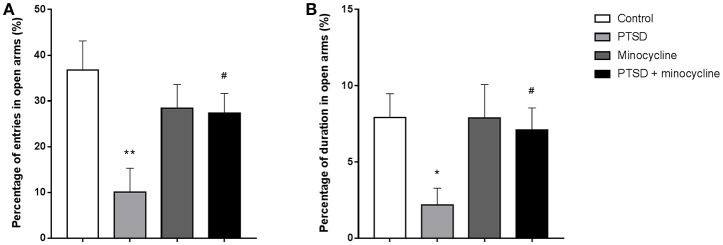
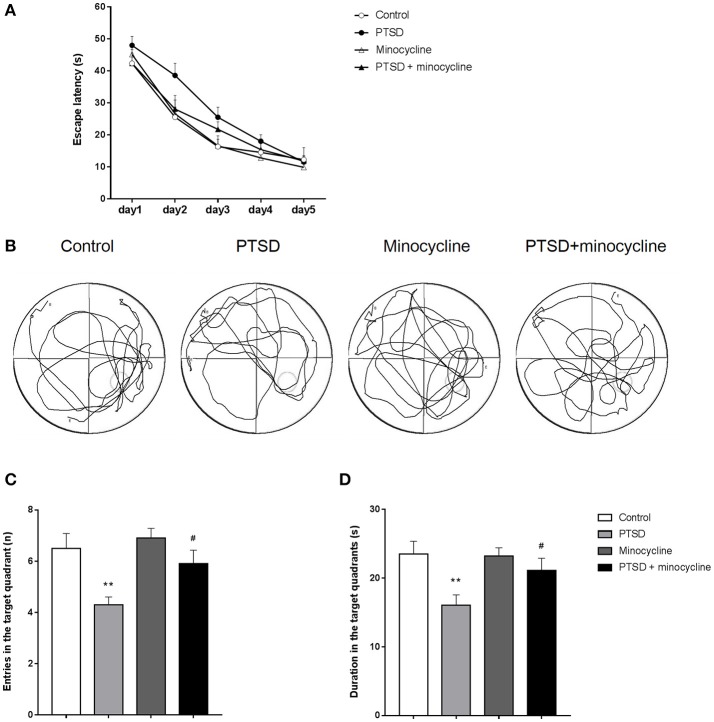
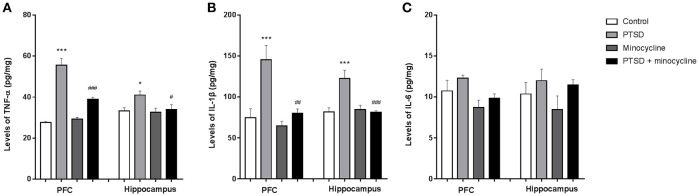
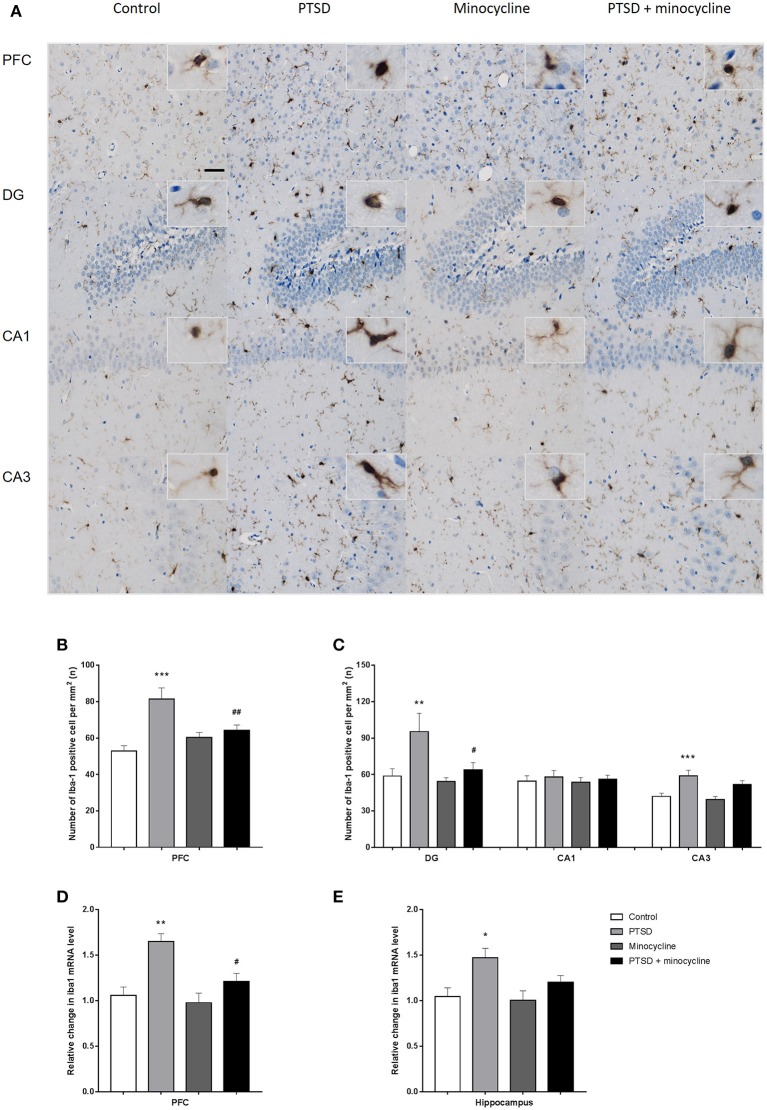
Accumulating evidences have suggested that anxiety-like behavior and impairment of learning and memory are key symptoms of post-traumatic stress disorder (PTSD), and pharmacological treatment can ameliorate anxiety and cognitive impairments. Recent studies have shown that minocycline exhibits anxiolytic effects. The aims of the present study were to determine whether minocycline administration would alter anxiety-like behavior and cognitive deficits induced by inescapable foot shock (IFS) and to explore the underlying mechanisms. Male Wistar rats were exposed to the IFS protocol for a period of 6 days to induce PTSD. The PTSD-like behavior was tested using the open field test, elevated plus maze test, and Morris water maze test. The effects of minocycline on pro-inflammatory cytokines, activation of microglia, and NF-κB in the PFC and hippocampus were also examined. Treatment with minocycline significantly reversed the IFS induced behavioral and cognitive parameters (impaired learning and memory function) in stressed rats. Additionally, IFS was able to increase pro-inflammatory cytokines, activate microglia, and enhance NF-κB levels, while minocycline significantly reversed these alterations. Taken together, our results suggest that the anxiolytic effect of minocycline is related to its ability to decrease the levels of pro-inflammatory cytokines and inhibit activation of microglia and NF-κB in the PFC and hippocampus.
越来越多的证据表明,焦虑样行为以及学习和记忆障碍是创伤后应激障碍(PTSD)的关键症状,药物治疗可以改善焦虑和认知障碍。最近的研究表明,米诺环素具有抗焦虑作用。本研究的目的是确定给予米诺环素是否会改变由不可逃避足部电击(IFS)诱导的焦虑样行为和认知缺陷,并探索其潜在机制。雄性Wistar大鼠接受IFS方案处理6天以诱导PTSD。使用旷场试验、高架十字迷宫试验和莫里斯水迷宫试验测试PTSD样行为。还检测了米诺环素对前额叶皮质(PFC)和海马中促炎细胞因子、小胶质细胞激活以及核因子κB(NF-κB)的影响。米诺环素治疗显著逆转了IFS诱导的应激大鼠的行为和认知参数(学习和记忆功能受损)。此外,IFS能够增加促炎细胞因子、激活小胶质细胞并提高NF-κB水平,而米诺环素显著逆转了这些改变。综上所述,我们的结果表明,米诺环素的抗焦虑作用与其降低促炎细胞因子水平以及抑制PFC和海马中小胶质细胞和NF-κB激活的能力有关。