Van Onsem Stijn, Triest Ludwig
Plant Biology and Nature Management, Department of Biology, Vrije Universiteit Brussel, Brussels, Belgium.
Front Plant Sci. 2018 Oct 16;9:1514. doi: 10.3389/fpls.2018.01514. eCollection 2018.
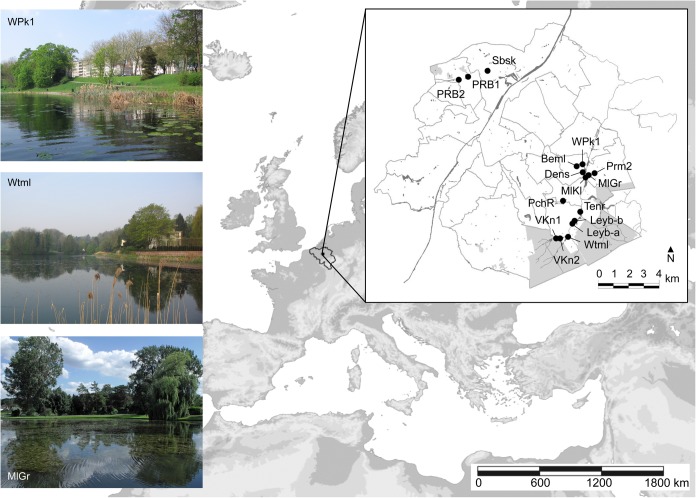
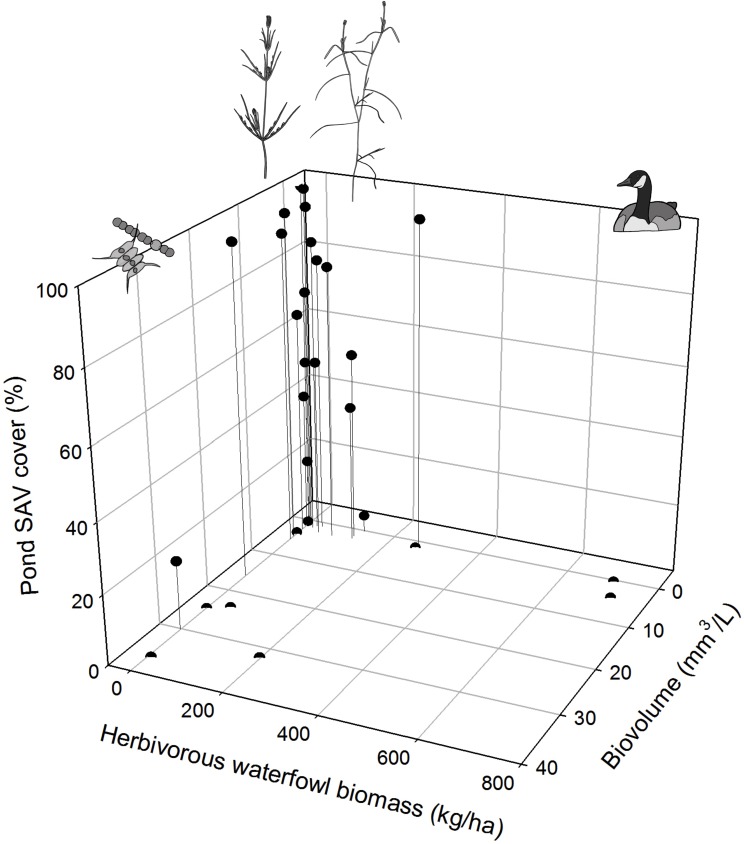
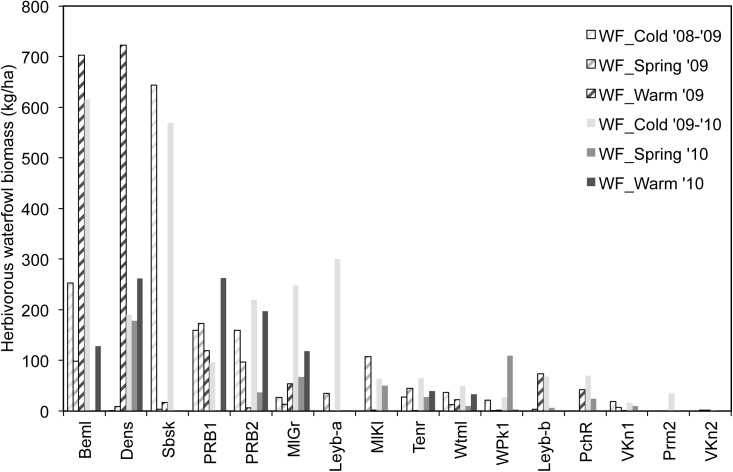
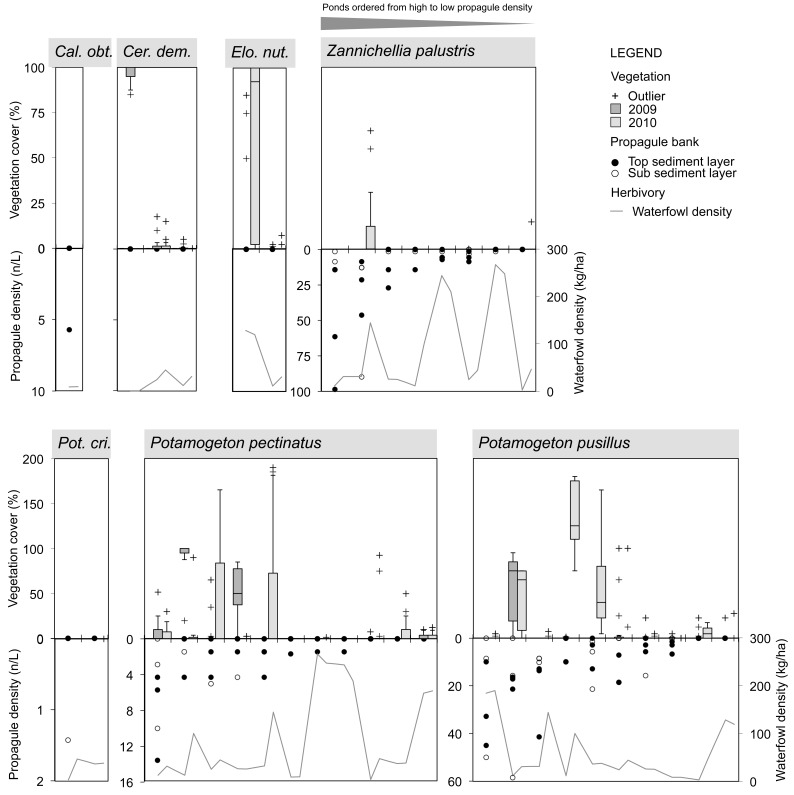
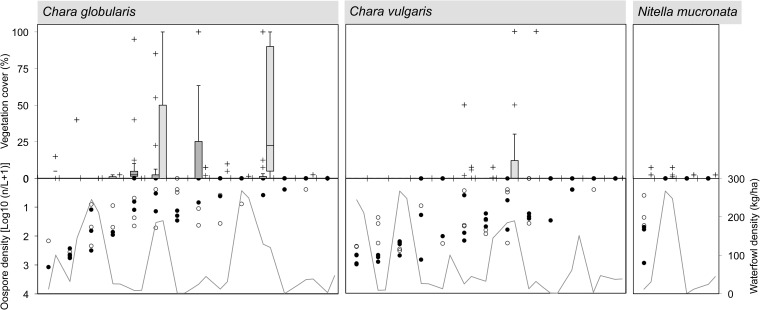
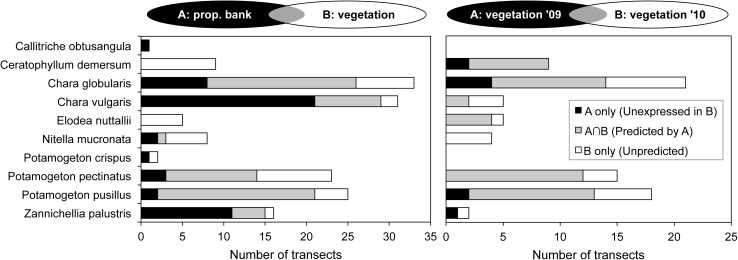
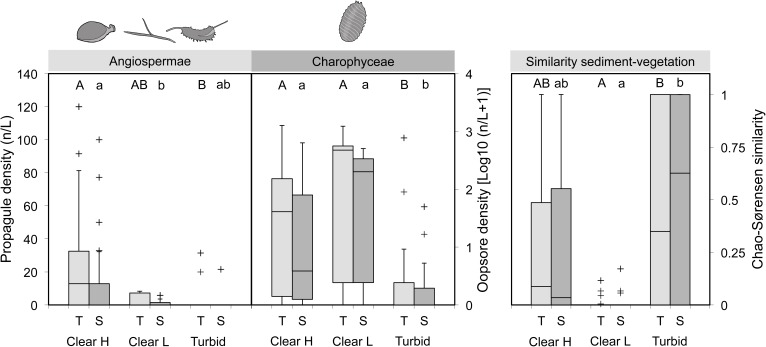
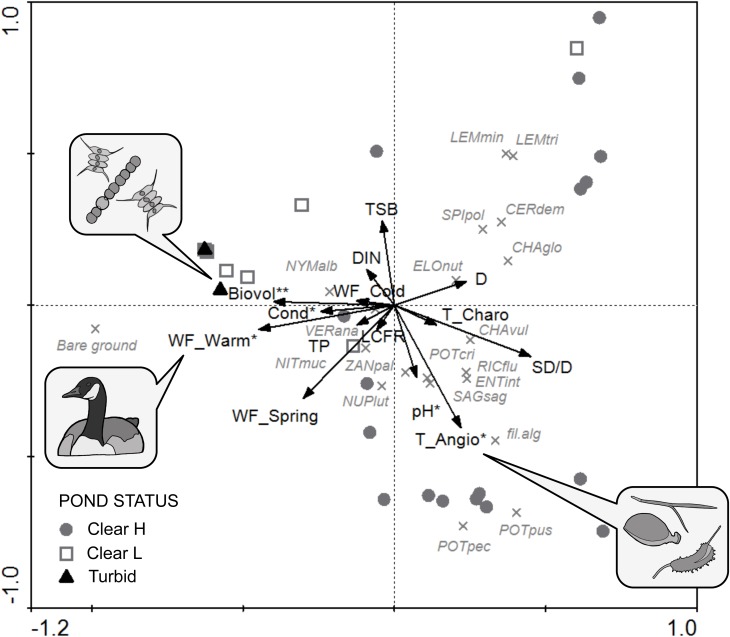
The aquatic vegetation in nutrient-rich shallow lakes and ponds is structured by the interplay of multiple biotic and abiotic drivers. We tested the contribution of the macrophyte propagule bank and the delayed as well as direct impact of waterbirds on submerged aquatic vegetation in a peri-urban pond system. To clarify the functional hierarchy of predictor variables, effects of herbivorous waterfowl and propagule bank potential were ranked relative to environmental, phytoplankton, and zooplankton indicators. Two aspects of the aquatic vegetation - community composition and total pond-scale cover - were discriminated. Within vegetation communities, phytoplankton biovolume and waterfowl herbivory during summer were linked to low macrophyte abundance, whereas propagule density of angiosperms was positively associated with specific assemblages of submerged macrophytes. High algal biovolume and summer waterfowl grazing seemed to affect maximal pond-scale cover of submerged aquatic vegetation. The presence of waterfowl in cold and spring periods was unrelated to vegetation structure in the consecutive main growth season. In addition, availability of propagules in the sediment did not automatically prompt pond-wide vegetation cover (especially when overruled by high waterfowl densities), nor did it guarantee a position in the submerged macrophyte community. Nonetheless, propagule bank potential was related to the waterbody's general ecological status, since turbid ponds exhibited impoverished propagule reserves compared to ponds residing in a clear, macrophyte-dominated state. Inadequate recruitment therefore represents a plausible bottleneck for macrophyte establishment. We conclude that phytoplankton-caused turbidity and high waterfowl biomass densities greatly restrict submerged macrophyte abundance. Propagule banks also participate in structuring submerged aquatic vegetation, though a stronger role is reserved for herbivorous waterfowl.
富营养化浅湖和池塘中的水生植被是由多种生物和非生物驱动因素的相互作用构成的。我们测试了大型植物繁殖体库的作用,以及水鸟对城郊池塘系统中沉水水生植被的延迟和直接影响。为了阐明预测变量的功能层次,将食草水禽和繁殖体库潜力的影响相对于环境、浮游植物和浮游动物指标进行了排序。区分了水生植被的两个方面——群落组成和池塘总体覆盖面积。在植被群落中,夏季浮游植物生物量和水鸟啃食与大型植物丰度低有关,而被子植物的繁殖体密度与沉水大型植物的特定组合呈正相关。高藻类生物量和夏季水鸟啃食似乎影响了沉水水生植被的最大池塘覆盖面积。寒冷期和春季水鸟的存在与随后主要生长季节的植被结构无关。此外,沉积物中繁殖体的可用性并不会自动促使整个池塘形成植被覆盖(特别是当被高水鸟密度所抵消时),也不能保证在沉水大型植物群落中占有一席之地。尽管如此,繁殖体库潜力与水体的总体生态状况有关,因为与处于清澈、大型植物主导状态的池塘相比,浑浊的池塘繁殖体储备较少。因此,招募不足似乎是大型植物建立的一个合理瓶颈。我们得出结论,浮游植物引起的浑浊和高水鸟生物量密度极大地限制了沉水大型植物的丰度。繁殖体库也参与了沉水水生植被的构建,不过食草水鸟发挥了更重要的作用。