Ju Robert J, Stehbens Samantha J, Haass Nikolas K
The University of Queensland, The University of Queensland Diamantina Institute, Translational Research Institute, Brisbane, QLD, Australia.
Discipline of Dermatology, University of Sydney, Sydney, NSW, Australia.
Front Med (Lausanne). 2018 Nov 6;5:307. doi: 10.3389/fmed.2018.00307. eCollection 2018.
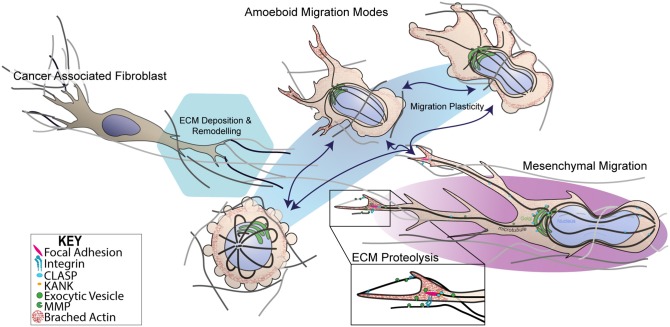
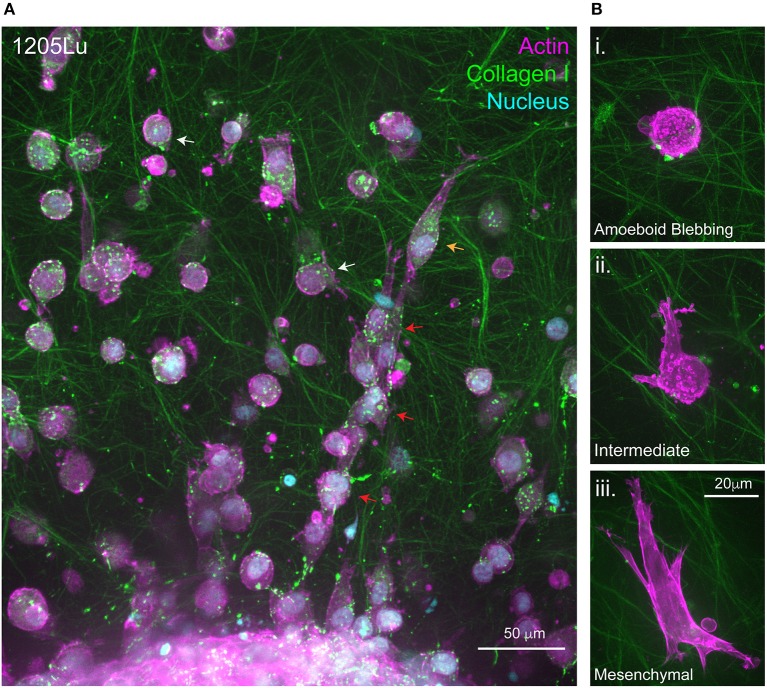
The importance of studying cancer cell invasion is highlighted by the fact that 90% of all cancer-related mortalities are due to metastatic disease. Melanoma metastasis is driven fundamentally by aberrant cell motility within three-dimensional or confined environments. Within this realm of cell motility, cytokines, growth factors, and their receptors are crucial for engaging signaling pathways, which both mediate crosstalk between cancer, stromal, and immune cells in addition to interactions with the surrounding microenvironment. Recently, the study of the mechanical biology of tumor cells, stromal cells and the mechanics of the microenvironment have emerged as important themes in driving invasion and metastasis. While current anti-melanoma therapies target either the MAPK signaling pathway or immune checkpoints, there are no drugs available that specifically inhibit motility and thus invasion and dissemination of melanoma cells during metastasis. One of the reasons for the lack of so-called "migrastatics" is that, despite decades of research, the precise biology of metastatic disease is still not fully understood. Metastatic disease has been traditionally lumped into a single classification, however what is now emergent is that the biology of melanoma metastasis is highly diverse, heterogeneous and exceedingly dynamic-suggesting that not all cases are created equal. The following mini-review discusses melanoma heterogeneity in the context of the emergent theme of mechanobiology and how it influences the tumor-stroma crosstalk during metastasis. Thus, highlighting future therapeutic options for migrastatics and mechanomedicines in the prevention and treatment of metastatic melanoma.
90%的癌症相关死亡是由转移性疾病导致的,这一事实凸显了研究癌细胞侵袭的重要性。黑色素瘤转移基本上是由三维或受限环境中的异常细胞运动驱动的。在这个细胞运动领域内,细胞因子、生长因子及其受体对于激活信号通路至关重要,这些信号通路不仅介导癌细胞、基质细胞和免疫细胞之间的相互作用,还介导与周围微环境的相互作用。最近,肿瘤细胞、基质细胞的力学生物学以及微环境的力学研究已成为驱动侵袭和转移的重要主题。虽然目前的抗黑色素瘤疗法靶向MAPK信号通路或免疫检查点,但尚无药物可特异性抑制黑色素瘤细胞在转移过程中的运动,从而抑制其侵袭和扩散。缺乏所谓“迁移抑制剂”的原因之一是,尽管经过数十年研究,转移性疾病的确切生物学机制仍未完全了解。转移性疾病传统上被归为单一类别,然而现在出现的情况是,黑色素瘤转移的生物学机制高度多样、异质性强且极其动态——这表明并非所有病例都是相同的。以下小型综述在力学生物学这一新兴主题的背景下讨论黑色素瘤的异质性,以及它在转移过程中如何影响肿瘤-基质相互作用。因此,强调了迁移抑制剂和机械药物在预防和治疗转移性黑色素瘤方面未来的治疗选择。