Bakthavatchalam Yamuna Devi, Ralph Ravikar, Veeraraghavan Balaji, Babu Priyanka, Munusamy Elakkiya
Department of Clinical Microbiology, Christian Medical College, Vellore, Tamil Nadu, India.
Department of Medicine (Unit II), Christian Medical College, Vellore, Tamil Nadu, India.
Infect Dis Ther. 2019 Mar;8(1):51-62. doi: 10.1007/s40121-018-0224-z. Epub 2018 Nov 21.
Heteroresistant vancomycin-intermediate Staphylococcus aureus (hVISA) bacteremia may result in clinical failure of vancomycin therapy, together with prolonged infection and hospitalization. This clinical problem has resulted in a search for more effective treatment options. The current study was designed to further investigate the synergistic effect of oxacillin plus vancomycin against methicillin-resistant S. aureus (MRSA) and hVISA using checkerboard and time-kill assays.
Non-duplicate S. aureus isolates including hVISA (n = 29), MRSA (n = 10) and methicillin susceptible S. aureus (MSSA, n = 11) were used for combinational testing using checkerboard and time-kill assays.
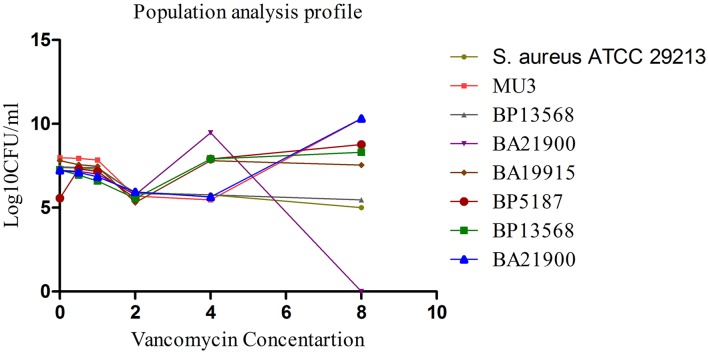
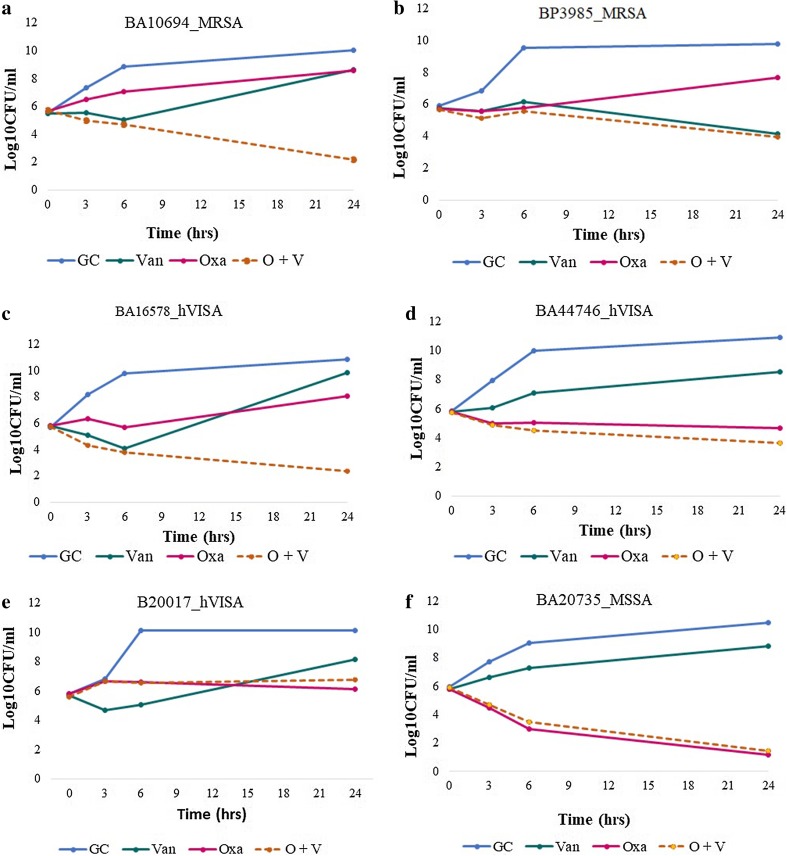
Twenty-one isolates, 15 hVISA and 6 MRSA, showed synergy between oxacillin and vancomycin by checkerboard assay with fractional inhibitory concentration indices of ≤ 0.5. The addition of oxacillin to vancomycin resulted in a reduction in baseline vancomycin MIC from 1-2 to 0.06-0.5 µg/ml against MRSA and hVISA isolates. In the time-kill assay, the combination of oxacillin and vancomycin resulted in synergistic activity against hVISA (n = 23) and MRSA (n = 7) isolates. Regrowth was observed in six hVISA isolates exposed to combination in the time-kill assay, but none of them reached the original inoculum density at 24 h. All re-growth isolates showed a onefold increase in vancomycin MIC (from 1 to 2 µg/ml) and were re-confirmed as hVISA using the population-analysis profile experiment. Overall, for hVISA and MRSA, the combination of oxacillin plus vancomycin had greater antibacterial effect than each individual drug alone.
The present study showed the potential activity of vancomycin plus oxacillin combination against hVISA and MRSA isolates. Further, continued evaluation of this combination is warranted and may have therapeutic benefits in treating complicated MRSA infections.
异质性万古霉素中介金黄色葡萄球菌(hVISA)菌血症可能导致万古霉素治疗的临床失败,以及感染和住院时间延长。这一临床问题促使人们寻找更有效的治疗方案。本研究旨在使用棋盘法和时间杀菌试验进一步研究苯唑西林联合万古霉素对耐甲氧西林金黄色葡萄球菌(MRSA)和hVISA的协同作用。
使用包括hVISA(n = 29)、MRSA(n = 10)和甲氧西林敏感金黄色葡萄球菌(MSSA,n = 11)在内的非重复金黄色葡萄球菌分离株,通过棋盘法和时间杀菌试验进行联合检测。
通过棋盘法检测,21株分离株(15株hVISA和6株MRSA)显示苯唑西林和万古霉素之间具有协同作用,分数抑菌浓度指数≤0.5。在针对MRSA和hVISA分离株的试验中,在万古霉素中添加苯唑西林可使基线万古霉素MIC从1-2降至0.06-0.5μg/ml。在时间杀菌试验中,苯唑西林和万古霉素联合使用对hVISA(n = 23)和MRSA(n = 7)分离株具有协同活性。在时间杀菌试验中,观察到6株hVISA分离株在联合用药后出现再生长,但在24小时时均未达到原始接种密度。所有再生长的分离株万古霉素MIC均增加一倍(从1增至2μg/ml),并通过群体分析谱实验重新确认为hVISA。总体而言,对于hVISA和MRSA,苯唑西林联合万古霉素的抗菌效果优于单独使用每种药物。
本研究显示了万古霉素联合苯唑西林对hVISA和MRSA分离株的潜在活性。此外,有必要对该联合用药进行持续评估,其可能对治疗复杂的MRSA感染具有治疗益处。