Institute of Medicinal Biotechnology, Chinese Academy of Medical Sciences and Peking Union Medical College, Beijing, China.
PLoS One. 2013 Jul 2;8(7):e68053. doi: 10.1371/journal.pone.0068053. Print 2013.
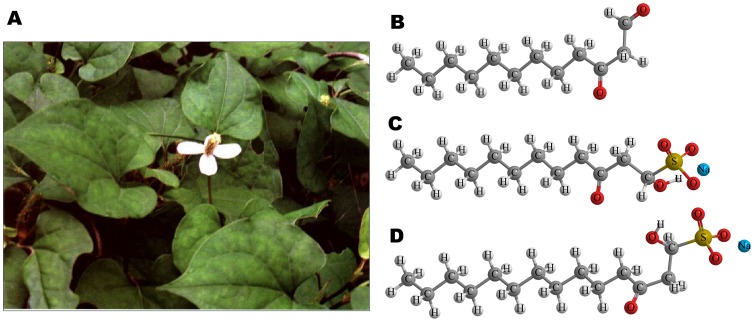
Staphylococcus aureus can cause severe infections, including bacteremia and sepsis. The spread of methicillin-resistant Staphylococcus aureus (MRSA) highlights the need for novel treatment options. Sodium new houttuyfonate (SNH) is an analogue of houttuynin, the main antibacterial ingredient of Houttuynia cordata Thunb. The aim of this study was to evaluate in vitro activity of SNH and its potential for synergy with antibiotics against hospital-associated MRSA.
A total of 103 MRSA clinical isolates recovered in two hospitals in Beijing were evaluated for susceptibility to SNH, oxacillin, cephalothin, meropenem, vancomycin, levofloxacin, minocycline, netilmicin, and trimethoprim/sulfamethoxazole by broth microdilution. Ten isolates were evaluated for potential for synergy between SNH and the antibiotics above by checkerboard assay. Time-kill analysis was performed in three isolates to characterize the kill kinetics of SNH alone and in combination with the antibiotics that engendered synergy in checkerboard assays. Besides, two reference strains were included in all assays.
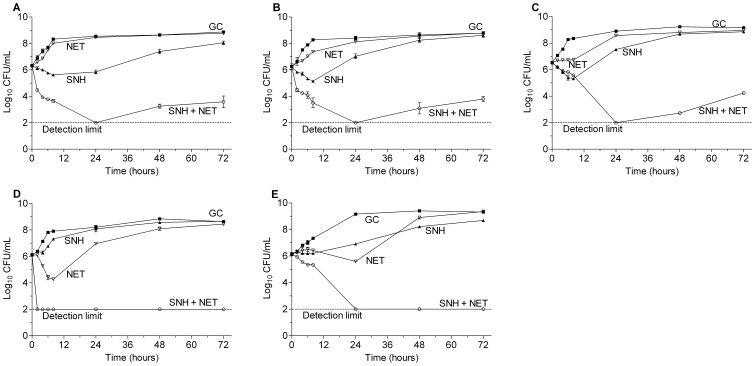
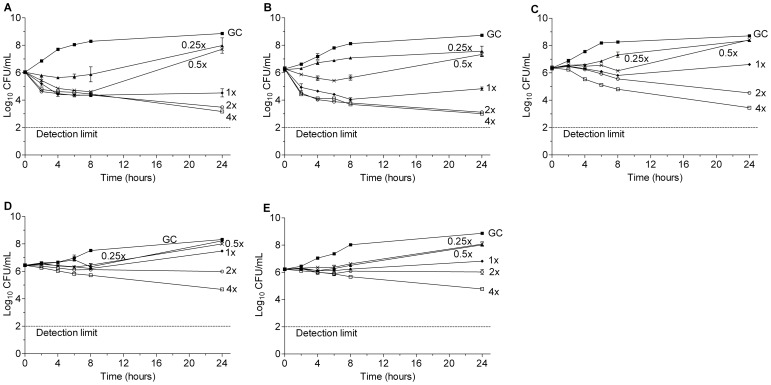
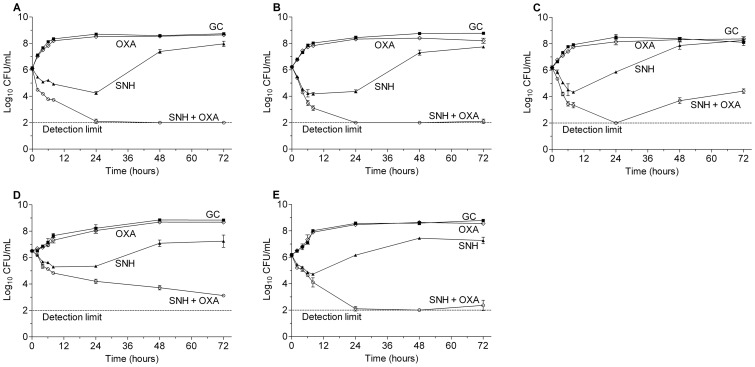
SNH inhibited all test strains with minimum inhibitory concentrations (MICs) ranging from 16 to 64 µg/mL in susceptibility tests, and displayed inhibition to bacterial growth in concentration-dependent manner in time-kill analysis. In synergy studies, the combinations of SNH-oxacillin, SNH-cephalothin, SNH-meropenem and SNH-netilmicin showed synergistic effects against 12 MRSA strains with median fractional inhibitory concentration (FIC) indices of 0.38, 0.38, 0.25 and 0.38 in checkerboard assays. In time-kill analysis, SNH at 1/2 MIC in combination with oxacillin at 1/128 to 1/64 MIC or netilmicin at 1/8 to 1/2 MIC decreased the viable colonies by ≥ 2log(10) CFU/mL.
CONCLUSIONS/SIGNIFICANCE: SNH demonstrated in vitro antibacterial activity against 103 hospital-associated MRSA isolates. Combinations of sub-MIC levels of SNH and oxacillin or netilmicin significantly improved the in vitro antibacterial activity against MRSA compared with either drug alone. The SNH-based combinations showed promise in combating MRSA.
金黄色葡萄球菌可引起严重感染,包括菌血症和败血症。耐甲氧西林金黄色葡萄球菌(MRSA)的传播突显了需要新的治疗选择。钠新鱼腥草素(SNH)是鱼腥草的类似物,鱼腥草是蕺菜的主要抗菌成分。本研究旨在评估 SNH 的体外活性及其与抗生素联合治疗医院相关 MRSA 的潜力。
对北京两家医院分离的 103 株 MRSA 临床分离株进行 SNH、苯唑西林、头孢噻吩、美罗培南、万古霉素、左氧氟沙星、米诺环素、奈替米星和复方磺胺甲噁唑药敏试验,采用肉汤微量稀释法。通过棋盘试验评估 10 株分离株 SNH 与上述抗生素联合应用的协同作用潜力。对 3 株分离株进行时间杀伤分析,以确定 SNH 单独及与棋盘试验中产生协同作用的抗生素联合应用的杀菌动力学。此外,所有试验均包括 2 株参考菌株。
SNH 在药敏试验中对所有受试菌株的最低抑菌浓度(MIC)范围为 16-64μg/ml,在时间杀伤分析中呈浓度依赖性抑制细菌生长。在协同研究中,SNH-苯唑西林、SNH-头孢噻吩、SNH-美罗培南和 SNH-奈替米星组合对 12 株 MRSA 菌株表现出协同作用,棋盘试验中中位部分抑菌浓度(FIC)指数分别为 0.38、0.38、0.25 和 0.38。在时间杀伤分析中,SNH 在 1/2 MIC 时与苯唑西林在 1/128 至 1/64 MIC 或奈替米星在 1/8 至 1/2 MIC 联合使用可使活菌数减少≥2log(10) CFU/ml。
结论/意义:SNH 对 103 株医院相关 MRSA 分离株表现出体外抗菌活性。与单独使用任一药物相比,SNH 与低浓度的苯唑西林或奈替米星联合使用显著提高了对 MRSA 的体外抗菌活性。基于 SNH 的联合用药在治疗 MRSA 方面具有应用前景。