Shiba Hiroyuki, Takeuchi Koji, Hiramatsu Ryo, Furuse Motomasa, Nonoguchi Naosuke, Kawabata Shinji, Kuroiwa Toshihiko, Kondo Natsuko, Sakurai Yoshinori, Suzuki Minoru, Ono Koji, Oue Shiro, Ishikawa Eiichi, Michiue Hiroyuki, Miyatake Shin-Ichi
Department of Neurosurgery, Osaka Medical College.
Kyoto University Research Reactor Institute.
Neurol Med Chir (Tokyo). 2018 Dec 15;58(12):487-494. doi: 10.2176/nmc.oa.2018-0111. Epub 2018 Nov 21.
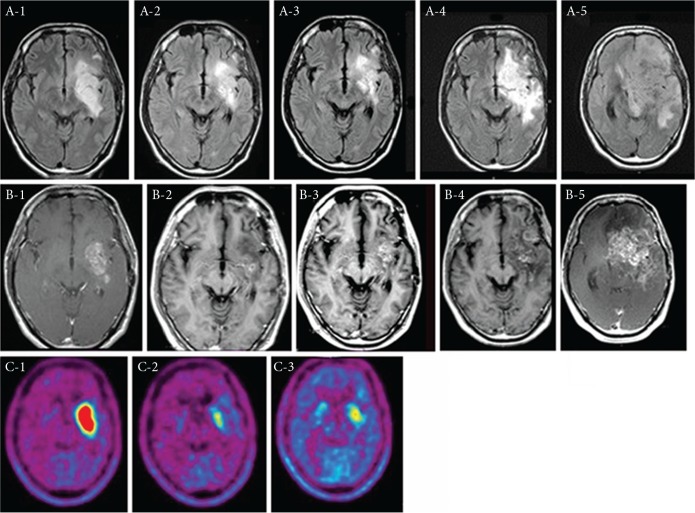
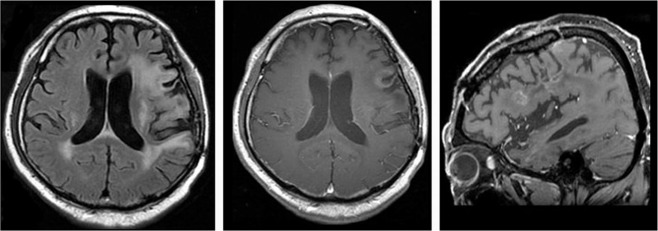
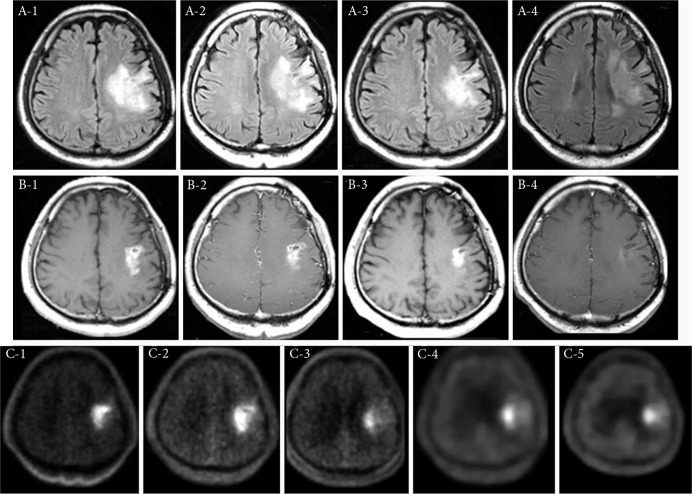
Recurrent malignant gliomas (RMGs) are difficult to control, and no standard protocol has been established for their treatment. At our institute, we have often treated RMGs by tumor-selective particle radiation called boron neutron capture therapy (BNCT). However, despite the cell-selectivity of BNCT, brain radiation necrosis (BRN) may develop and cause severe neurological complications and sometimes death. This is partly due to the full-dose X-ray treatments usually given earlier in the treatment course. To overcome BRN following BNCT, recent studies have used bevacizumab (BV). We herein used extended BV treatment beginning just after BNCT to confer protection against or ameliorate BRN, and evaluated; the feasibility, efficacy, and BRN control of this combination treatment. Seven patients with RMGs (grade 3 and 4 cases) were treated with BNCT between June 2013 and May 2014, followed by successive BV treatments. They were followed-up to December 2017. Median overall survival (OS) and progression-free survival (PFS) after combination treatment were 15.1 and 5.4 months, respectively. In one case, uncontrollable brain edema occurred and ultimately led to death after BV was interrupted due to meningitis. In two other cases, symptomatic aggravation of BRN occurred after interruption of BV treatment. No BRN was observed during the observation period in the other cases. Common terminology criteria for adverse events grade 2 and 3 proteinuria occurred in two cases and necessitated the interruption of BV treatments. Boron neutron capture therapy followed by BV treatments well-prevented or well-controlled BRN with prolonged OS and acceptable incidence of adverse events in our patients with RMG.
复发性恶性胶质瘤(RMGs)难以控制,目前尚未建立针对其治疗的标准方案。在我们研究所,我们经常通过一种名为硼中子俘获疗法(BNCT)的肿瘤选择性粒子辐射来治疗RMGs。然而,尽管BNCT具有细胞选择性,但仍可能发生脑放射性坏死(BRN),并导致严重的神经并发症,有时甚至死亡。这部分归因于通常在治疗过程早期给予的全剂量X射线治疗。为了克服BNCT后的BRN,最近的研究使用了贝伐单抗(BV)。我们在此采用在BNCT后立即开始的延长BV治疗,以预防或改善BRN,并评估了这种联合治疗的可行性、疗效和对BRN的控制情况。2013年6月至2014年5月期间,7例RMGs患者(3级和4级病例)接受了BNCT治疗,随后进行了连续的BV治疗。对他们进行随访至2017年12月。联合治疗后的中位总生存期(OS)和无进展生存期(PFS)分别为15.1个月和5.4个月。在1例病例中,由于脑膜炎导致BV中断后,出现了无法控制的脑水肿,最终导致死亡。在另外2例病例中,BV治疗中断后出现了BRN的症状加重。在其他病例的观察期内未观察到BRN。2例患者出现了不良事件通用术语标准2级和3级蛋白尿,需要中断BV治疗。在我们的RMGs患者中,BNCT后进行BV治疗能很好地预防或控制BRN,延长OS,且不良事件发生率可接受。