Department of Mechanical Engineering, Sogang University, Seoul, Korea.
Department of Biomedical Engineering, Sogang University, Seoul, Korea.
Sci Rep. 2018 Nov 21;8(1):17145. doi: 10.1038/s41598-018-35216-7.
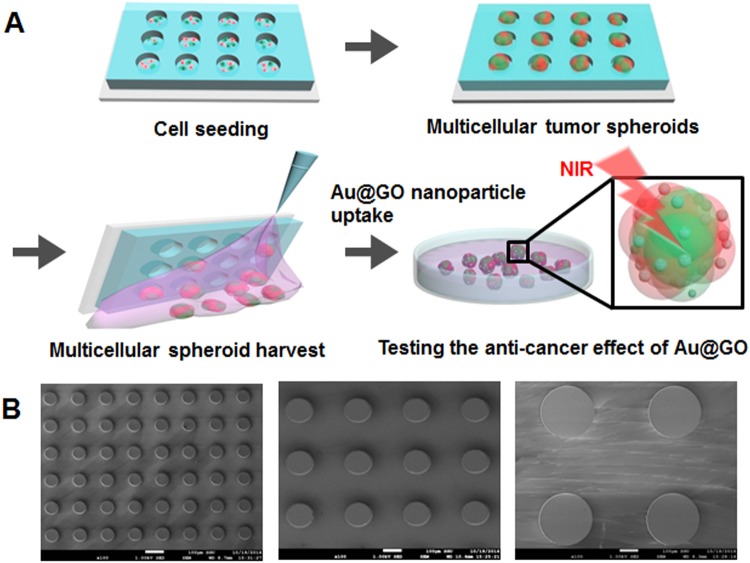
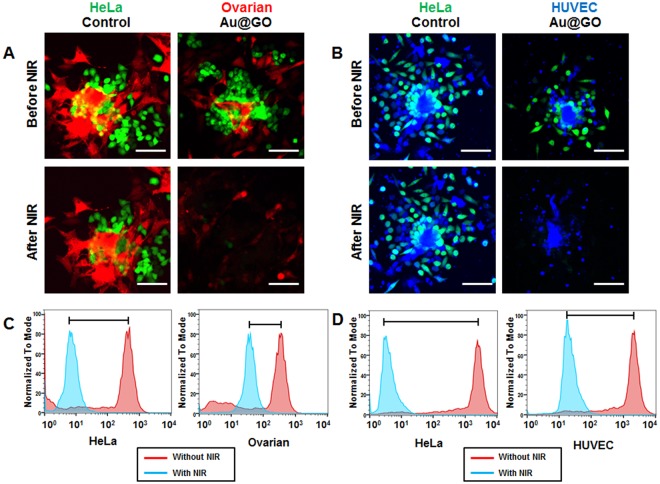
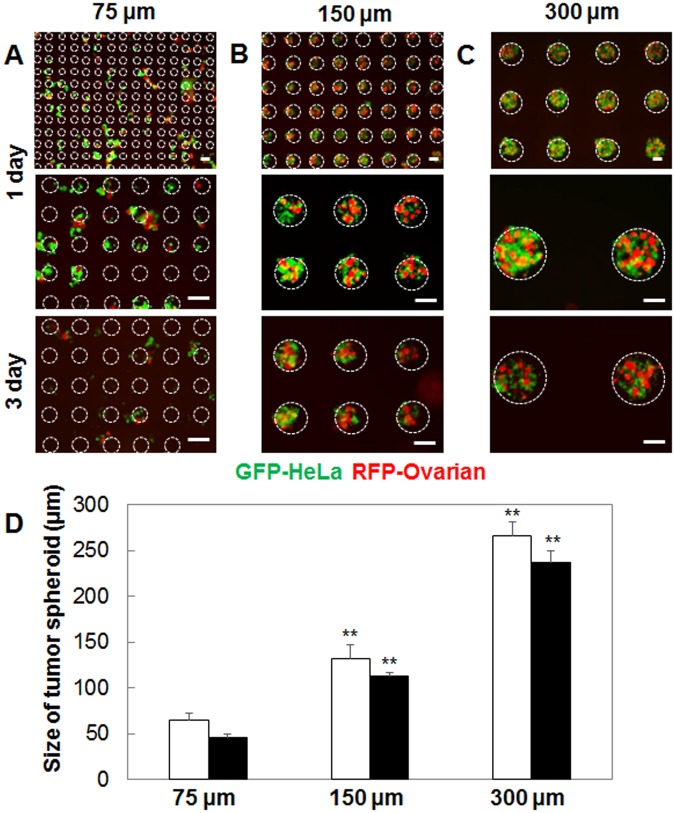
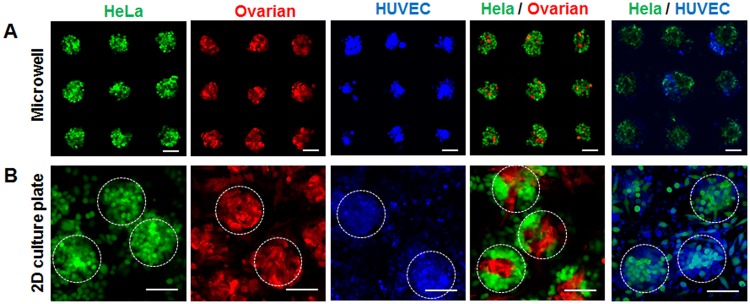
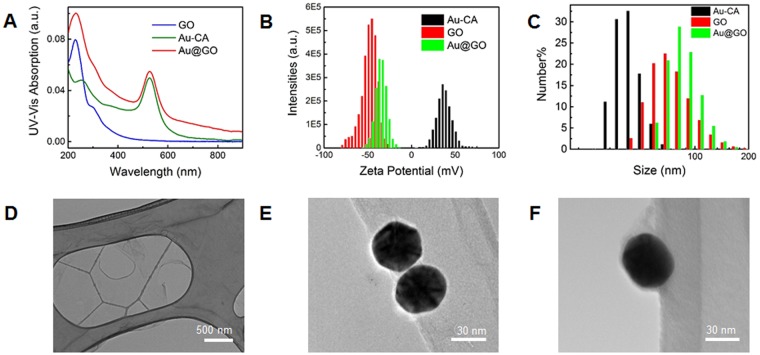
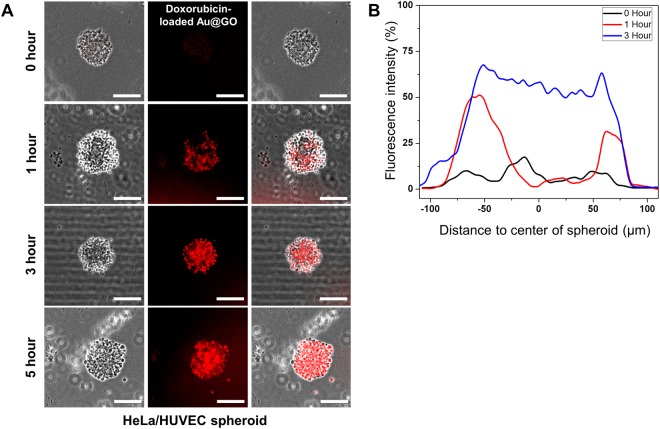
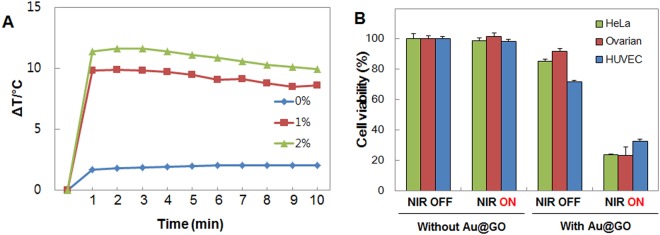
Even though in vitro co-culture tumor spheroid model plays an important role in screening drug candidates, its wide applications are currently limited due to the lack of reliable and high throughput methods for generating well-defined and 3D complex co-culture structures. Herein, we report the development of a hydrogel microwell array to generate uniform-sized multicellular tumor spheroids. Our developed multicellular tumor spheroids are structurally well-defined, robust and can be easily transferred into the widely used 2D culture substrates while maintaining our designed multicellular 3D-sphere structures. Moreover, to develop effective anti-cancer therapeutics we integrated our recently developed gold-graphene hybrid nanomaterial (Au@GO)-based photothermal cancer therapy into a series of multicellular tumor spheroid co-culture system. The multicellular tumor spheroids were harvested onto a two-dimensional (2D) substrate, under preservation of their three-dimensional (3D) structure, to evaluate the photothermal therapy effectiveness of graphene oxide (GO)-wrapped gold nanoparticles (Au@GO). From the model of co-culture spheroids of HeLa/Ovarian cancer and HeLa/human umbilical vein endothelial cell (HUVEC), we observed that Au@GO nanoparticles displayed selectivity towards the fast-dividing HeLa cells, which could not be observed to this extent in 2D cultures. Overall, our developed uniform-sized 3D multicellular tumor spheroid could be a powerful tool for anticancer drug screening applications.
尽管体外共培养肿瘤球体模型在筛选药物候选物方面发挥着重要作用,但由于缺乏可靠且高通量的方法来生成定义明确且 3D 复杂共培养结构,其广泛应用目前受到限制。在此,我们报告了一种水凝胶微井阵列的开发,用于生成均匀大小的多细胞肿瘤球体。我们开发的多细胞肿瘤球体结构定义明确、稳健,并且可以轻松转移到广泛使用的 2D 培养基质中,同时保持我们设计的多细胞 3D 球体结构。此外,为了开发有效的抗癌疗法,我们将最近开发的基于金-石墨烯杂化纳米材料 (Au@GO) 的光热癌症治疗整合到一系列多细胞肿瘤球体共培养系统中。多细胞肿瘤球体被收获到二维 (2D) 基质上,以保留其三维 (3D) 结构,以评估氧化石墨烯 (GO) 包裹的金纳米粒子 (Au@GO) 的光热治疗效果。从 HeLa/卵巢癌细胞和 HeLa/人脐静脉内皮细胞 (HUVEC) 的共培养球体模型中,我们观察到 Au@GO 纳米粒子对快速分裂的 HeLa 细胞具有选择性,而在 2D 培养中则无法观察到这种程度的选择性。总体而言,我们开发的均匀大小的 3D 多细胞肿瘤球体可以成为抗癌药物筛选应用的有力工具。